SINGAPORE PRESCHOOL ACCREDITATION FRAMEWORK (SPARK 2.0)
Framework
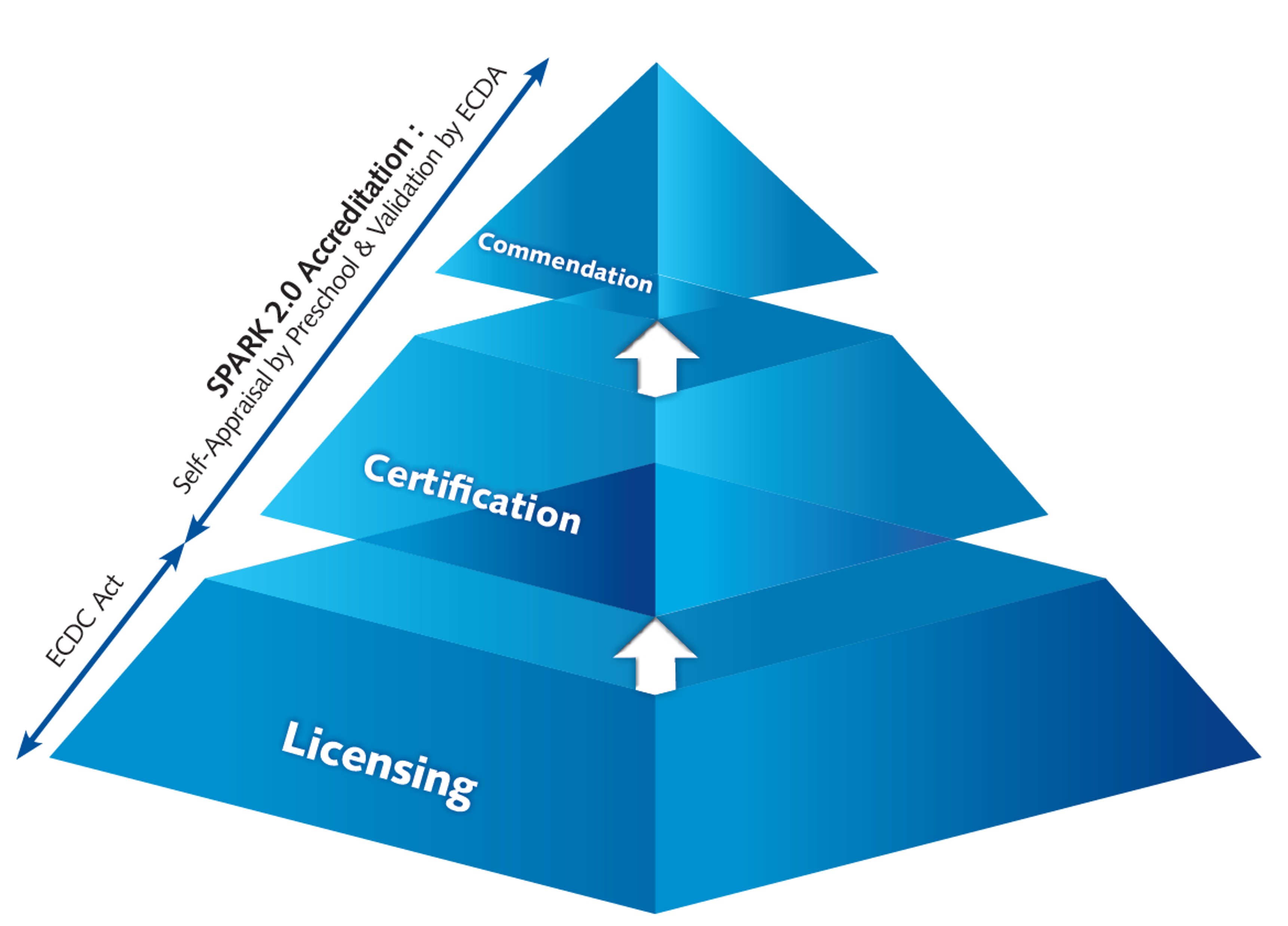
The Quality Improvement Model adopts a progressive approach, ensuring minimum standards for preschools at Licensing stage, and supporting and recognising preschools’ continuous improvements in quality at Accreditation stage.
SPARK 2.0 continues to be a 2-tiered accreditation framework which focuses on enhancing teaching and learning and management processes to promote the holistic development and well-being of young children. The framework integrates various policies and initiatives into preschool quality standards, whilst empowering preschools to take ownership of their quality journey and foster a culture of continuous improvement and innovation, beyond simply meeting licensing requirements.
- All preschools must meet ECDA’s regulatory requirements for licensing in accordance with the Early Childhood Development Centre (ECDC) Act. This foundational stage ensures basic standards of safety, health, and operational compliance are maintained, providing the essential groundwork for quality care and education.
- Preschools should strive to improve their quality beyond licensing requirements by moving into the next stage. Using the SPARK 2.0 Tool, preschools reflect on their practices, identify strengths and areas for growth, and develop targeted improvement plans through systematic self-appraisal. This stage emphasizes continuous learning, innovation, and adaptation to meet children’s unique needs.
- Preschools demonstrating sustained quality practices can apply for SPARK Accreditation. ECDA validates the preschools’ self-appraisal and recognises their achievement of quality standards. There are two tiers of attainment for SPARK Accreditation – Certification and Commendation.
- SPARK 2.0, using the validation approach, acknowledges the diverse early childhood landscape and empowers preschools to take ownership of their improvement journey towards higher quality.