“These are not competencies that emerge automatically,” said Ms Ng, who is also a mother of 2. “They develop through consistent and meaningful experiences in safe and supportive environments.”
Intentionality shapes everything in her K1 classroom. Beyond the mirror at the door, a dedicated safe space gives children room to practise the “Stop-Think-Choose" strategy when emotions run high. Over time, this helps them develop self-regulation skills, focusing on empowering the children and emotional growth over correcting behaviour.
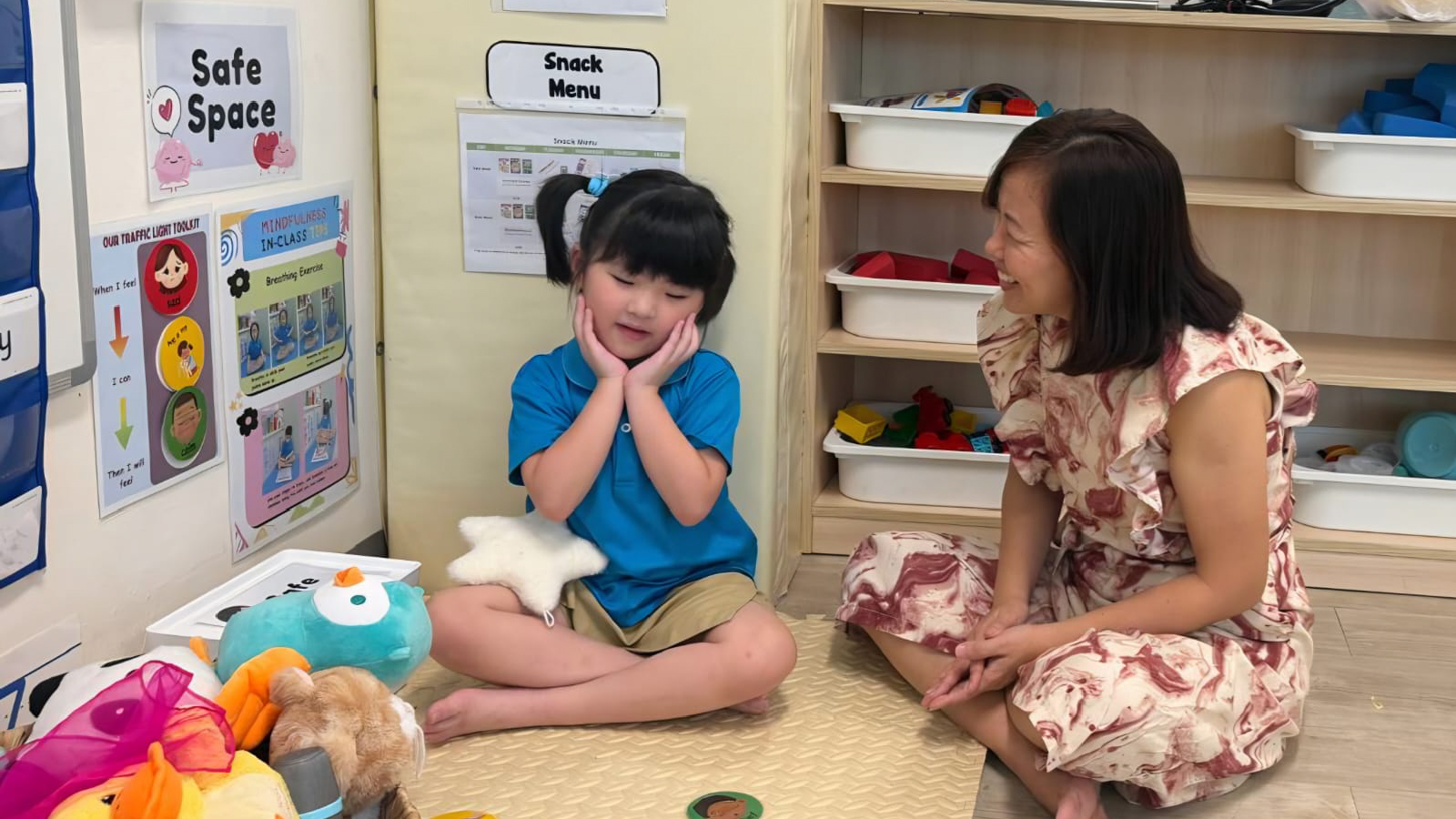 Ms Ng joins a child at her centre’s dedicated safe space, where children can learn to regulate their emotions.
Meanwhile, mixed-level play sessions bring K1 and K2 children together. As they play, they develop social awareness and relationship skills as they negotiate with one another, problem-solve and learn to take turns. They also pick up an understanding and respect for rules and boundaries – not because they are told or instructed, but because they experience them through play.
Ms Ng recalled a child who used to react impulsively during group play and lash out at peers. Through consistent modelling, guided role play, and the Stop-Think-Choose strategy, the child gradually learned to think before reacting. The turning point came during outdoor play, when another child accidentally knocked down his structure. Where he previously might have reacted with anger, he paused and said gently: “It's okay, we can build it again.”
“I was very heartened to see that happening,” Ms Ng said. “I know that he has learned the skill of self-management and how to build relationships with his friends.”
THE RIGHT SUPPORT AT THE RIGHT AGE
At PCF Sparkletots Preschool @ Ulu Pandan Blk 24, children and educators share a simple daily routine — a minute of quiet sitting, breathing exercises, and a values-based, read aloud story.
This is not just done at the start of the day. It is something the class returns to whenever they need to settle and refocus. “The children cross their legs, breathe, and come back to themselves,” said centre leader Nirmala Thevi d/o Vijayarengan, who has been with the preschool for two decades.
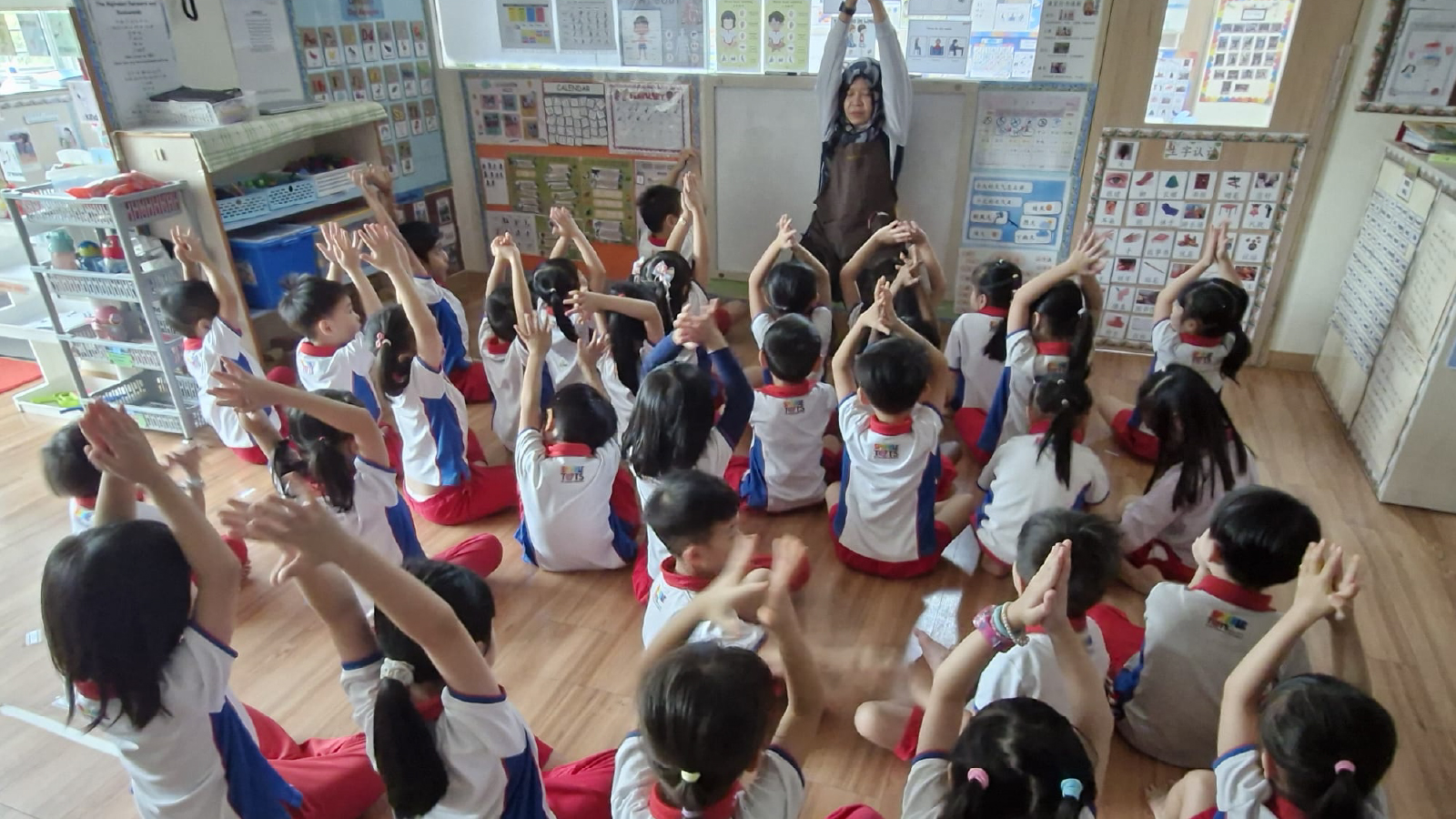 Children and educators at PCF Sparkletots Preschool @ Ulu Pandan Blk 24 take part in a minute of quiet sitting, breathing exercises, and a values-based story read aloud.
Introduced in 2012, this is one way Ms Nirmala has incorporated SED into the preschool’s culture and curriculum. At the heart of her approach is a simple understanding - SED looks different at every stage of a child's development.
For infants and toddlers, it starts with trust and attachment. Educators respond to every cry, recognise every emotion, and make sure no child’s needs go unattended. “Lesson plans can wait,” she said. “Attend to the children's needs first.”
As children grow older, the focus shifts to negotiation, turn-taking, and problem-solving. For instance, children are encouraged to work through conflicts independently before seeking adult intervention.
Ms Nirmala also observed that many parents see SED as good behaviour and compliance. It is common for adults to expect children to self-regulate and manage their emotions much earlier than is developmentally realistic. Through parent workshops and open-door observation sessions, her preschool helps parents better understand this. This way, the strategies children learn in preschool can be reinforced at home.
Educators at her centre are also guided by the 3Rs philosophy - being Respectful, Responsive and Reciprocal in how they interact with children. “Build relationships with the children first,” she said. “Sit beside them, not above them. Use simple emotion words like 'happy', 'sad', 'scared' and show you are paying attention.”
The impact of strong SED goes far beyond the preschool years. As educators shared, these early social and emotional competencies stay with children for life – shaping their values, character, how they relate to others, handle challenges, and navigate the world around them.