



ABOUT OUR EXPERT
Ms Goh is an ECDA Fellow and currently a Senior Centre Leader at E-Bridge Pre-School. She wants to nurture a community of practice centred around authentic observation, interpretation and collaborative curriculum design, so as to collectively elevate the standard of early childhood (EC) care and education.
Five years ago, Ms Angeline Goh’s experience working with Reggio Emilia-trained EC experts transformed her perspective. “Instead of focusing on what children could do, they looked at what children were trying to do,” reflects Ms Goh.
This shift — from measuring achievement to uncovering potential — has a major impact on how she guides educators in observational practices and the conclusions drawn. In effect, observation becomes a powerful tool for building relationships with children and planning purposeful activities in support of each child’s learning and development.
A NEW LENS
At the heart of Ms Goh's educational philosophy is the belief that children are capable, expressive and intentional. “If you start with that view, your observations change. You're not just recording milestones; you're noticing meaning,” she says.
For example, suppose a child is gluing sticks and yarn on black paper to form an image of a train. Some educators might stop at noting a basic skill, like fine motor skills development. But guided by Ms Goh's approach, they may unpack the child's choice of material, storytelling approach and spatial reasoning. “It's not about what the child made, but why they made it and how,” she says.
Viewed through this lens, an analysis of the observations could focus on how the child constructed the train, why they selected that material, and the connections they made with its properties. In turn, this process can inform educators on the next steps in the child's learning and development plan.
FROM NOTICING TO INTERPRETING
Ms Goh recommends a three-pronged framework for harnessing classroom observations:
- Observe. Focus on visible, factual actions. Record what you see using neutral language (e.g. “Child picked up a marker with right hand”).
- Analyse. Revisit your notes. Link the actions recorded to learning domains, such as how the child's demonstration of fine motor skills shows problem-solving abilities.
- Interpret. Think about the child's intention or interest. Explore what they might be expressing, choosing or trying to understand.
“The purpose is to make children's thinking visible,” she explains. “We're not simply tracking outcomes; we're revealing insights.”
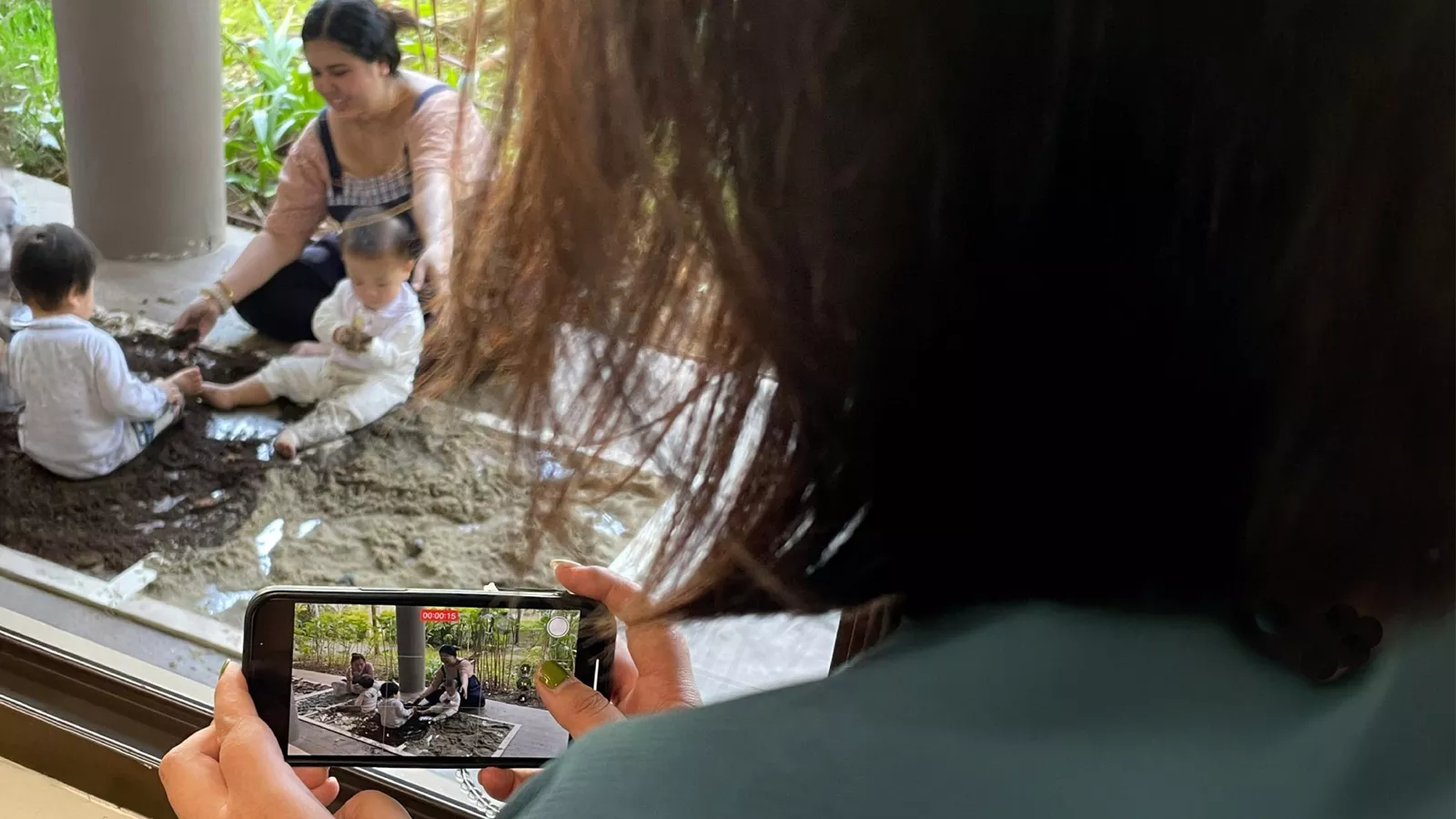 Besides writing notes, educators can also use photo and video documentation to carry out observations.
Try these practical tips to deepen your observation:
- Use video recordings to capture fleeting moments and dialogue.
- Photograph the child from unconventional angles. “Don't just shoot from the front. Try different angles, like top-down or from behind,” Ms Goh suggests. “It will change what you see.”
- Ask probing questions. Instead of “What did you make?”, ask the child, “Why did you choose this?” or “How did you decide to use that?”.
- Observe fewer children at a time. One-to-one observations allow educators to focus their attention, provide detailed documentation and glean individualised insights.
A COMMUNITY OF REFLECTIVE PRACTICE
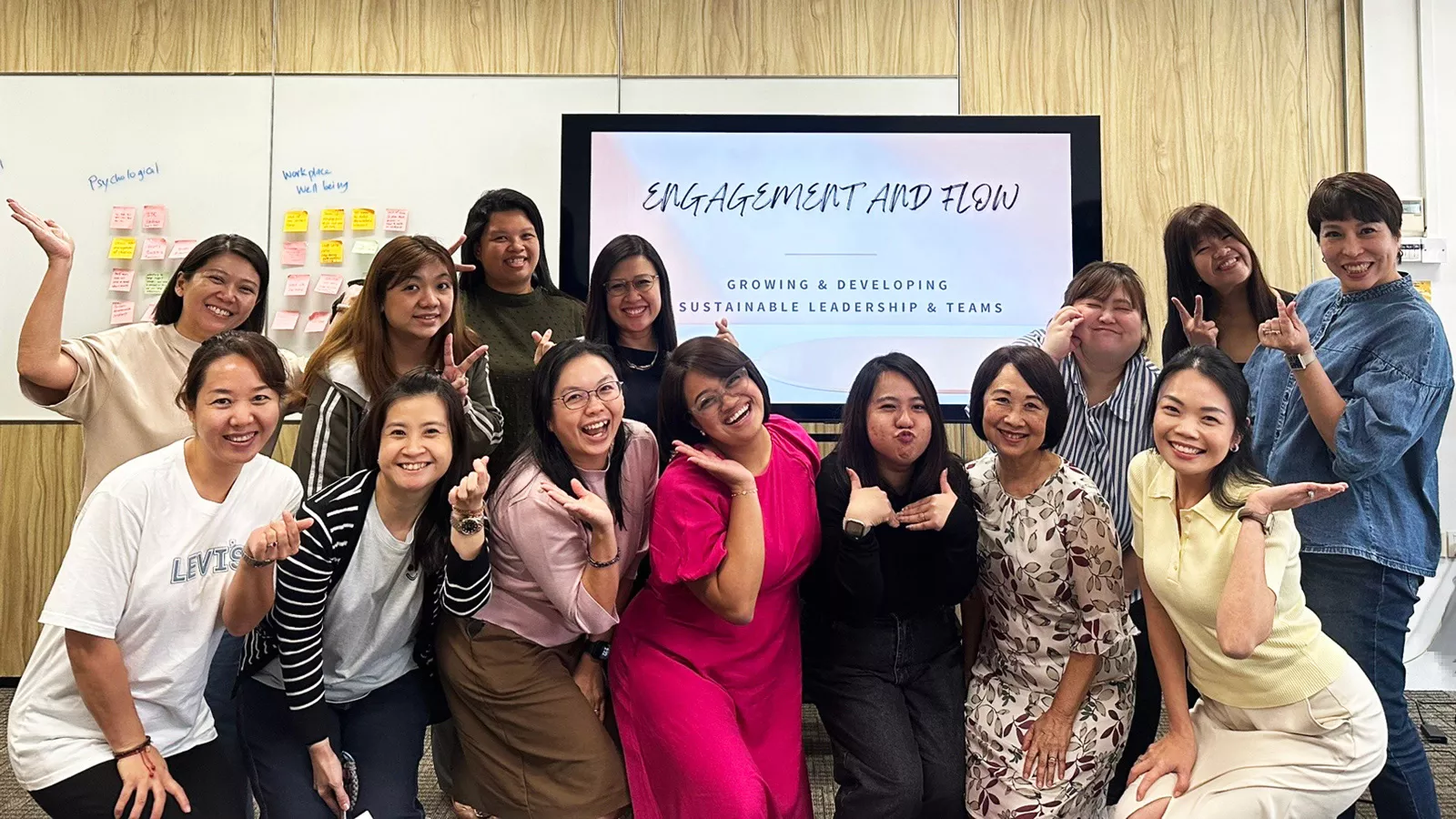
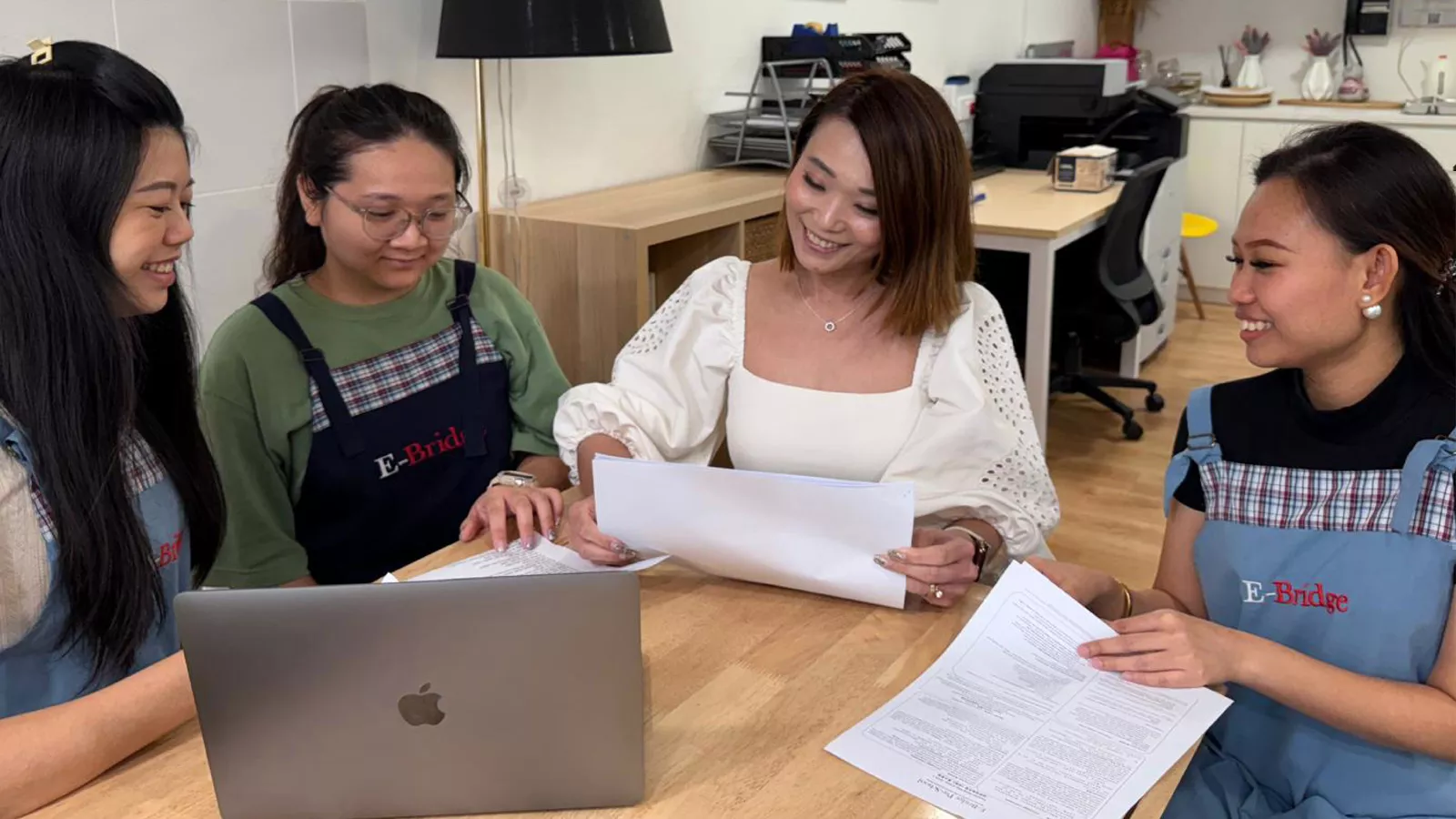
As a senior centre leader, Ms Goh makes it a point to organise regular sharing sessions involving her whole team of educators. They compare what each sees in the same observation and discuss their interpretations. These dialogues stretch educators' perspectives and foster a collaborative work environment.
“The way I see a child might differ from how you do. By sharing our views, we can expand our thinking,” she says. “The goal isn't to find the 'correct' answer. It's about being more reflective and intentional together.”
 Regular dialogues with the teaching team help preschool educators reflect and improve their observation and interpretation techniques.
Ms Goh also works with centre leaders and educators beyond her preschool through her Inquiry-Based Action Plan (IBAP) project, 'Equipping Leaders with the Art of Interpreting Observations'. Through the course, she seeks to change mindsets, share best practices for recording and interpreting observations, and nurture an ecosystem where educators collaborate and learn from one another.
“Many participants said they have seen a visible shift in how their teams document children's learning and plan the curriculum,” she shares. In some preschools, there are even early ideas to pilot research projects or collaborative approaches with stakeholders such as parents.
She is encouraged by those educators who are committed to observing deeply and differently, making teaching decisions that honour how children learn. Ultimately, Ms Goh hopes that every EC professional will view observation not as a routine task, but as a meaningful opportunity to understand children's ideas and thinking.