


ABOUT OUR EXPERT

Dr Tan is a Senior Lecturer in the Early Childhood Education Programme (S R Nathan School of Human Development) at the Singapore University of Social Sciences. Previously an Assistant Director at the National Institute of Early Childhood Development, a teacher, centre principal and curriculum specialist, she is particularly interested in infant-toddler pedagogies and early childhood (EC) leadership.
Children’s earliest life experiences lay the foundation for their future. What often goes unrecognised, however, is how differently babies and adults learn.
Dr Cynthia Tan, an ECDA Fellow, uses the concept of spotlight vs. lantern consciousness — shared by developmental psychologist Alison Gopnik — to explain the contrast between adult and infant learning. “Adults learn like spotlights, focusing their attention on a specific task,” says Dr Tan. “Infants, on the other hand, learn like lanterns. They pay attention to all the information they encounter, rather than filtering out things adults would consider distractions.
“In lantern learning, rather than being taught to squeeze a sponge, babies are given a waterplay tub filled with various objects — sponges, bottles, and floating or sinking items — allowing them to play and discover through exploration.”
 The spotlight (left) and lantern (right) serve as metaphors to describe the difference between adults’ focused attention and infants’ diffuse mode of thinking.
Dr Tan’s Inquiry-Based Action Plan (IBAP) project, ‘Supporting Children’s Active Learning Experiences as a Leader in Infant Care Settings’, builds on the concept of lantern learning. It emphasises fostering infants’ curiosity and active engagement as they discover and process their surroundings.
Just like lanterns casting light indiscriminately, babies learn by exploring everything around them. The curriculum, therefore, should be designed to support their exploration and learning through hands-on experiences.
OBSERVE AND INVOLVE
Gone is the outdated image of infants as empty cups waiting to be filled with standardised curriculum content. Today’s approach values children’s agency and involvement. Infants are seen as seeds, requiring close observation and a nurturing environment to flourish in their own unique ways.
“Our job as EC educators is to be patient — watch, wait and adapt. You’re getting to know a fellow human being, observing how they respond to their environment, and creating the right conditions for involvement so they can learn best,” says Dr Tan. “For instance, are they absorbed and ‘in the zone’, or bored and walking off? What is the child telling us?”
Participants in her IBAP project practised observing infants on video using a simplified version of the Leuven Scale of Involvement. This scale, divided into three levels (Low, Moderate and High), helped participants assess and reflect on infants’ level of involvement during play activities. By doing so, they gained valuable insights into the children’s curiosity, engagement and active learning.
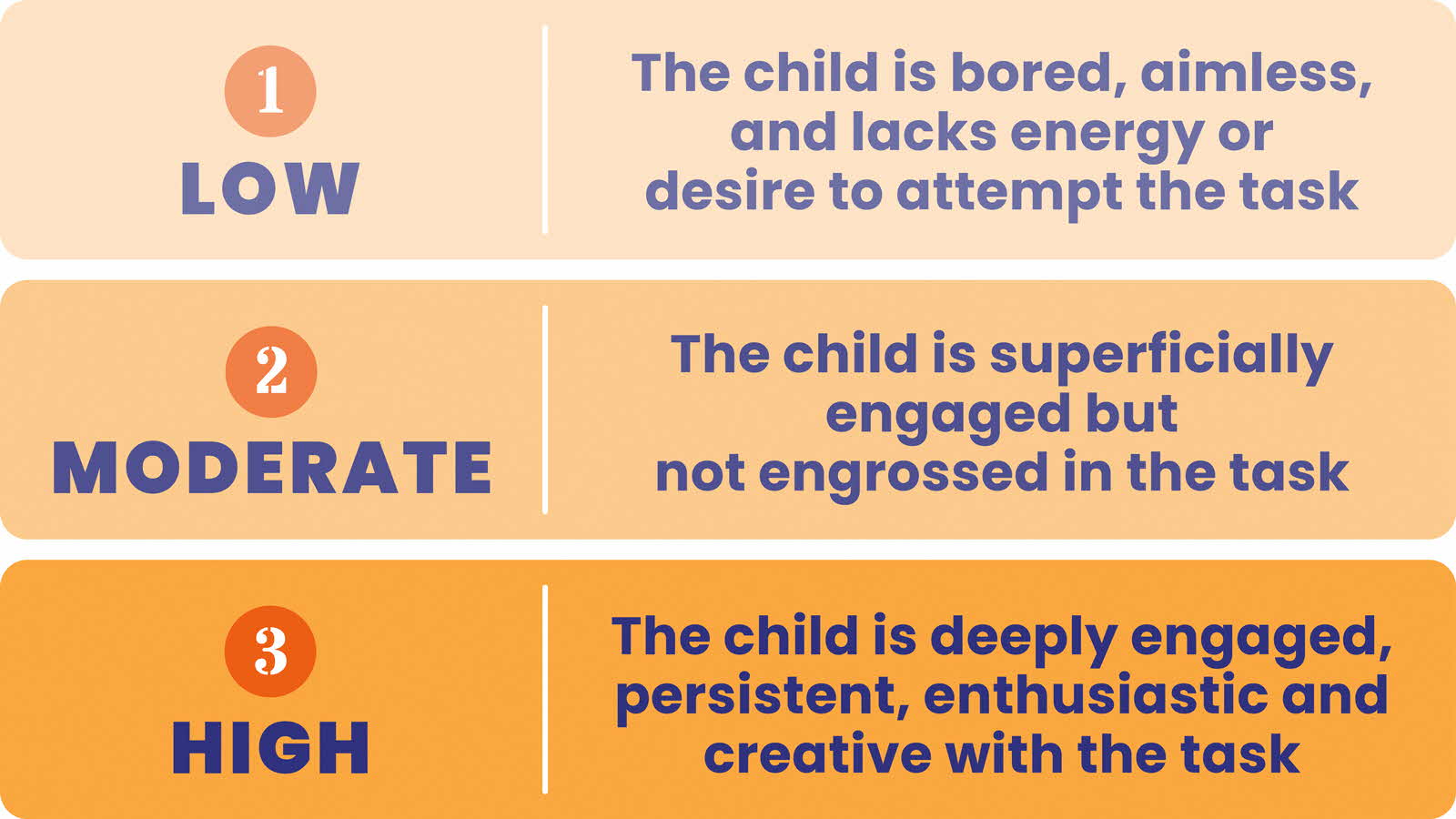 The simplified Leuven Scale of Involvement is a three-point scale that measures a child’s level of engagement in an activity. The higher the score, the more focused and involved they are in what they are doing.
Dr Tan cautions that a child’s compliance with an activity does not necessarily mean they are involved. Instead, look out for these cues or signs of genuine involvement:
- Concentration: Observe the child’s eyes. Are they focused on a specific object or task?
- Energy: Is the child alert, lively and putting in effort?
- Persistence: Does the child want to continue and try the activity again?
- Complexity: Is the child experimenting, adding their own variations or testing things out?
ADAPT CLASSROOM ENVIRONMENTS, SYSTEMS AND PERSPECTIVES
“Babies don’t just need to learn how to move — they need to move in order to learn,” says Dr Tan. “Movement is the primary language they use to explore the world.”
Besides giving infants ample space to move around freely and safely, Dr Tan recommends providing open-ended play materials — what she refers to as the ‘4Bs’: balls, baskets, boxes and books. “Balls can be rolled or thrown; older infants love to put things in baskets; boxes can be pushed or climbed; and books can be held or stacked.”
Centre leaders, she adds, must re-evaluate their mental models or frameworks to spark changes in the classroom environment and practices. “For example, if you view an infant care setting solely through the lens of safety, then that’s the only type of conversation you’ll have with educators,” says Dr Tan. To foster deeper reflection, double-loop learning is essential, challenging underlying assumptions and prompting real change.
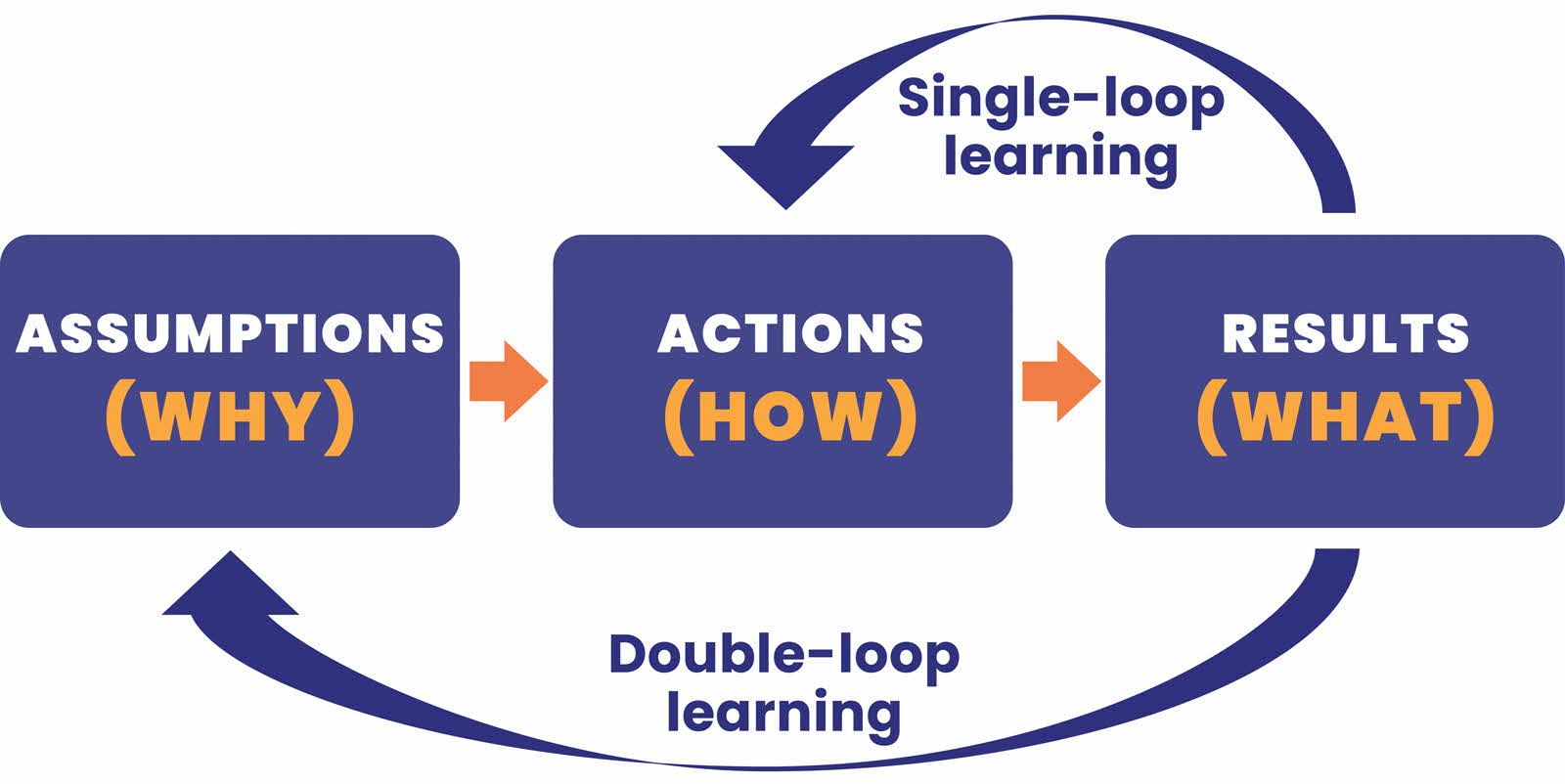 Unlike single-loop learning, which focuses on immediate problem-solving or adjusting actions to fit an existing framework, double-loop learning, as introduced by Chris Argyris, gets to the root cause of the problem and alters the framework itself, leading to transformative change.
EC leaders can consciously don the lens of infant involvement by asking educators questions about what a child enjoyed during the day, what the child enjoyed playing, or what the child was fascinated and interested in. “Don’t just assess whether you’re doing things right by going down a checklist,” Dr Tan suggests. “Ask if you’re doing the right things to begin with, based on the children’s responses.”
From a coaching perspective, such leader-educator conversations can help educators develop their own lens for observing and understanding infant involvement.
Dr Tan also emphasises the importance of considering how the centre’s planning and organisational systems support infant involvement. Coordinating in smaller teams even within large class sizes, she suggests, may help foster better communication, especially when it comes to parent-teacher conversations about how best to nurture each child.
The goal is to develop infant care settings as trusted spaces for collaboration between home and centre, she says. “Infants have only been on Earth for a year or so, and their caregivers are still getting to know them. Both parents and educators need to give each other grace — and space — to learn about the child together.”


