





ABOUT OUR EXPERTS

ECDA Fellow and District Head, PCF Sparkletots Preschool

ECDA Fellow and Cluster Director, Little Skool-House
In June 2025, a group of ECDA Fellows went on a study trip to Shanghai, China, to observe international best practices. What they witnessed in local preschools and learnt from research institutes widened their perspectives on the true potential of learning through play.
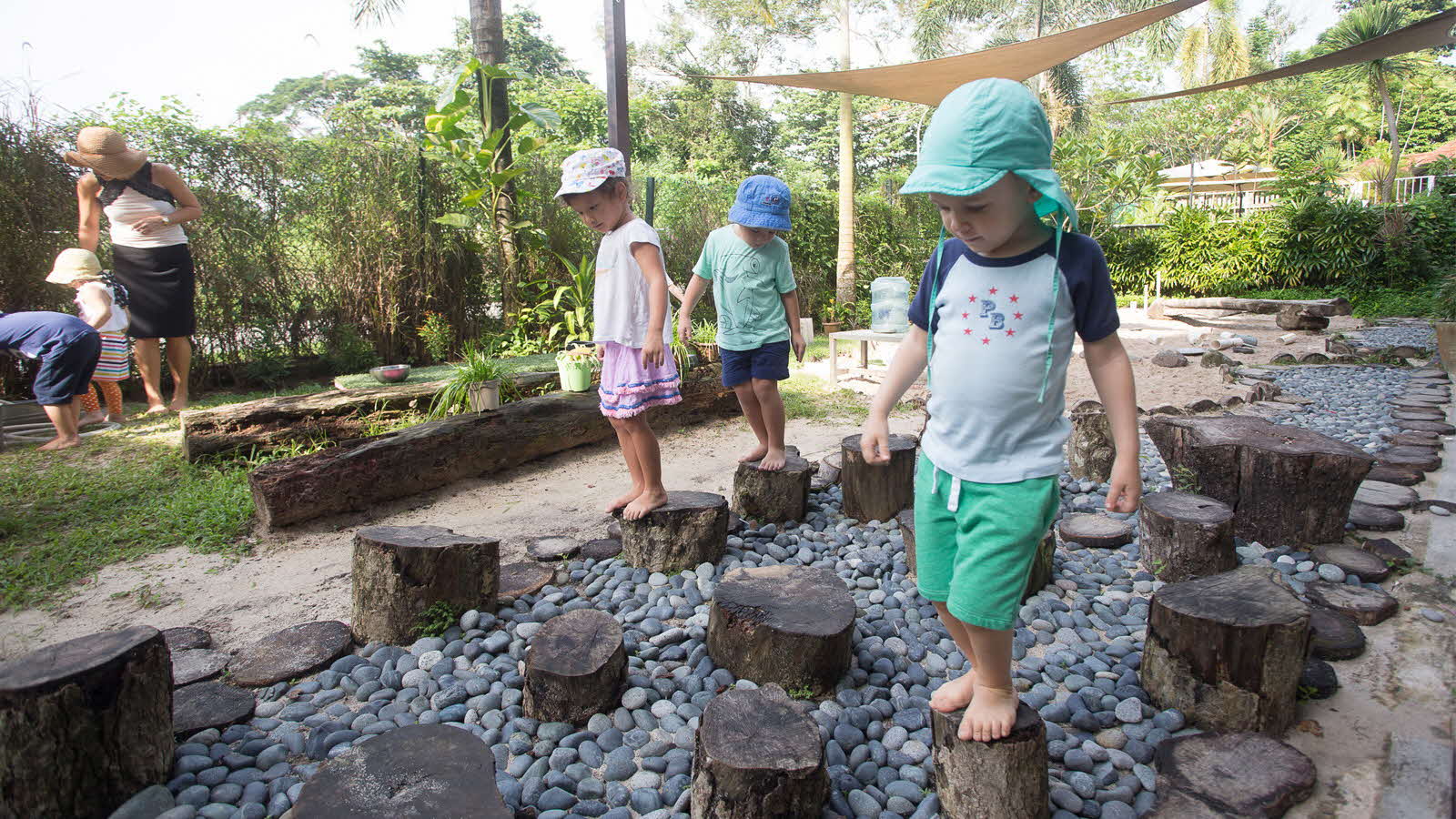
Preschools in Shanghai set aside at least two hours of daily free outdoor play. Instead of typical or fixed playground equipment, children use open-ended materials such as colourful blocks, wooden planks, basins and crates. Children choose what, how and with whom they play, while educators step back to observe and document their experiences and discoveries. Outdoor playtime is followed by reflection sessions in the classroom, where children talk about what they have learned, challenges faced and how these were navigated.
Two ECDA Fellows, Ms Alicia Lim and Ms Stella Pereira, share more insights about true play and how early childhood (EC) educators in Singapore can — with parents’ support — adapt this approach locally.
1TRUE PLAY FOSTERS HOLISTIC DEVELOPMENT
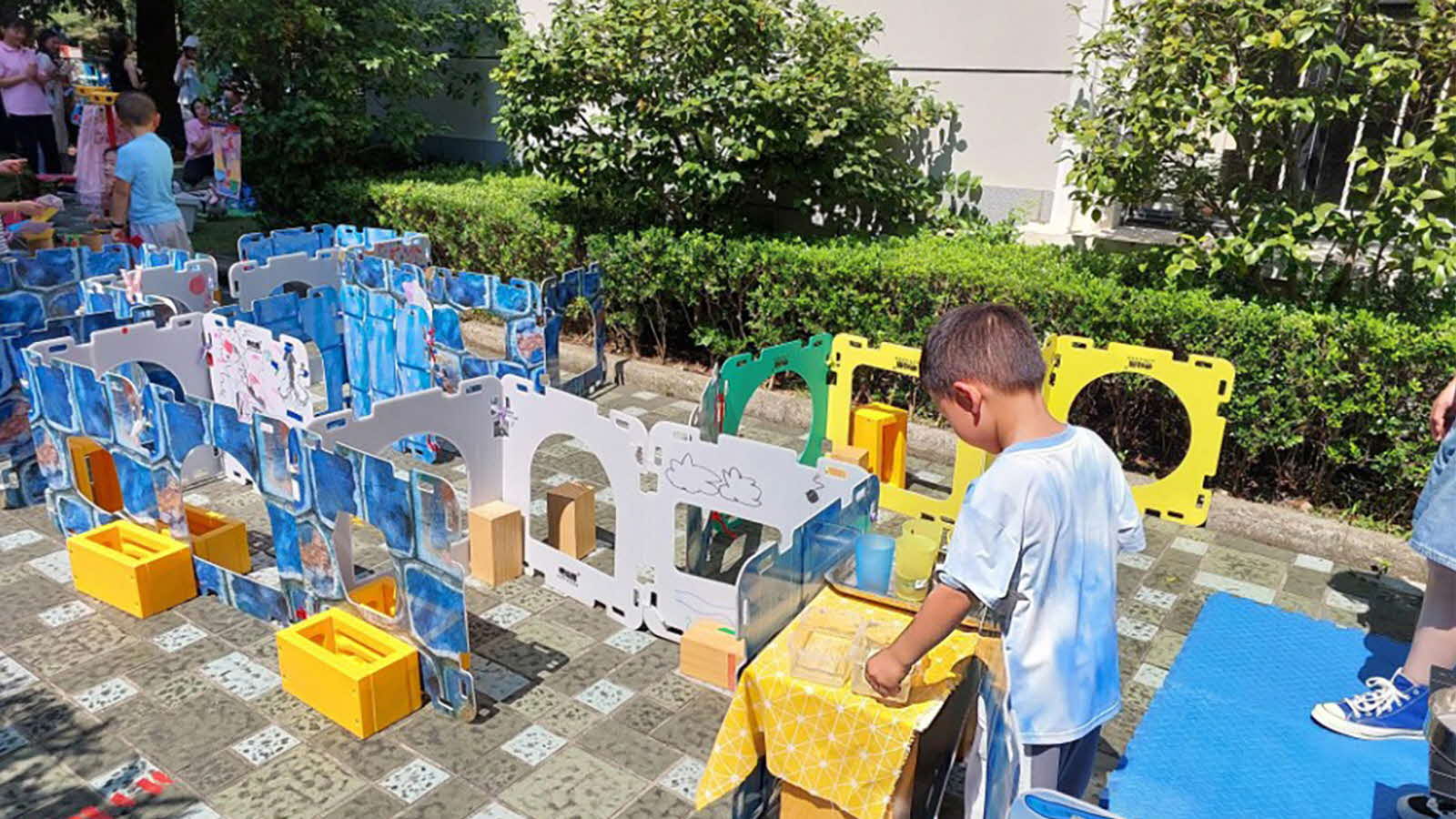 While visiting a kindergarten in Shanghai, ECDA Fellows saw children working together to co-design the outdoor play space and construct a maze. Activities like this nurture all aspects of development, helping them become well-rounded, capable individuals.
When children have freedom to follow their interests and instincts, build imaginative play structures and set their own rules, they are charting individualised learning pathways.
“Every brain is wired differently,” explains Ms Lim. “Letting children explore their own curiosities gives them control over their learning. This boosts their cognitive development, creativity and problem-solving skills.”
The communal and physical aspects of true play also help children build motor and social skills. In addition, the sense of autonomy increases their confidence, self-esteem and emotional well-being.
2RESISTING THE URGE TO INTERVENE EMPOWERS CHILDREN
The ECDA Fellows were struck by how Chinese educators intentionally refrained from ‘helping’ or intervening in children’s play activities. Children were trusted to carry heavy wooden crates by themselves or decide if a plank should be a bridge or a slide, without inputs from teachers.
“Adults tend to constantly remind children to be careful so they don’t fall down, or guide them on what to do next,” says Ms Pereira. “But in an age-appropriate environment and given the opportunity, children will surprise us with their true capabilities.”
3RISKY PLAY IS ABOUT BUILDING RESILIENCE, NOT ATTRACTING HARM
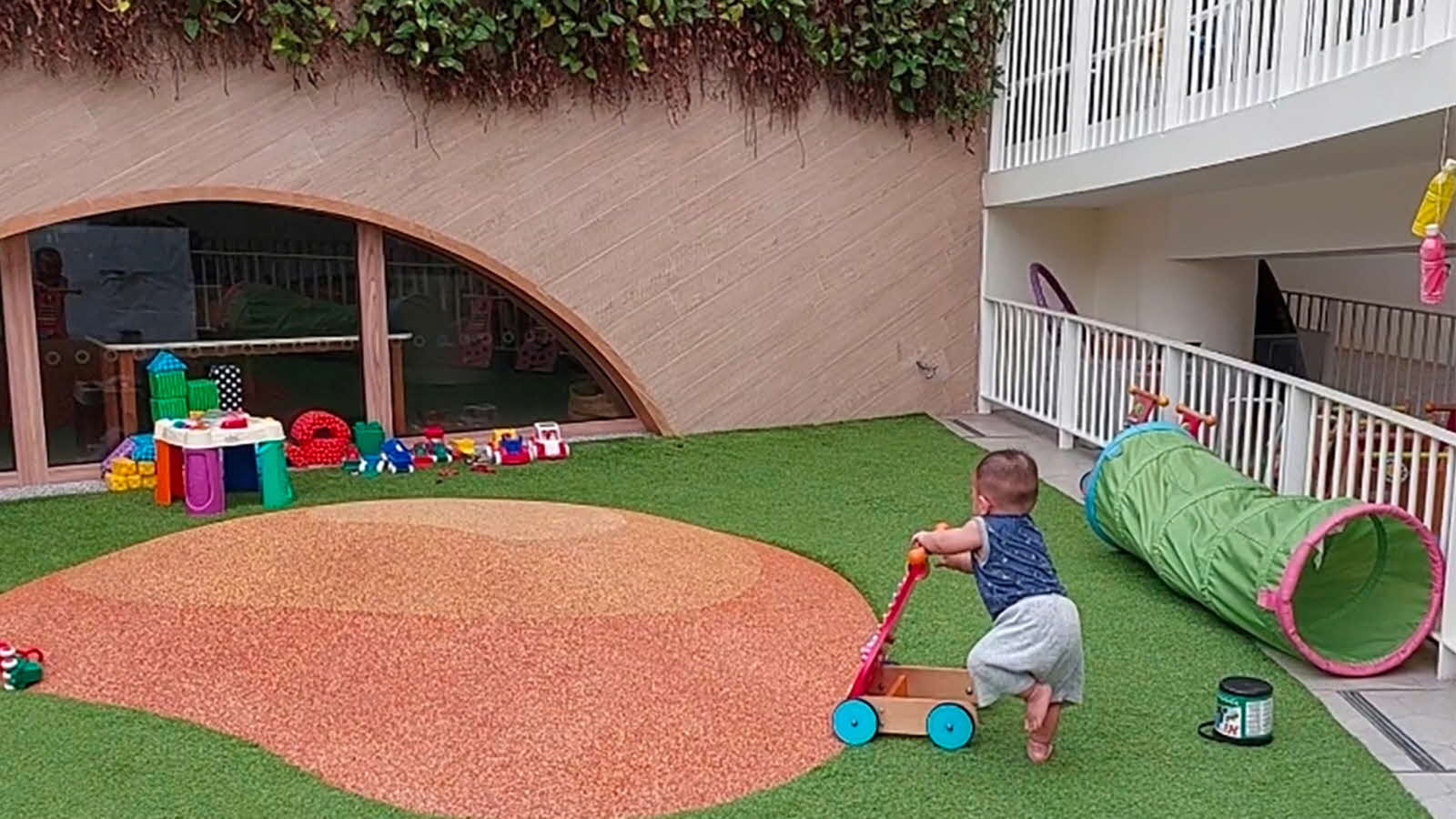 After returning from her study trip, Ms Lim documented this moment of child-initiated play at a PCF Sparkletots centre. The infant demonstrated determination and perseverance as he pushed a cart up a slope, rising to the challenge and learning to manage risk and uncertainty.
True play embraces risk-taking as a way to test boundaries, try new ideas, and learn from mistakes without fear of failure or judgement. This philosophy views children as competent, self-directed learners capable of assessing a situation and taking acceptable risks that stretch their limits and further develop their abilities.
At one of the PCF Sparkletots centres under her care, Ms Lim recalls watching a 10-month-old infant struggle to push a cart up a small slope. Rather than intervening, she observed him trying and taking small steps back whenever he felt himself about to fall. After 10 minutes, he figured out that it was easier to push the cart up the slope while sitting instead of standing.
“Had an adult stopped him from trying out of fear that he might fall, he would not have experimented and learned about balance and persistence,” she explains. “This is what we mean by risky or true play — providing safe opportunities for children to overcome challenges and grow.”
4PARENT INVOLVEMENT AND SUPPORT IS CRUCIAL
In Shanghai, preschools regularly invite parents to observe outdoor play sessions. Families get to see first-hand how their children interact in this environment, and share their thoughts and feedback. This collaboration fosters trust with families and helps them recognise the value of true play.
Ms Pereira believes EC educators in Singapore can adopt similar practices to strengthen the parent-preschool partnership. “Talk to parents about your centre’s focus on child-led play and intended learning goals, and encourage them to voice their concerns,” she suggests. “Invite parents to observe their children in action and see for themselves how play deepens knowledge and skills, contributing to long-term development.”
SHIFTING MINDSETS ABOUT TRUE PLAY REQUIRES PATIENCE
In Singapore, safety often takes precedence over risky play and physical space limitations are a common constraint, making it a challenge to implement true play.
However, change is happening and there are some things EC educators can do. Under Ms Lim’s guidance, a PCF Sparkletots centre replaced structured storytelling and music and movement activities in the morning with two hours of free play. The results were positive — with children showing more joy, higher engagement and visible developmental progress.
But convincing both educators and parents took time. “I had many conversations with teachers to help them understand the purpose of true play and feel confident about ‘letting go’ and trusting children with control. We also talked about safety concerns, parents’ reactions and how to address them,” says Ms Lim. “Sharing videos of children engaged in true play and success stories contributed towards shifting mindsets.”