



ABOUT OUR EXPERT

Dr Chan is a Senior Lecturer at the National Institute of Early Childhood Development – City Campus (NIEC (City)). She teaches social and emotional learning across various certification levels. Dedicated to helping children overcome emotional challenges and promoting well-being, she also inspires early childhood (EC) educators to value self-awareness in their practice.
Planning lessons, facilitating children’s learning and keeping parents informed are all part and parcel of an educator’s job. Amid packed schedules, deadlines and daily classroom challenges, many educators struggle to find balance — affecting their mental health and overall well-being. Feelings of being overwhelmed and self-doubts can start to creep in. They may also experience sleep problems, chronic fatigue and increased absenteeism due to illness.
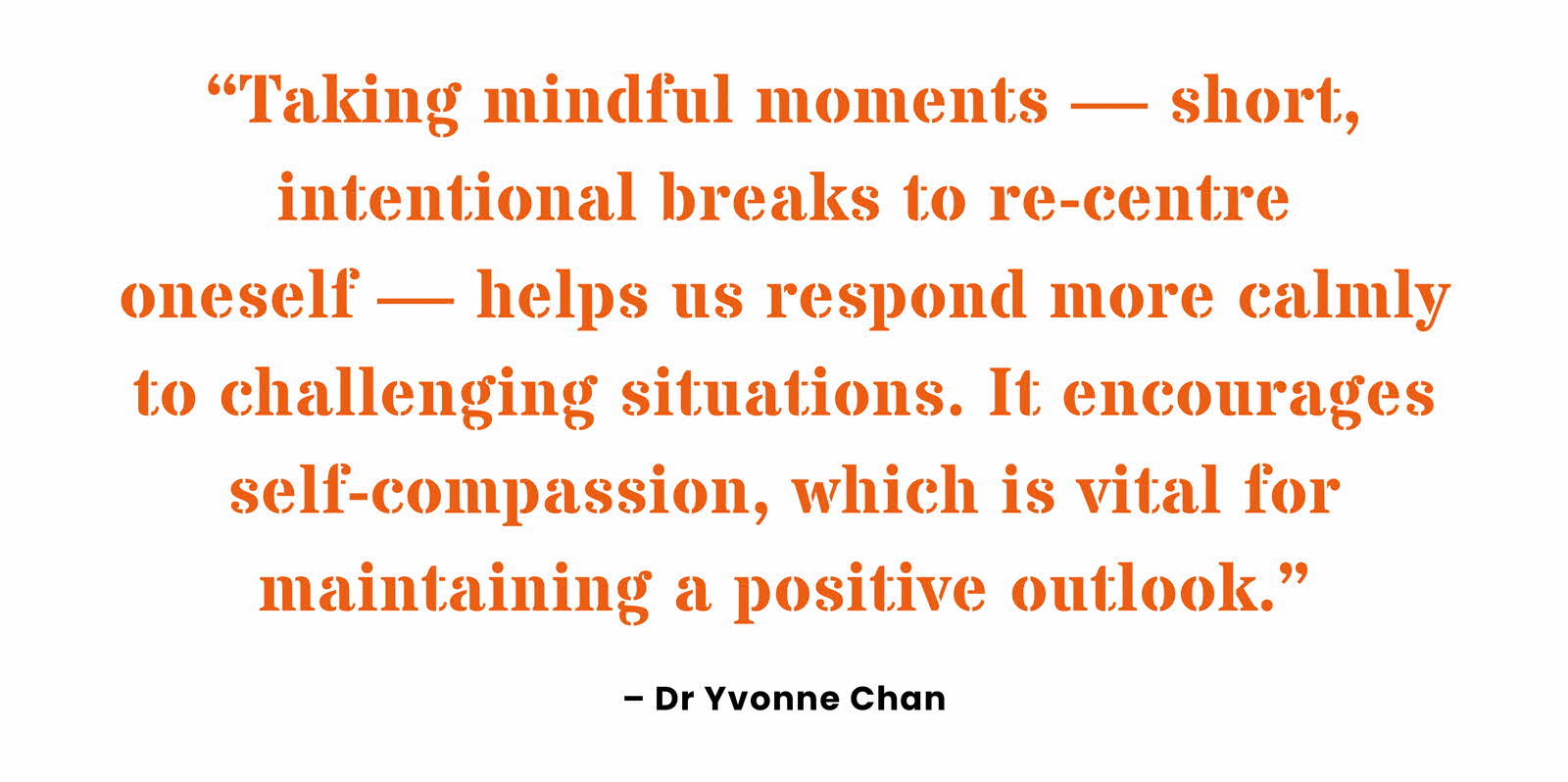
According to Dr Yvonne Chan from NIEC, these are all possible signs of burnout. The antidote? Mindfulness — paying attention to the present moment and acknowledging one’s feelings in a calm, non-judgemental way.
“By maintaining moment-by-moment awareness and observing our thoughts non-judgmentally, we can see what influences our feelings and actions, allowing us to consciously choose how to respond rather than being reactive,” says Dr Chan. “This practice helps break cycles of rumination, leading to greater happiness, focus and emotional regulation.”
She shares five mindfulness strategies that EC educators can easily integrate into their busy day. When educators prioritise self-care and taking time for oneself, they become happier and healthier — strengthening professional resilience, enhancing classroom harmony and modelling social-emotional well-being for children.
1
LISTEN TO YOUR BODY
 Our bodies, like boats, also have anchors. Anchor breathing involves using one’s breath to focus on a particular point and stay present.
Deep breathing exercises get more oxygen to the brain, reduce anxiety and improve focus. It signals safety to the brain, overcoming the ‘fight, flight or freeze’ response. Also called anchor breathing, this technique can be done within two to 10 minutes, making it a quick way to centre yourself before and after class.
Steps for anchor breathing:
- Be seated comfortably. Sit in a quiet spot with your back straight, shoulders relaxed, and eyes closed.
- Pay attention to your breathing. Notice the physical sensations of each inhale and exhale.
- Choose your anchor point. Place your hand where you feel the breath most strongly — your belly, chest or nose — and use this point to stay in the present.
- Return when you wander. Distractions are normal. Instead of getting frustrated, simply note “My mind has wandered” and gently guide your attention back to your anchor point.
LISTEN TO YOUR THOUGHTS
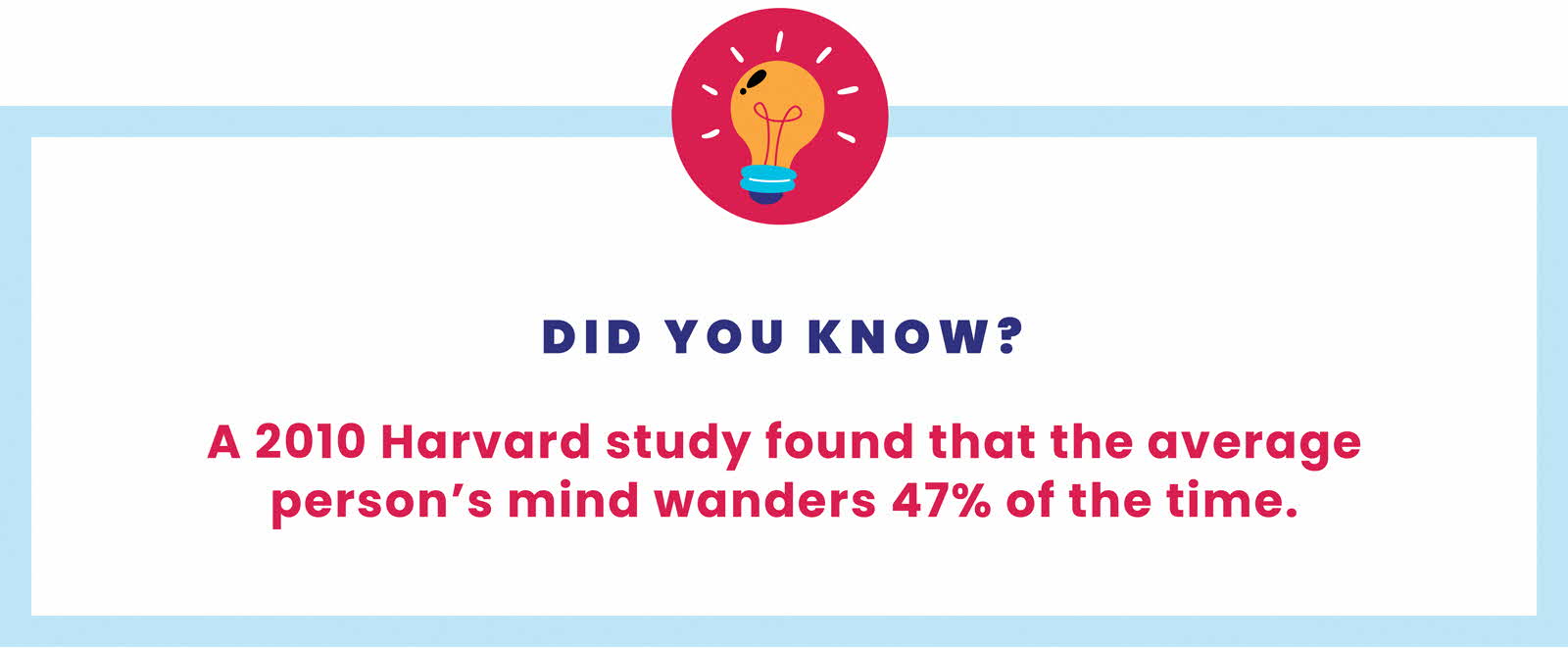
Mind-wandering can affect happiness, especially when our thoughts drift toward worries, self-criticism or other forms of psychological pain. To loosen the grip of intrusive or unhelpful thoughts, Dr Chan suggests using a simple cue: “Tell your wandering mind, ‘Tap Tap’, and bring your focus back to the present.”
Recognising one’s thoughts as just thoughts help us step away from distorted narratives, leading to greater clarity and confidence.
CREATE A PERSONAL MANTRA
Craft a simple, positive phrase to repeat during stressful moments. For example, when juggling multiple deadlines, tell yourself, “I can do it!”. To ease worries about the future, say “Be here now” or “Today I will not stress over things I can’t control.”
Repeating meaningful affirmations regularly can counter anxiety, rewire negative thought patterns, and reinforce helpful beliefs and emotional resilience.
4BUILD HIGH-QUALITY CONNECTIONS IN THE WORKPLACE
 Strong work relationships can help avoid burnout and positively impact job satisfaction and performance.
When you feel overwhelmed at work, talking to a colleague about the stress or collaborating with others can help.
To build mindful, strong connections with colleagues:
- Improve respectful engagement. Be present and responsive during conversations. Listen without judgement or criticism, and value others’ perspectives.
- Facilitate task enabling. Help colleagues perform their roles well, and ask for assistance or support when you need it.
- Deepen mutual trust. Be reliable, regulate your emotions and be genuine in interactions.
- Encourage play. Engage in light-hearted, creative interactions to strengthen rapport.
KEEP A REFLECTION LOG
Journalling your thoughts, feelings and experiences helps you process events, recognise triggers and observe patterns. Regular reflection fosters self-awareness, boosts gratitude and supports emotional well-being.
Steps for better journalling:
- Reflect on both positive and challenging moments in your life.
- Use prompts such as “What made me feel joyful or engaged today?”, “What am I grateful for?” or “What is one small accomplishment I achieved today?”.
- Be a non-judgemental observer of your own thoughts and emotions.


