



Passionate early childhood (EC) educators are always thinking about the children they care for. Ms Jeanne Tan knows this well. As Principal of My First Skool at Block 409 Jurong West, she works tirelessly with her staff to constantly reflect on how to improve teaching and learning practices.
In 2023, the team decided to address a challenge close to every educator’s heart: helping little children manage big emotions. They wanted to look deeper into this issue through the lens of Practitioner Inquiry (PI) — a process where educators systematically study their own practice to enhance teaching and learning in the classroom.
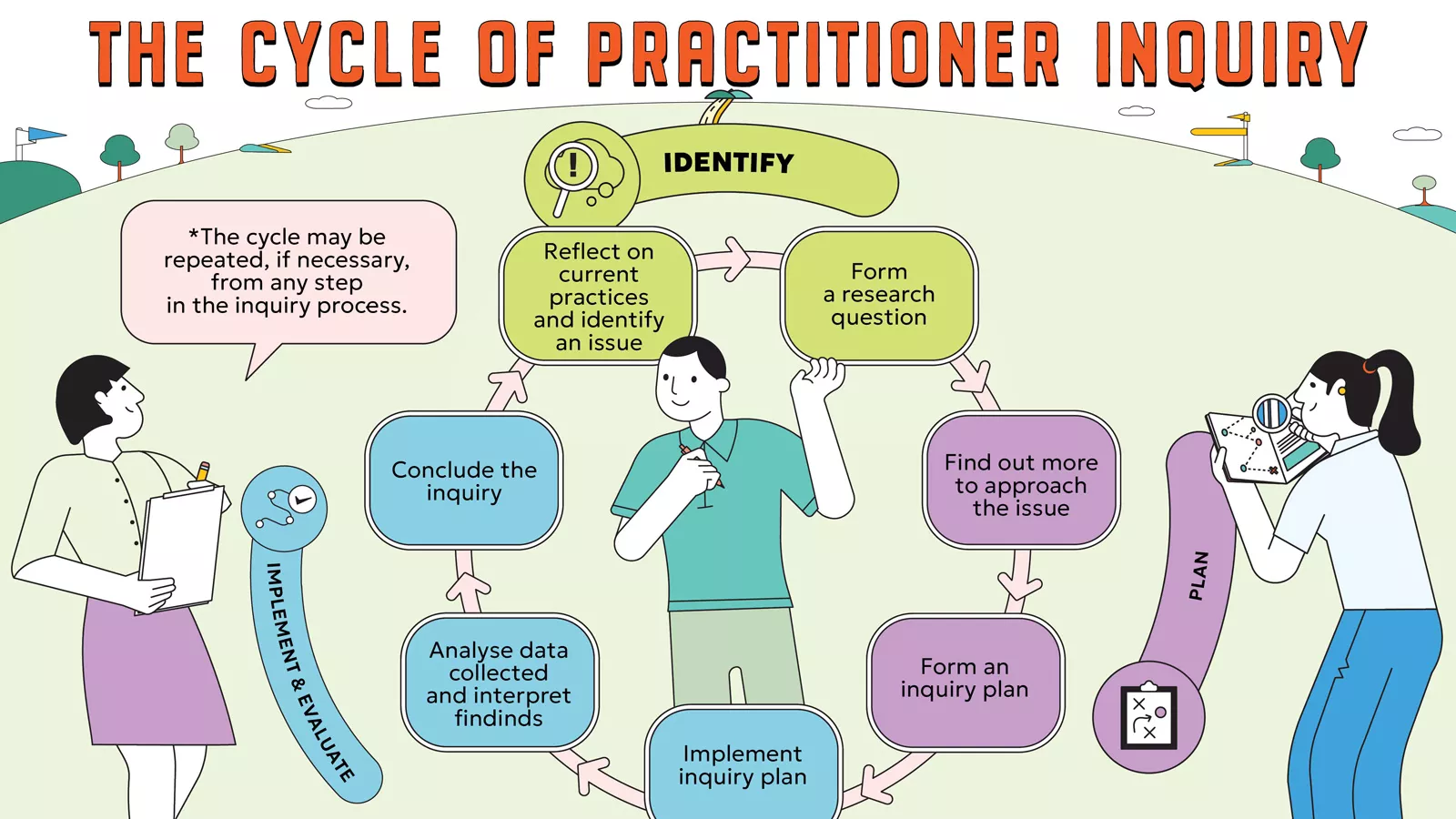 The Cycle of PI is a structured process where educators identify the issue to form a research question, plan and implement strategies in response to that question, and evaluate the strategies used.
To guide their efforts in implementing PI effectively, Ms Tan’s centre partnered ECDA in piloting a professional development resource — the PI Starter Kit, which is now available to all preschools. Ms Tan shares what her team learned and why every educator can benefit from embarking on their own PI journey.
1
ROADMAP FOR DEEPER EXPLORATION
The PI project began when educators observed children struggling to manage their emotions and would often end up crying, screaming or shouting. They wanted to equip the children with strategies to express their emotions. During brainstorming, the educators came up with creative ideas.
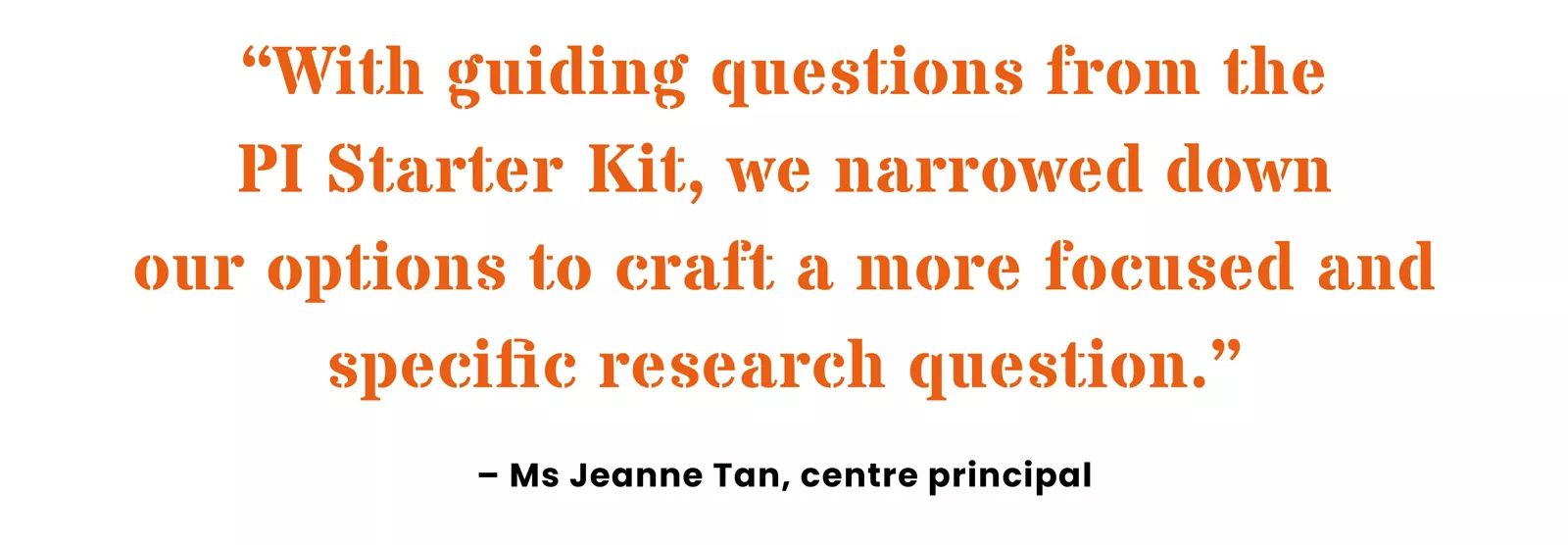
“It hit us that too many ideas could overwhelm the children instead of empowering them,” says Ms Tan. So, the team did research and literature review to refine their ideas and narrowed their focus — to explore the use of an emotion chart and set up a calming corner, both designed to help children identify and manage their emotions.
2
BOOSTING COLLABORATION AND CLARITY
A key tip in the PI Starter Kit is to form a team of about three to five like-minded colleagues, ideally with at least one experienced member. The team lead helps ensure members are clear about their roles and responsibilities, sets the project timeline and deadlines, schedules regular check-ins, and fosters open and respectful communication throughout the PI journey.
“This collaborative approach made a real difference and supported the team throughout the journey,” explains Ms Tan. “We exchanged ideas and had meaningful discussions about our children — the challenges they faced and the possible solutions. Our collective effort built a shared understanding and deepened our commitment to continual improvement.”
3
A CYCLE OF LEARNING IN ACTION
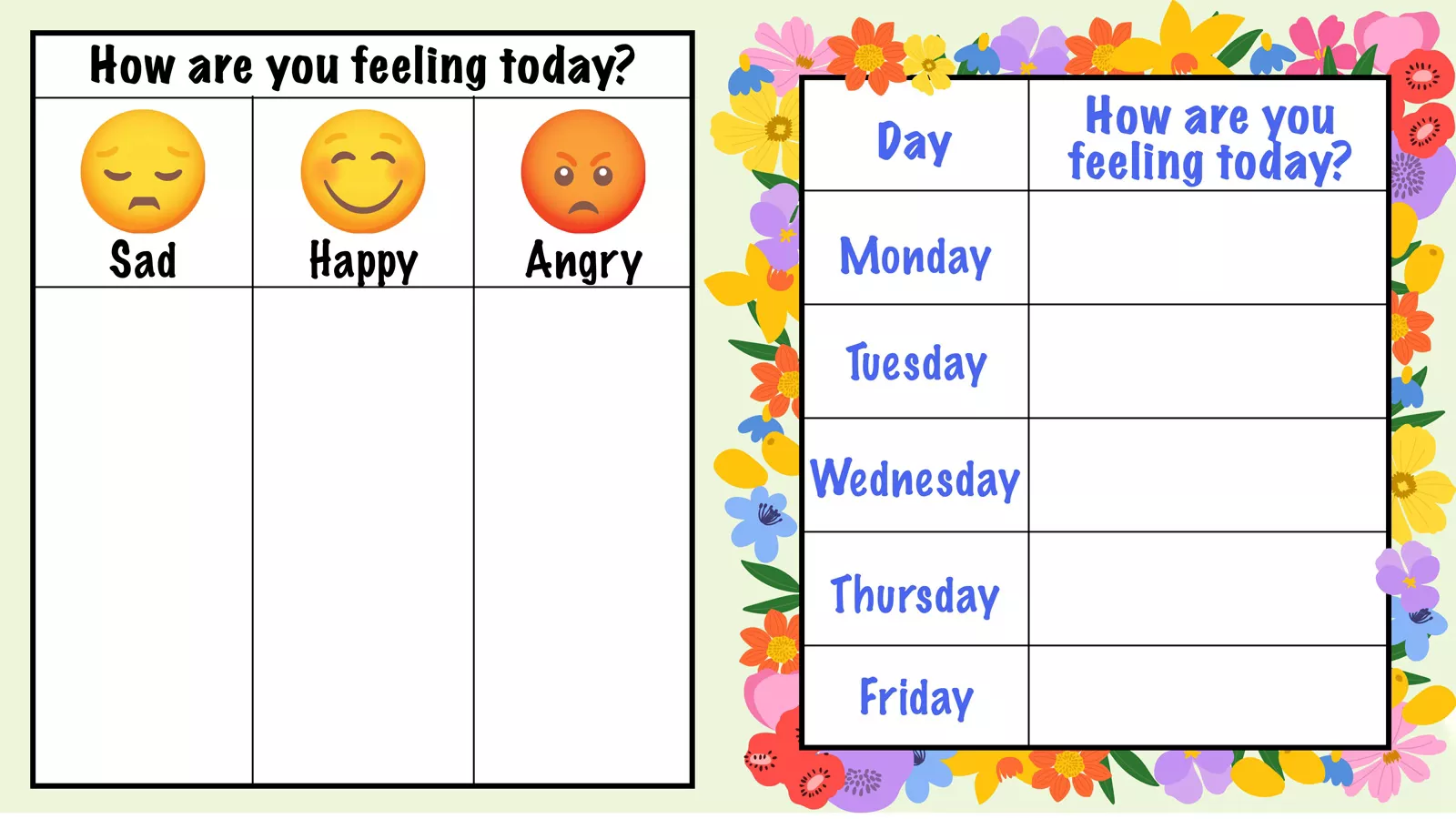 By tracking and monitoring their implementation progress, Ms Tan’s team adapted the initial emotion chart used (left) to allow for more open-ended responses (right).
The first emotion chart featured three basic emotions: happy, sad and angry. Children placed their photos beside the corresponding feelings on the chart. As educators kept track and interpreted the findings, they realised this was too limited and revised their chart.
With the new chart, the children were able to include more expressive drawings and new feeling words (e.g. “surprised”, “average”) at any time during the day. While talking to the children about what they had drawn, educators encouraged them to identify their feelings and why they felt a certain way — cultivating emotional self-awareness, a crucial skill for managing one’s emotions.
4
TRACKING OUTCOMES WITH DATA
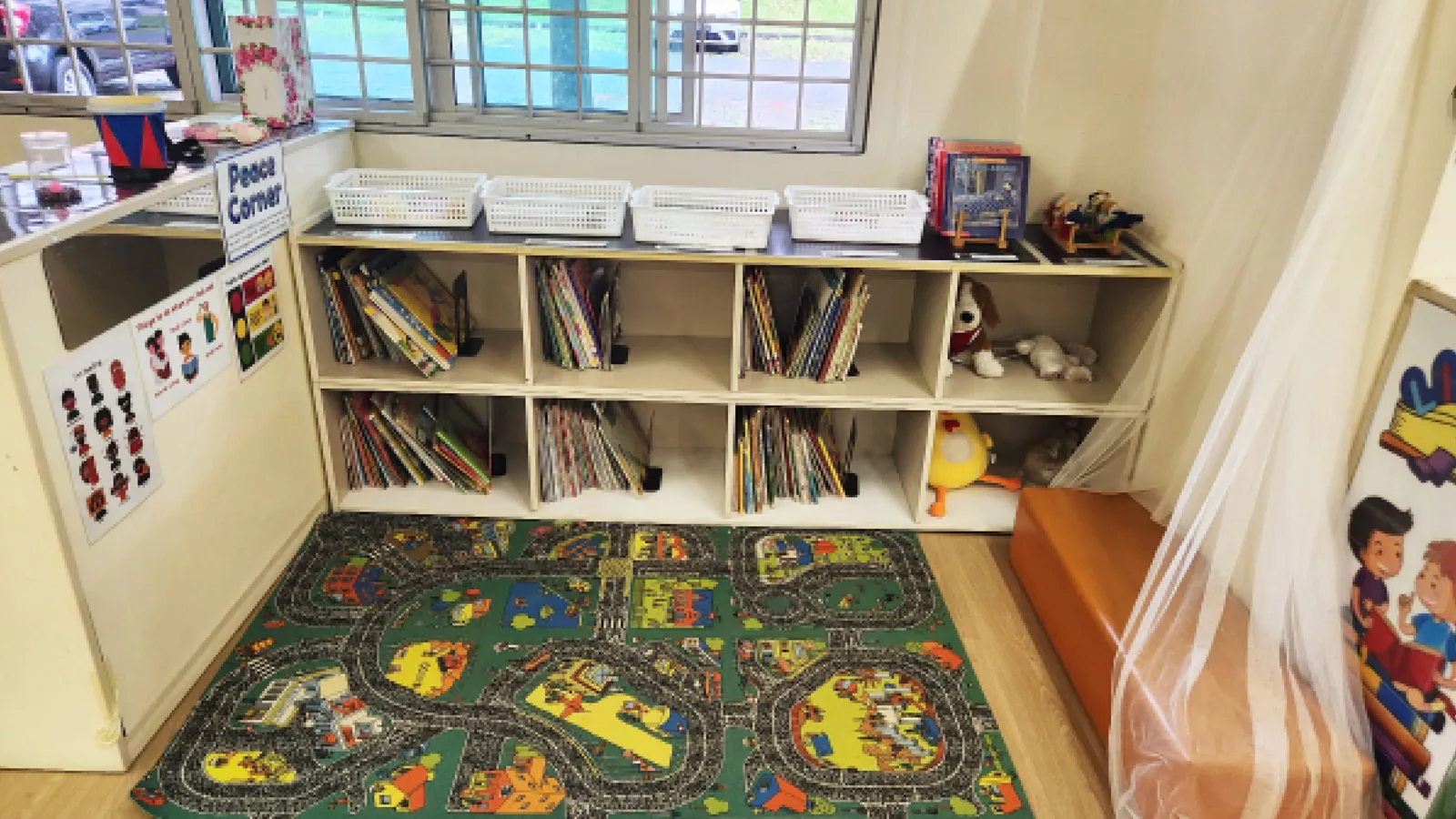 The centre’s calming corner, equipped with materials such as books, soft toys, games and breathing techniques, proved effective in helping children learn to manage their emotions more constructively.
The PI Starter Kit helped Ms Tan’s team think more critically about data collection and analysis. “We recognised the importance of collecting data both before and after our implementation to measure improvements,” she says. “We had to decide on the type of data — quantitative, qualitative or a mix of both — and who our sources should be.
“We sought the children’s perspectives to understand how well they could identify and manage their emotions. We also gathered observations and insights from class educators, who interacted daily with the children.”
By analysing the data as the project progressed, the team fine-tuned their strategies, updating the emotion chart and introducing new activities to better support the children. “Over time, children became more confident in identifying their emotions and expressing them in appropriate ways,” Ms Tan recalls. “They visited the calming corner at least once a day, where they explored tools like breathing exercises or engaging stories to help them manage their emotions.”
5
CONTINUOUS REFLECTION FUELS GROWTH
“This journey reinforced the importance of a thoughtful, data-driven approach to PI,” says Ms Tan. “The process involved a lot of back-and-forth. It was a dynamic cycle of planning, implementation and evaluation. Using ECDA’s PI Starter Kit sharpened our focus and prompted deeper reflection, leading to innovative solutions to foster emotional intelligence in children.”
To other EC educators, she recommends PI as a powerful platform for professional growth: “It encourages us to be more reflective and intentional in our practices, bringing deeper meaning to our work and sparking continuous improvement.”


