
When six-year-old Rose Vinnarasi Parthiban says Vanakkam (Tamil for “hello”) to her mother after preschool, it may appear to be a simple greeting. But for her mother, Ms Christina Pillanthran, it is a sign that Rose is gaining confidence in using the language of her heritage.
“At home, we’ve started to communicate more in Tamil,” says Ms Pillanthran. “It is very important to me that Rose learns her mother tongue. I believe it helps her stay connected to our cultural roots, traditions and identity. Speaking in Tamil also helps Rose build stronger relationships with older family members, especially her grandparents.”
A lot of the credit, she shares, goes to Rose’s preschool, PCF Sparkletots Preschool @ Hong Kah North Blk 338 (CC). It is one of many centres participating in ECDA’s initiative to expand the provision of Mother Tongue Language (MTL) lessons through non-traditional classroom models, including virtual classes, to address issues of varying demand and limited qualified teachers in some preschools.
MEETING A GROWING NEED
In 2024, ECDA and Anchor Operators (AOPs) piloted an initiative to explore innovative approaches to MTL educator deployment and lesson delivery in selected preschools.
The traditional approach of face-to-face lessons delivered by a dedicated educator is complemented by:
- Roving MTL educators serving multiple centres
- Mixed-age classes for smaller groups of children
- Virtual MTL lessons for older age groups
Together, these approaches enable more sustainable MTL provision, reaching more children across preschools. Strong partnership and open communication with families is also essential.
BALANCING QUALITY AND FLEXIBILITY
All three alternative approaches are offered at PCF Sparkletots Preschool, one of the AOPs.
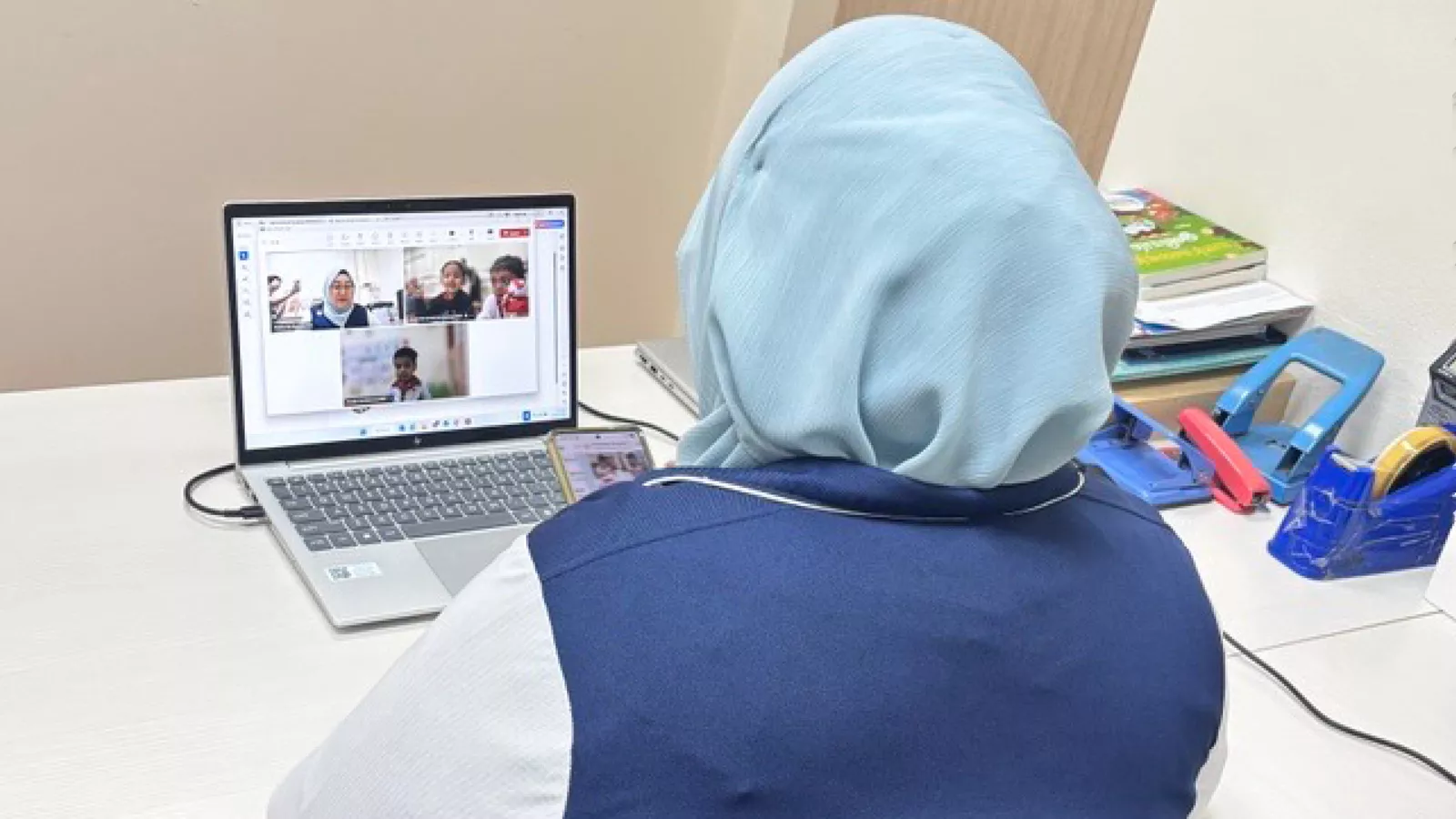 Like most centres, PCF Sparkletots Preschool’s use of virtual lessons predates the pilot initiative and started during the COVID-19 pandemic.
“Currently, we have one Tamil Language teacher who roves between two centres within walking distance of each other,” says Ms Penny Quek, Lead Executive Principal, PCF Sparkletots Preschool. This proximity circumvents manpower constraints and allows children at both centres to see their educator every day for face-to-face MTL lessons.
Mixed-age classes have the advantage of encouraging peer support, she notes. “In this environment, young children can learn from older peers who serve as role models. Successful implementation requires educators to carefully design lesson content and adjust the duration of activities to meet the diverse needs of learners across different age groups.”
As for virtual lessons, the AOP organises training workshops and sharing sessions to equip MTL educators with e-pedagogical skills. Guidance is provided on environmental setup, hardware readiness, as well as essential soft skills like tone of voice and body language. Strong language modelling skills, such as clear pronunciation and expressiveness, are emphasised to reinforce the words taught virtually.
To help MTL educators with content planning, PCF Sparkletots’ language specialists curate and prepare PowerPoint slides, videos and e-resources that align with curriculum goals. “We are also mindful of the recommended national screen time guidelines and ensure that our lessons adhere to them,” adds Ms Quek.
AN EDUCATOR’S PERSPECTIVE
Mr Lesalan Bathmanathan, a Tamil Language educator at PCF Sparkletots Preschool @ West Coast Blk 728 (KN), has explored all three modes of teaching under the pilot. While the methods may differ, he points out that they all share the same goal — to nurture children’s interest in MTL and their cultural heritage, and to develop foundational language skills.
For mixed-age classes, the key is to tailor content to the different age groups. “I adapt activities to match their respective developmental levels and encourage meaningful participation,” says Mr Lesalan. “For example, after a values-based storytelling session, older children can engage in a ‘Conscience Alley’ activity to practise perspective-taking, while younger children express their understanding through drawing or role-play.”
When it comes to virtual lessons, some strategies to keep children engaged include:
- Dedicating a conducive space, with minimal distractions, to conduct the virtual session
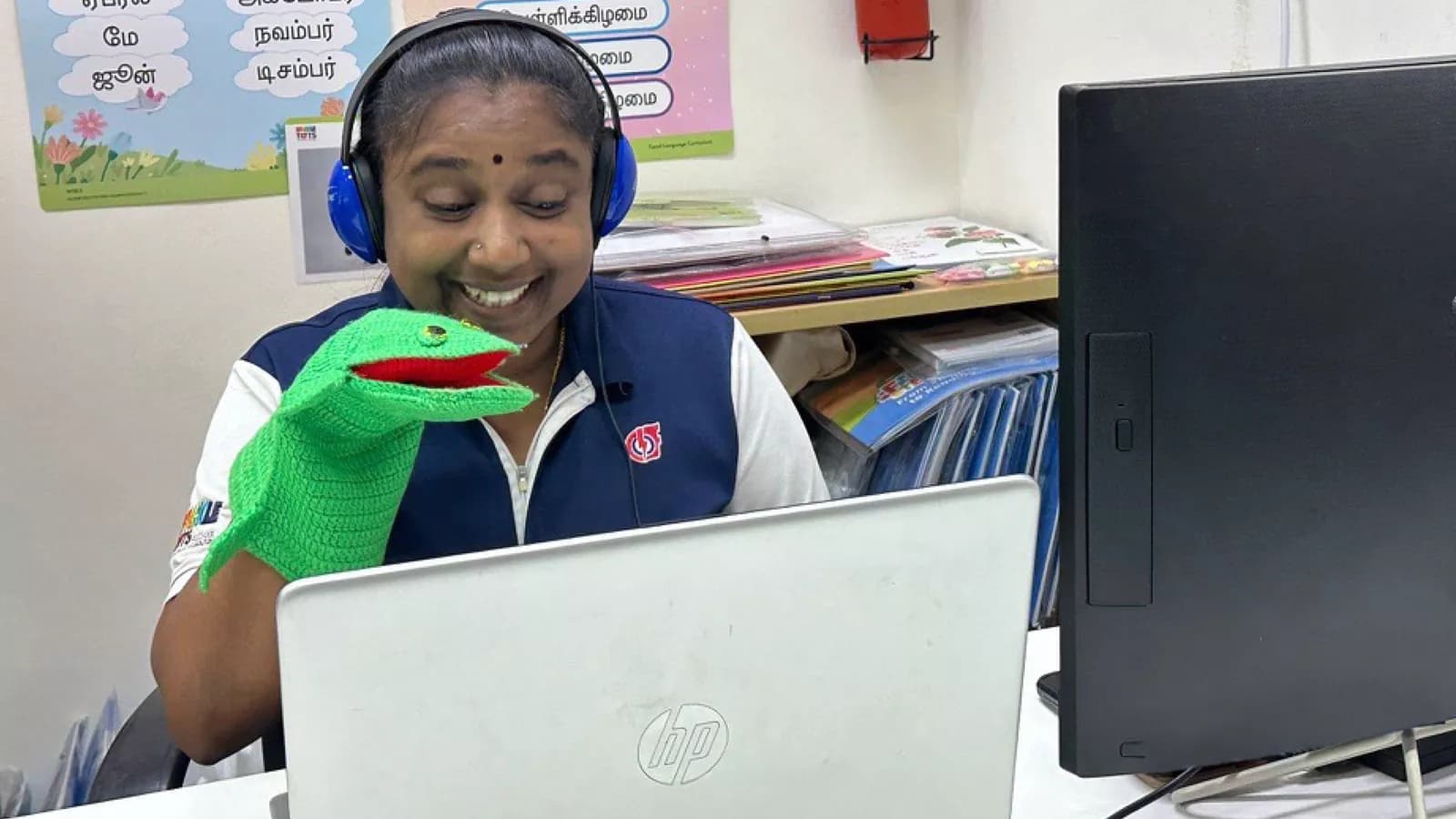
- Using expressive tones or puppets to make storytelling more lively
- Introducing simple songs, movement breaks or short games to bring back their attention
- Incorporating hands-on activities such as art and craft projects, or getting children to form letters with playdough
- Planning for follow-up activities like journalling, where class assistants help track the children’s progress and share updates
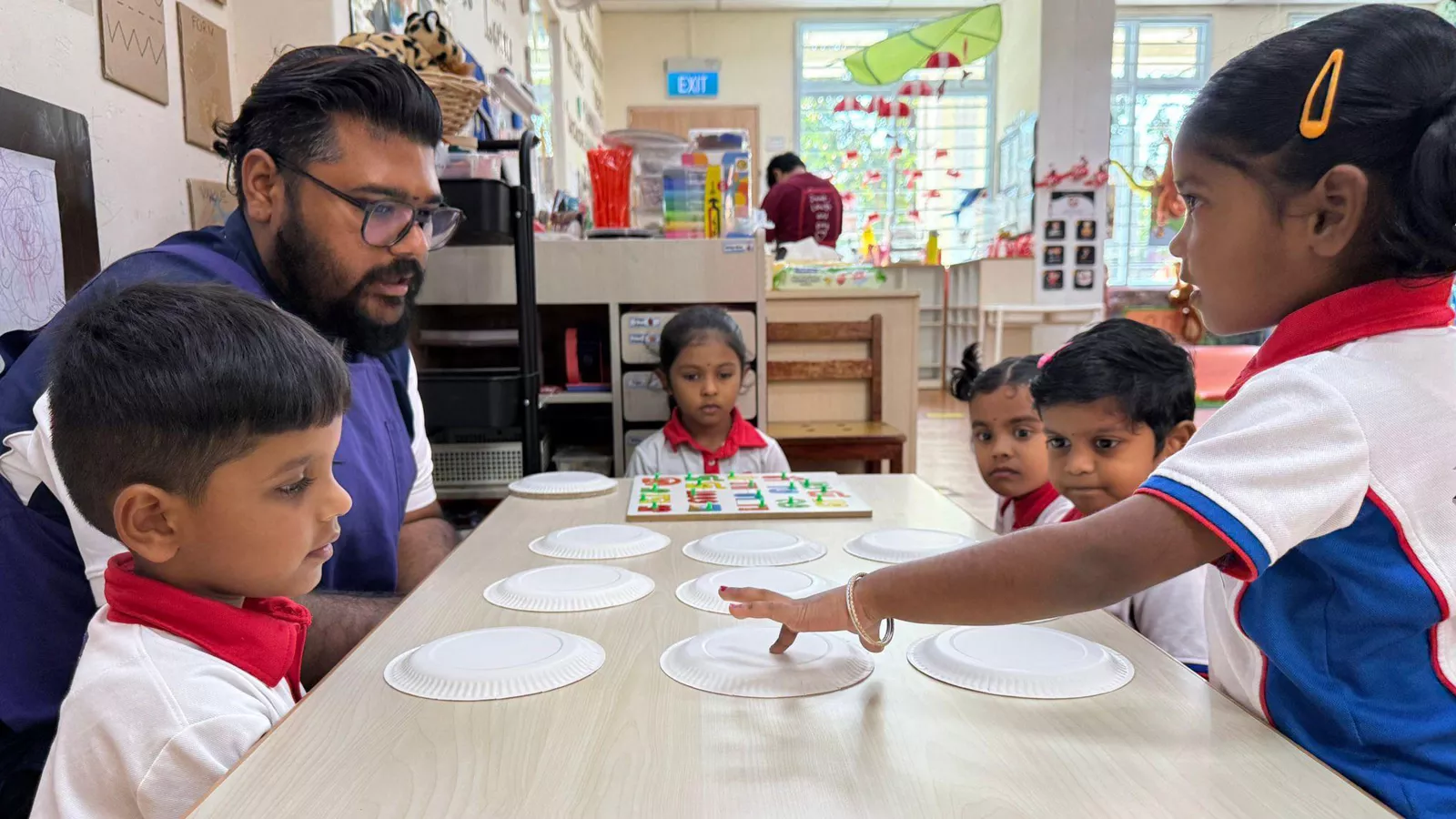 Tamil Language teacher Mr Lesalan schedules monthly centre visits to see the children he teaches virtually and assess their learning progress in person.
Even with virtual lessons, in-person visits are still critical. “I visit the centres at least once a month, so that children in my virtual classes have opportunities to interact with me face-to-face,” says Mr Lesalan. “I use this time for activities that might otherwise be limited by screen, such as those involving group play, peer interaction and physical engagement.”
REACTION FROM PARENTS
Ms Pillanthran admits to being initially sceptical about the pilot. Open communication with her child’s preschool and educators made a big difference in changing her mind.
“At first, I was concerned about how effective the alternative models — especially virtual lessons — would be,” she recalls. “Rose’s teachers patiently explained how the programme is structured to support each child’s learning pace. They also provided regular updates on her progress. This helped me feel more confident about the pilot and its benefits for Rose’s MTL learning.
“Rose now speaks Tamil more frequently at home and tries to use it in daily conversations with family members. She can recognise more words in storybooks and enjoys singing Tamil songs. She is no longer shy or hesitant to use the language, even when she makes mistakes.”
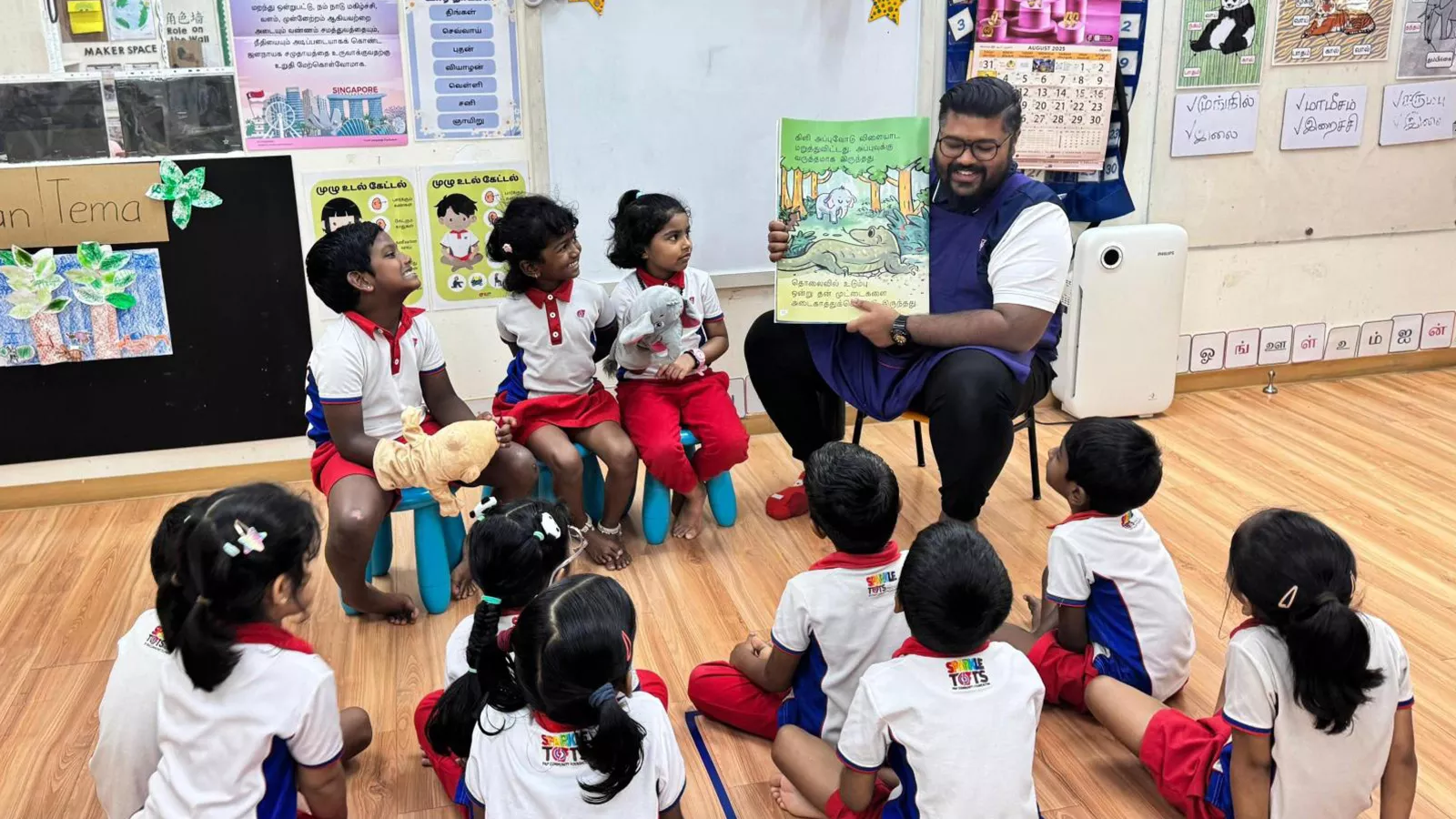 With positive feedback from participants, more preschools are expected to join the initiative to expand MTL provision through alternative service models.
As more preschools adopt new approaches to MTL provision, the collective efforts of educators and families can help children like Rose grow up connected to their roots and learn to use their mother tongue with confidence.