



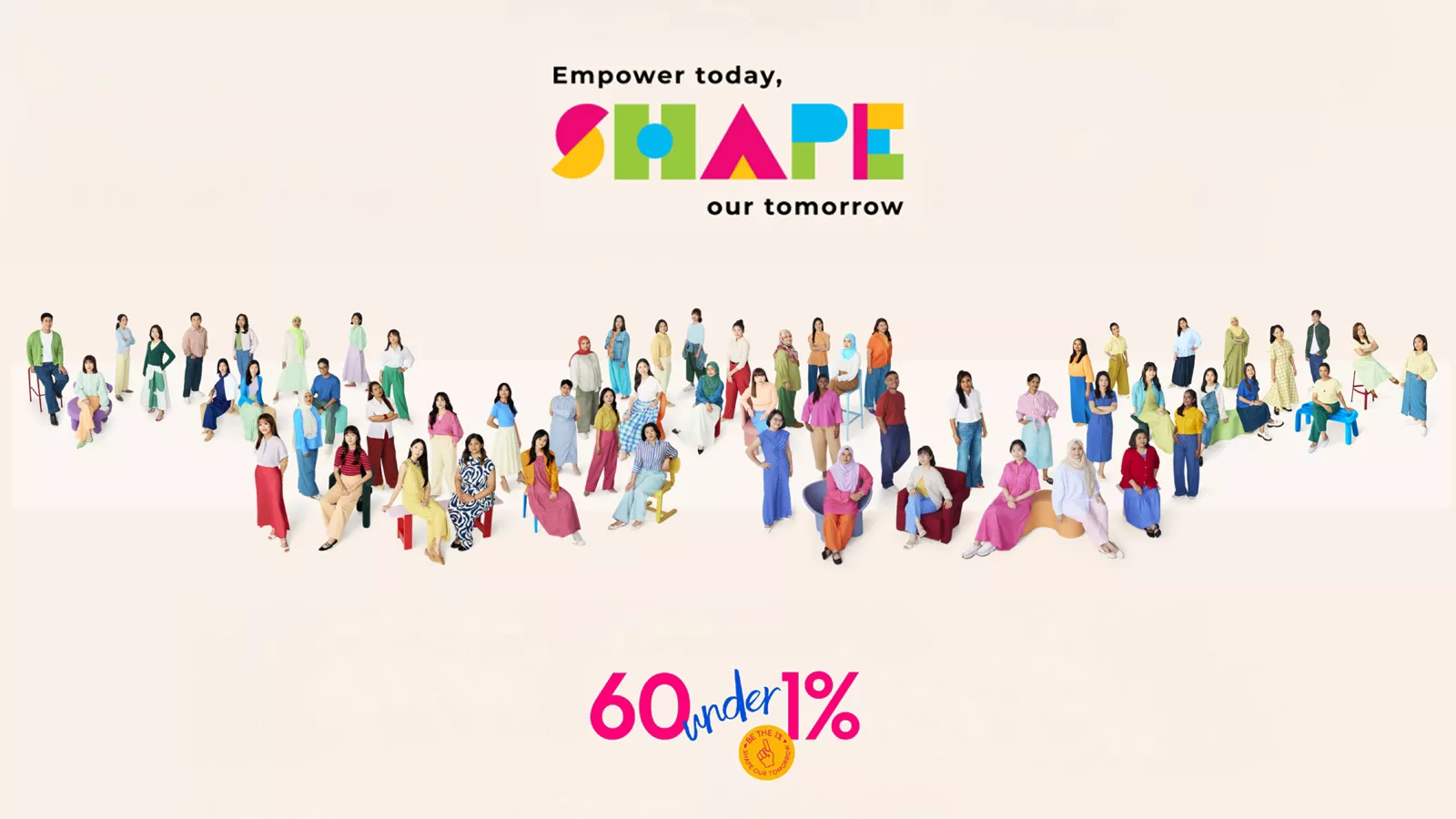

Early childhood (EC) and early intervention (EI) educators make up about 1% of Singapore's workforce. Yet, their work has a 100% difference on our future, as they play an important role in nurturing the next generation.
ECDA's 'Shape Our Tomorrow' campaign, launched in 2018, sought to promote greater understanding about the EC sector and attract more talents to be preschool educators. In 2024, the campaign was refreshed with a new tagline, 'Empower Today, Shape Our Tomorrow', to further improve public perceptions about the sector and drive deeper conversations on the importance of parent-preschool partnership on children's holistic development.
The refreshed campaign this year brings attention to real-life stories of EC professionals across various roles beyond classroom teaching and showcases the joys and challenges they face. Besides being a preschool educator, there are different roles in the sector working together to support the learning and development of young children, spanning from mother tongue language, early intervention and infant care to curriculum development.
More than 60 educators were involved in the 2025 'Shape Our Tomorrow' campaign through videos and outdoor advertisements. They are the face of the sector to champion the extraordinary profession of being an EC or EI educator. We hear from two of them here — their experiences representing the sector, how they feel about the crucial work they do, and their hopes for stronger parent-preschool partnerships to support children's holistic development.
FUN, HARD WORK
Ms Kok Xiu Wen, 26, a preschool educator at Shaws Preschool @ Lorong Chuan, recently marked three years of working in the EC sector. Even before that, she was already aware of the joys and challenges of the occupation, having vicariously experienced them through her mother, a preschool teacher.
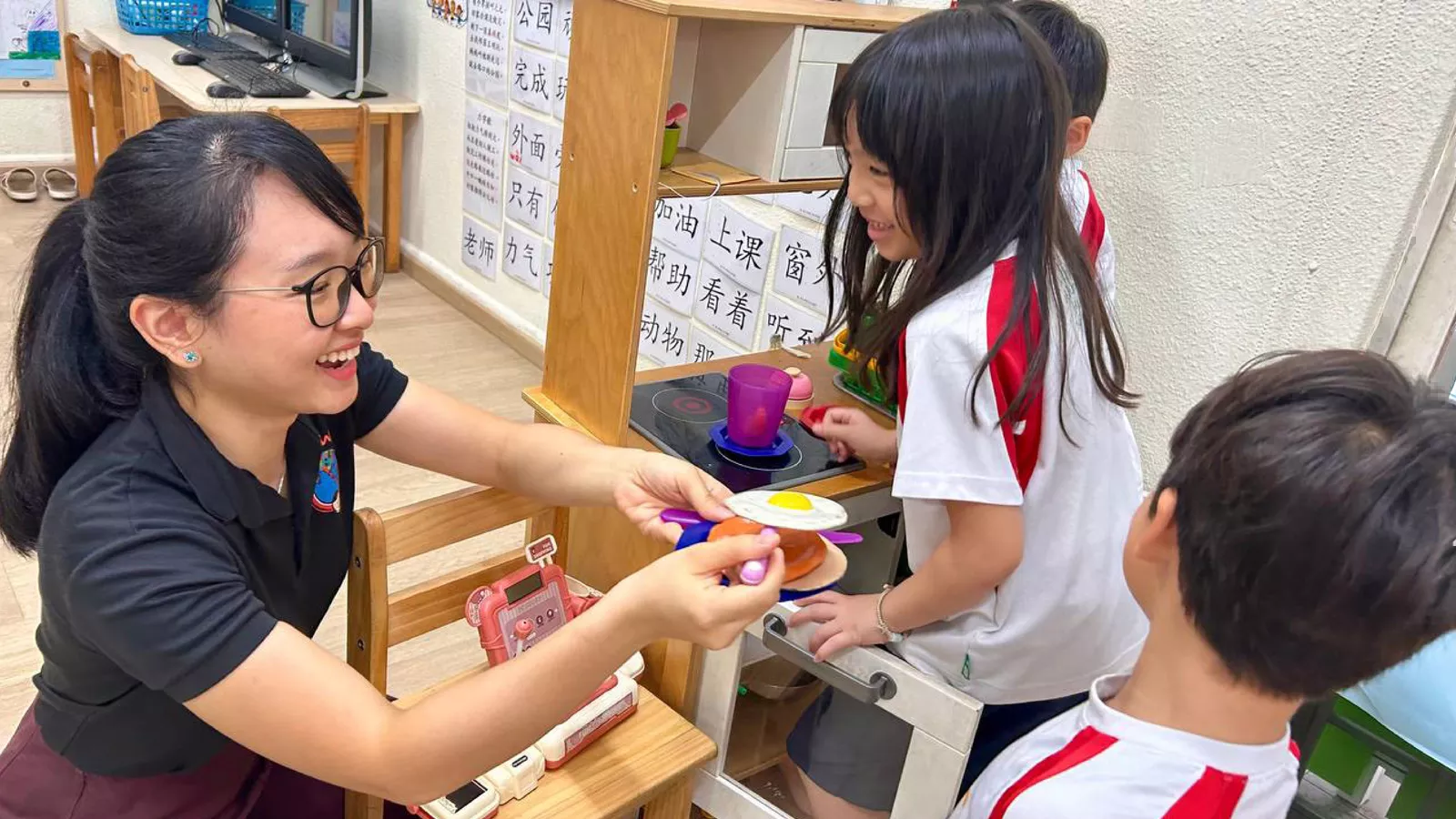 Preschool educator Ms Kok Xiu Wen loves being with children and, from them, has learned to be more playful and imaginative.
Her mother was initially wary when Ms Kok chose to study EC education at university. “She knew firsthand how tough the job can be, even if it is meaningful,” says Ms Kok, who nonetheless stuck with her decision. Today, her mother couldn’t be prouder of Ms Kok’s achievements and the fulfilment she has found at work.
“The shared passion and support among the preschool teaching fraternity keep me going,” shares Ms Kok. She finds assurance in her support system, especially during challenging times. “From my experience, parents are also more understanding and appreciative of the work we do. They are mindful of our workload and respectful of our working hours, rather than calling us late at night.”
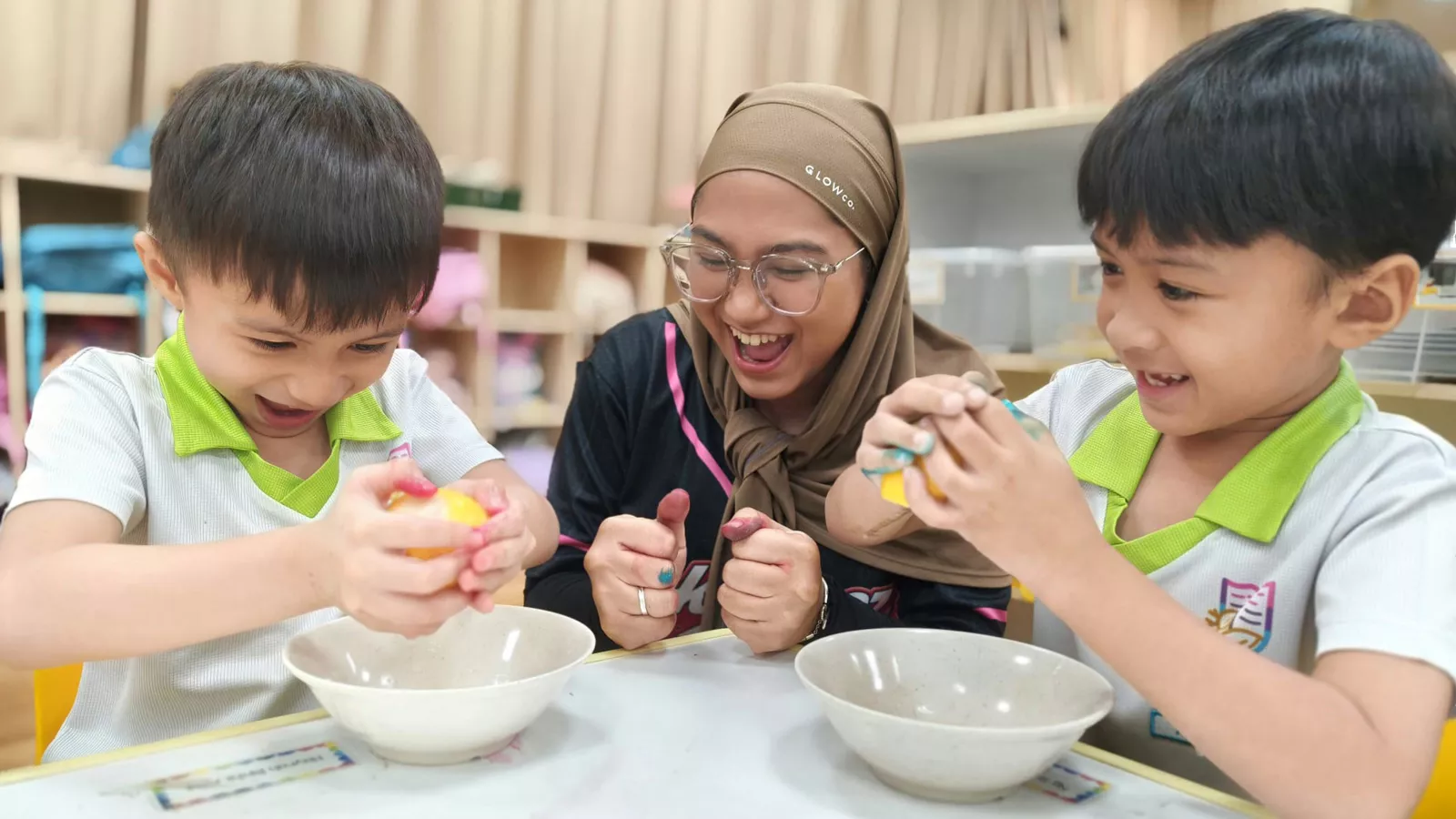
The children’s interests inform Ms Kok’s lesson plans. For example, after her K2 class expressed curiosity about the reticulated python, she designed inquiry-based learning experiences around it, including an excursion to the zoo. In one activity, the children used different body parts to squeeze water out of soaked sponges, mimicking how a reticulated python would constrict its prey.
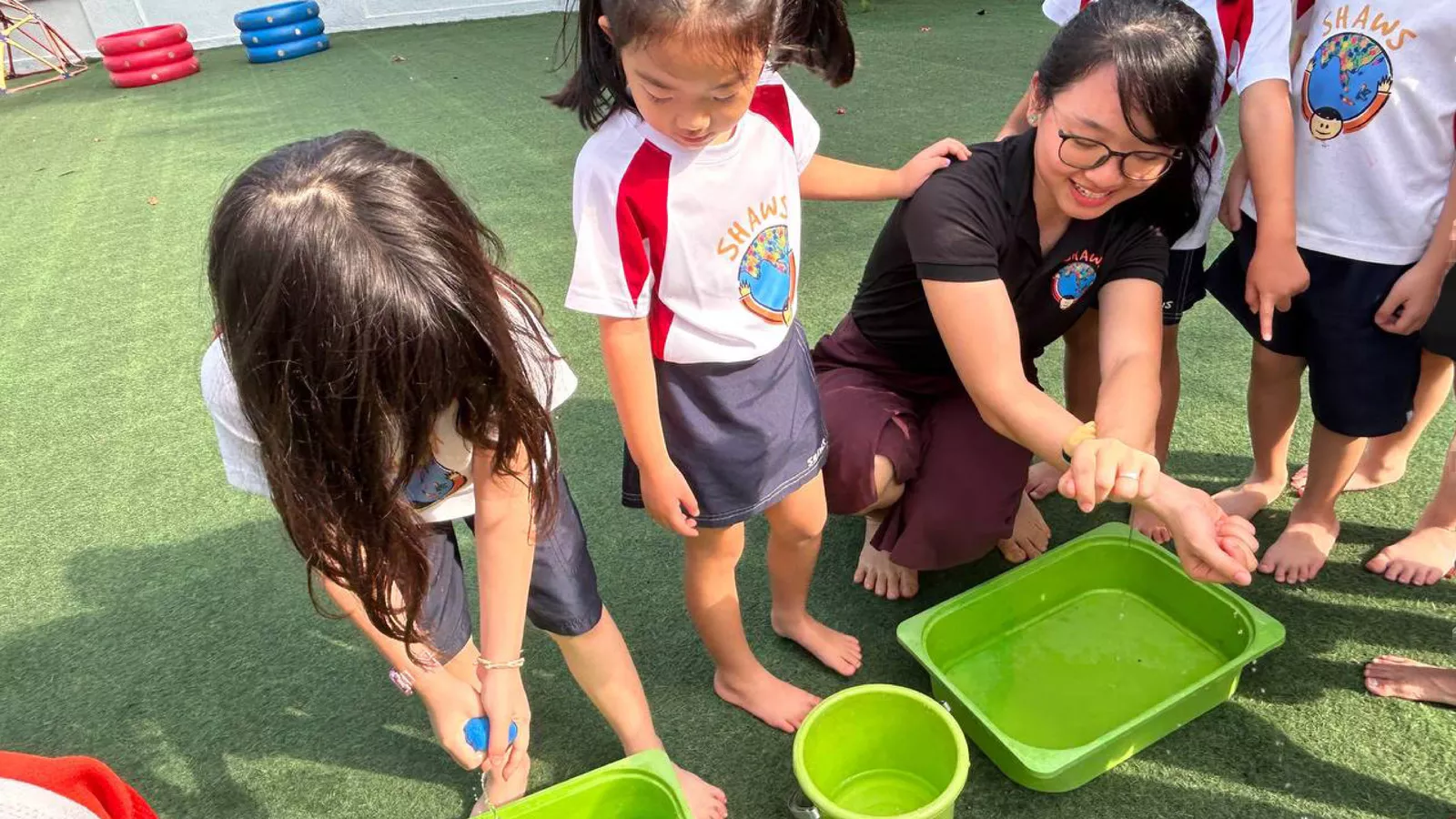 Children had fun pretending to be reticulated pythons while squeezing wet sponges with different body parts, in addition to stimulating their senses.
Fun, hard work is how Ms Kok describes her role. “As preschool educators, we create purposeful play possibilities for children based on learning goals,” she explains. “I take pride in making learning fun, concrete and engaging for them, and I love being constantly challenged to come up with new ideas.”
Ms Kok adds that it’s not just about teaching the ABCs and 123s, but helping children grow into kind, caring and compassionate individuals. Moments like seeing children comfort their friends when they cry give her much fulfilment. “It’s important to build positive values in children. I hope they grow up confident and have a heart for others.”
OVERCOMING DOUBTERS
Mr Kishure Kumar, 39, has been an EI educator at Cerebral Palsy Alliance Singapore (CPAS) since 2014. Prior to that, he worked with adults with special needs. “There was a big difference between those who had received EI and those who had not — in terms of their ability to communicate, perform tasks independently and interact with others,” he recalls. Seeing the positive, lifelong impact of EI up close motivated him to make a career pivot and work with young children.
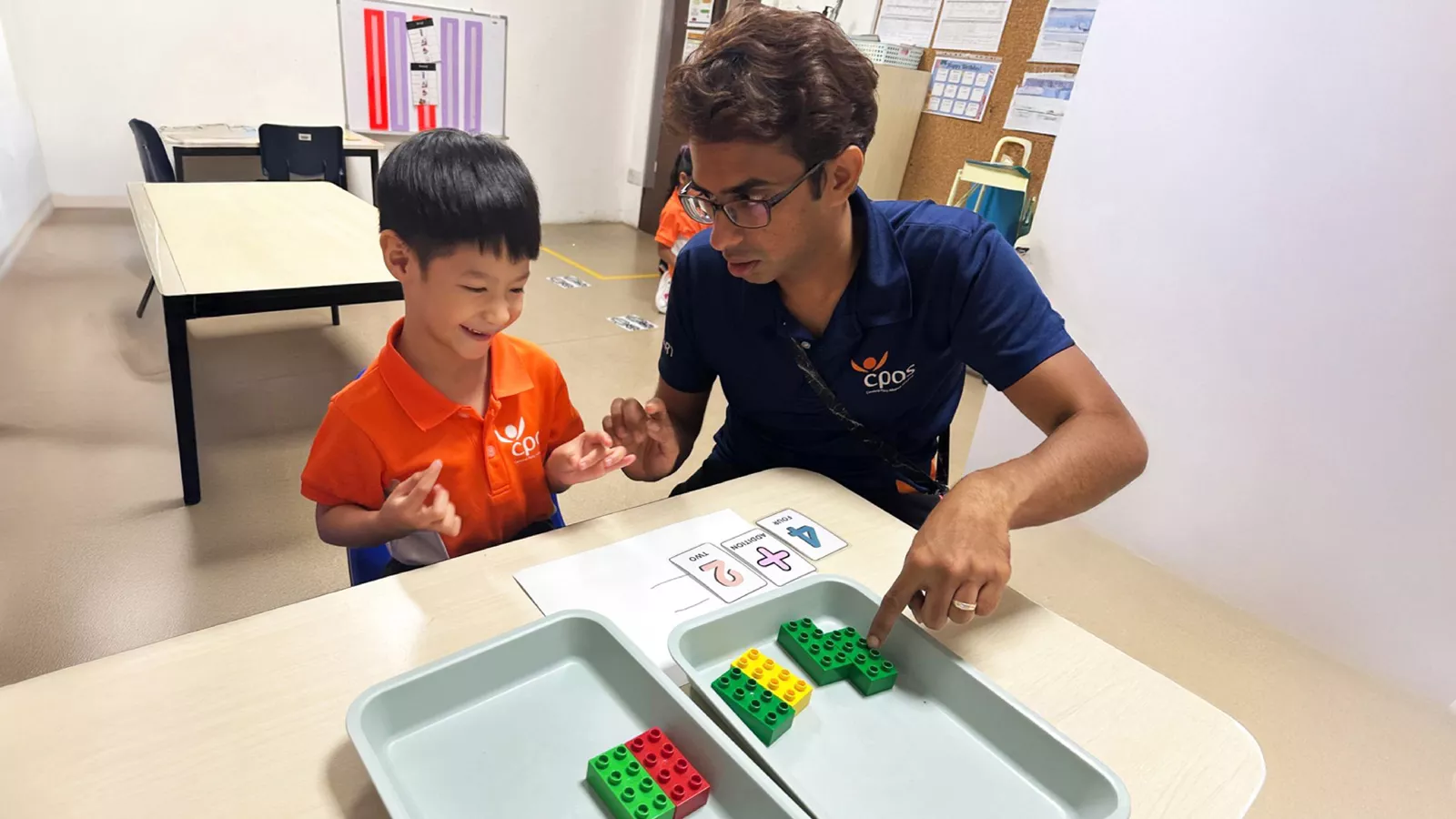 Early interventionist Mr Kishure Kumar often uses tangible objects, such as Lego bricks for simple addition, to help children grasp concepts and enjoy learning.
Mr Kishure is part of the Early Intervention Programme for Infants and Children (EIPIC) at CPAS, where he mainly works with children aged five and six diagnosed with autism spectrum disorder, global developmental delay or other forms of cognitive impairment. Depending on the child’s needs, he designs learning activities to help them develop foundational skills in areas such as language, literacy and numeracy.
His early years as a new EI educator had its share of challenges, not least beating gender stereotypes in joining a female-dominated profession. Parents doubted whether Mr Kishure could foster a warm, nurturing learning environment, and some questioned the centre leader: “Why did you hire a male teacher to care for my child?”.
It took time, but Mr Kishure eventually won over parents once they observed how their children were developing well under his guidance. Today, he continues to prove that male teachers can and do succeed as EI educators.
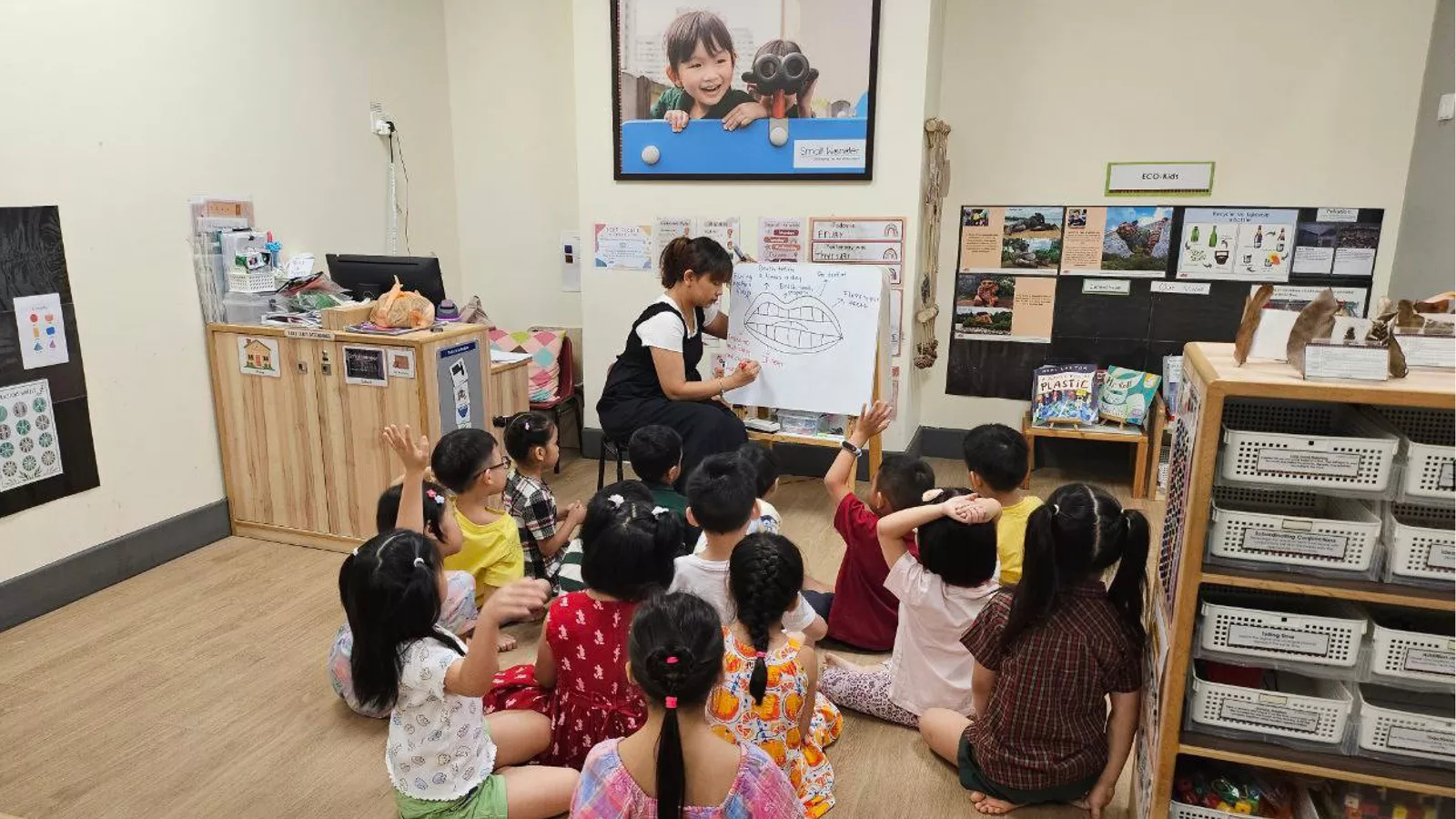
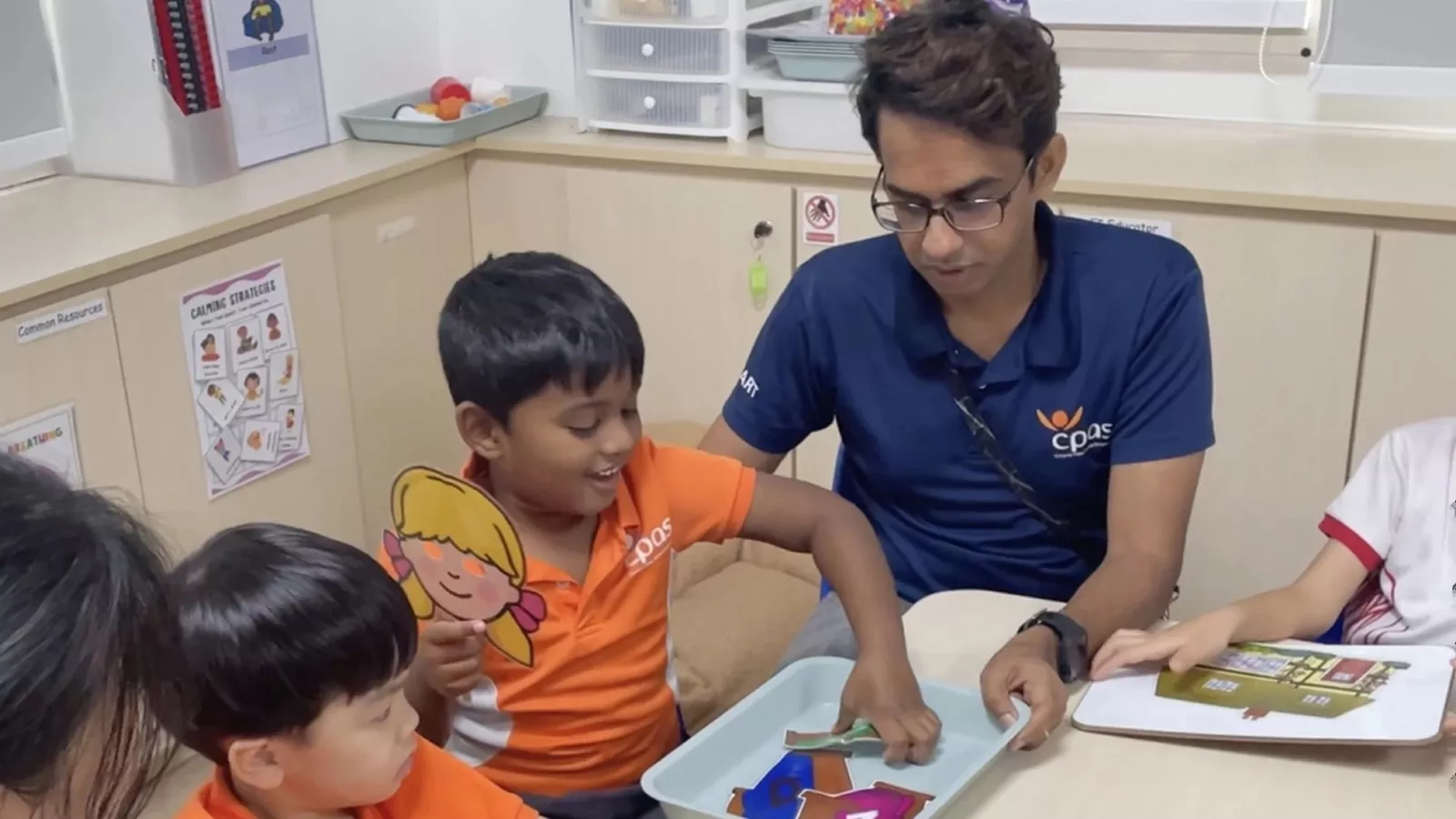 To make storytelling sessions more interactive, Mr Kishure provides visual aids that children can use to recount the tale in their own words.
“Over the years, I’ve worked with children with different conditions and learning profiles,” he shares. “Not only is my job gratifying, but I’m also constantly learning new teaching strategies and upgrading my skills.”
“While dramatic improvements may not necessarily happen during the few years children are in EIPIC, I am confident that the work we do shapes their future,” says Mr Kishure. EIPIC also offers family-centred support through parent and caregiver training, further enhancing learning outcomes.