
Then four-year-old Woon Xin Yi would attend preschool fitted with a hearing aid and a feeding tube in her nose. Born with a long-term heart condition, she grappled with hearing loss and feeding issues.
“Xin Yi was self-conscious at first as the devices were visible to her peers,” recalls her mother, Ms Kow Bi Xia. “But she grew to live with it.” Today, Xin Yi is seven years old and in Primary 1. While she still wears a hearing aid, she no longer needs a feeding tube. She is optimistic, independent and feisty.
Ms Kow gives a lot of credit to Xin Yi’s educators at M.Y World @ McNair Towers for her daughter’s growth. “The preschool years helped Xin Yi build her confidence,” she says. With her second daughter enrolled in the same preschool, she and her husband, Mr Woon Qingyong, have worked closely with the educators and trusted them to create a caring and inclusive learning environment for their children.
It is this commitment to a strong parent-preschool partnership that prompted centre principal Ms Sandhya Rubegan to nominate the couple for the ‘Our Wonderful Parents’ initiative, organised by Preschool Market and supported by ECDA and Singapore Kindness Movement.
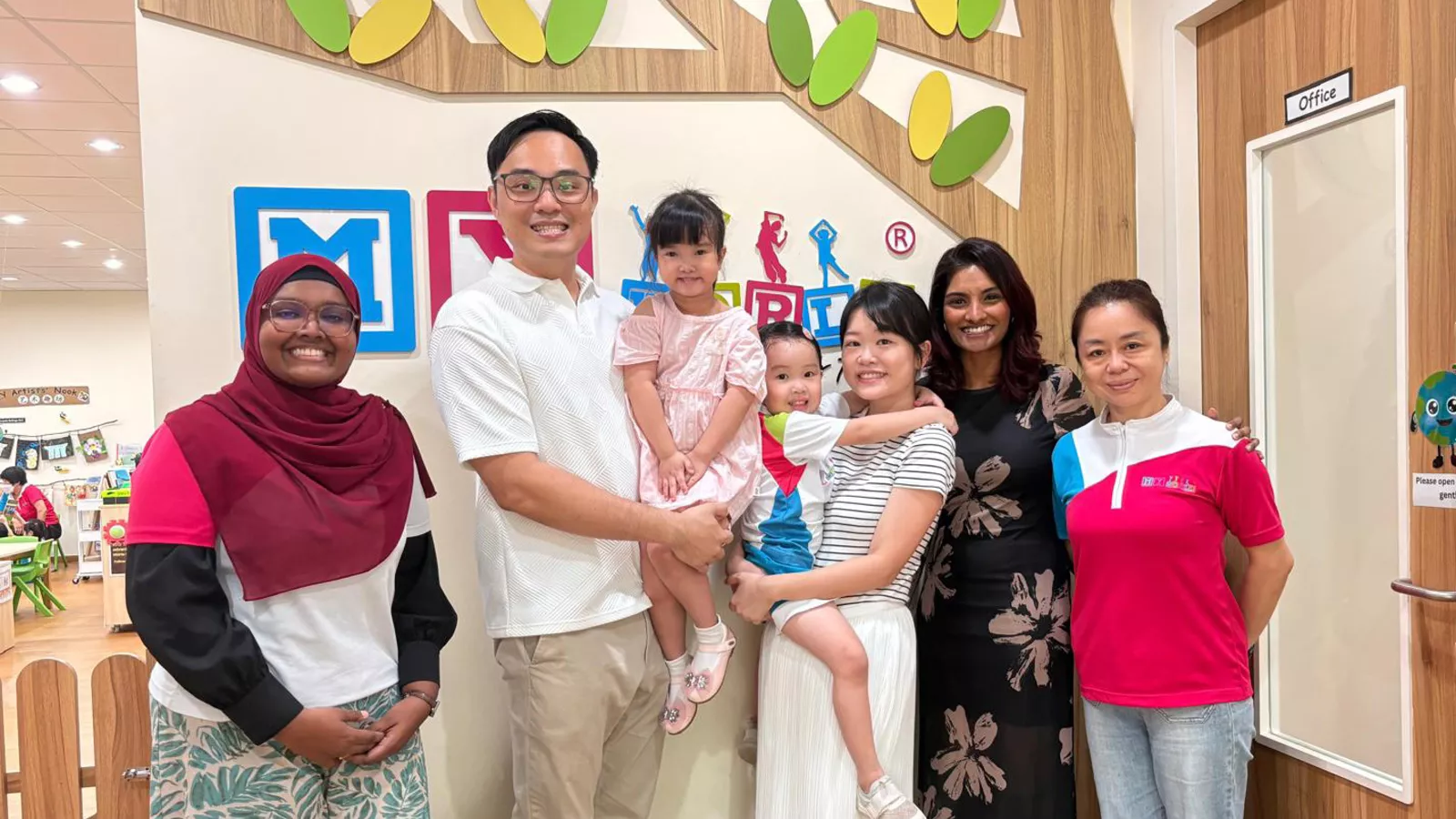
 Mr Woon Qingyong and Ms Kow Bi Xia with their three children. Xin Yi, the oldest, graduated from preschool in 2024. Her younger sister Xin Xuan, 4, goes to the same M.Y World centre.
Launched in May 2025, ‘Our Wonderful Parents’ recognises parents who demonstrate trust, respect, empathy, altruism and appreciation in their partnerships with early childhood (EC) educators. The initiative aims to foster positive parent-preschool partnerships and cultivate collaboration in the preschool community, creating environments where children can thrive and the EC sector continues to grow.
Mr Woon and Ms Kow are among the inaugural batch of more than 300 parents honoured at ECDA's Early Childhood Celebrations & Conference 2025.
DEEPENING PARTNERSHIP WITH TRUST
Upon enrolment at the preschool, the couple soon discovered the caring educators who regularly went the extra mile to help Xin Yi. Ms Kow remembers how her teachers learned to remove the hearing aid during nap time and fit it back on. They willingly wore clip-on microphones that detected their voices and streamed the audio directly to Xin Yi’s hearing aid.
In Xin Yi’s earlier years there, educators were agreeable to Ms Kow visiting the preschool during teatime and feeding her daughter via a tube. Subsequently, educators kept watch over Xin Yi and gave updates on how much she ate. They also took the effort to find out her food preferences and catered to them, so she would be encouraged to eat more.
Likewise, the learning environment and teaching strategies were thoughtfully adapted to ensure accessibility and engagement. “Timetables were structured to provide quieter settings for lessons, while visual aids and structured routines enhanced clarity and participation,” says Ms Rubegan. “We integrated Xin Yi’s interests in writing, drawing, storytelling and illustration into the curriculum, allowing her creativity to flourish.”
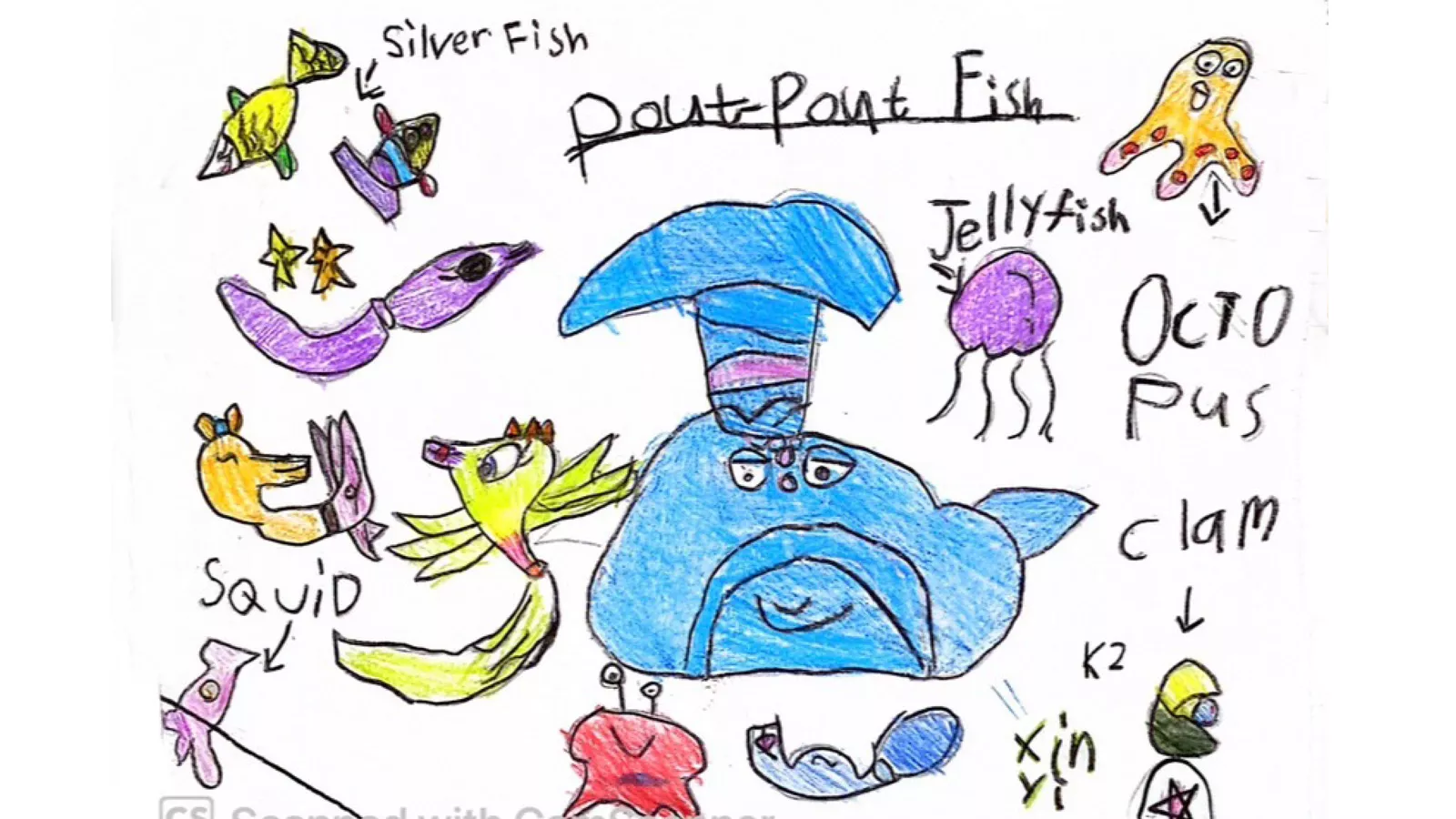 Inspired by a storytelling session on The Pout-Pout Fish, Xin Yi drew this artwork at home and shared it with her peers. This in turn sparked the idea for a class project: to create their own children’s version of this book.
“Through these intentional approaches, Xin Yi was able to participate fully, build confidence in her abilities, and contribute to a collaborative and inclusive learning environment,” explains Ms Rubegan.
COMMITTED AND PROACTIVE
Ms Rubegan recalls that from the very first meeting, Xin Yi’s parents came across as warm, approachable and genuinely invested in their child’s well-being: “Qingyong and Bi Xia were open to feedback and eager to partner with us, often reaching out with thoughtful questions like ‘What can I do at home to support my child in the different areas?’. Their proactive spirit and positive mindset stood out.”
That hasn’t changed, with their younger daughter Xin Xuan still at the centre. If anything, the family’s relationship with the preschool has deepened.
 Mr Woon (left) with Ms Rubegan (right) at the preschool’s National Day 2025 celebration. He volunteered to talk about his National Service experience with the children and led a physical activity station.
Compared to her big sister, Xin Xuan is more sensitive and struggles to regulate her emotions, leading to occasional meltdowns. By sharing strategies, such as setting up a calm-down corner, Ms Kow understands how educators handle such situations in preschool and takes their advice on board to manage challenging behaviours at home.
“We want to be involved in our children’s growing-up years,” says Ms Kow. She and her husband are happy to participate in preschool events, be it answering children’s questions about a soldier’s life or reading storybooks to the class.
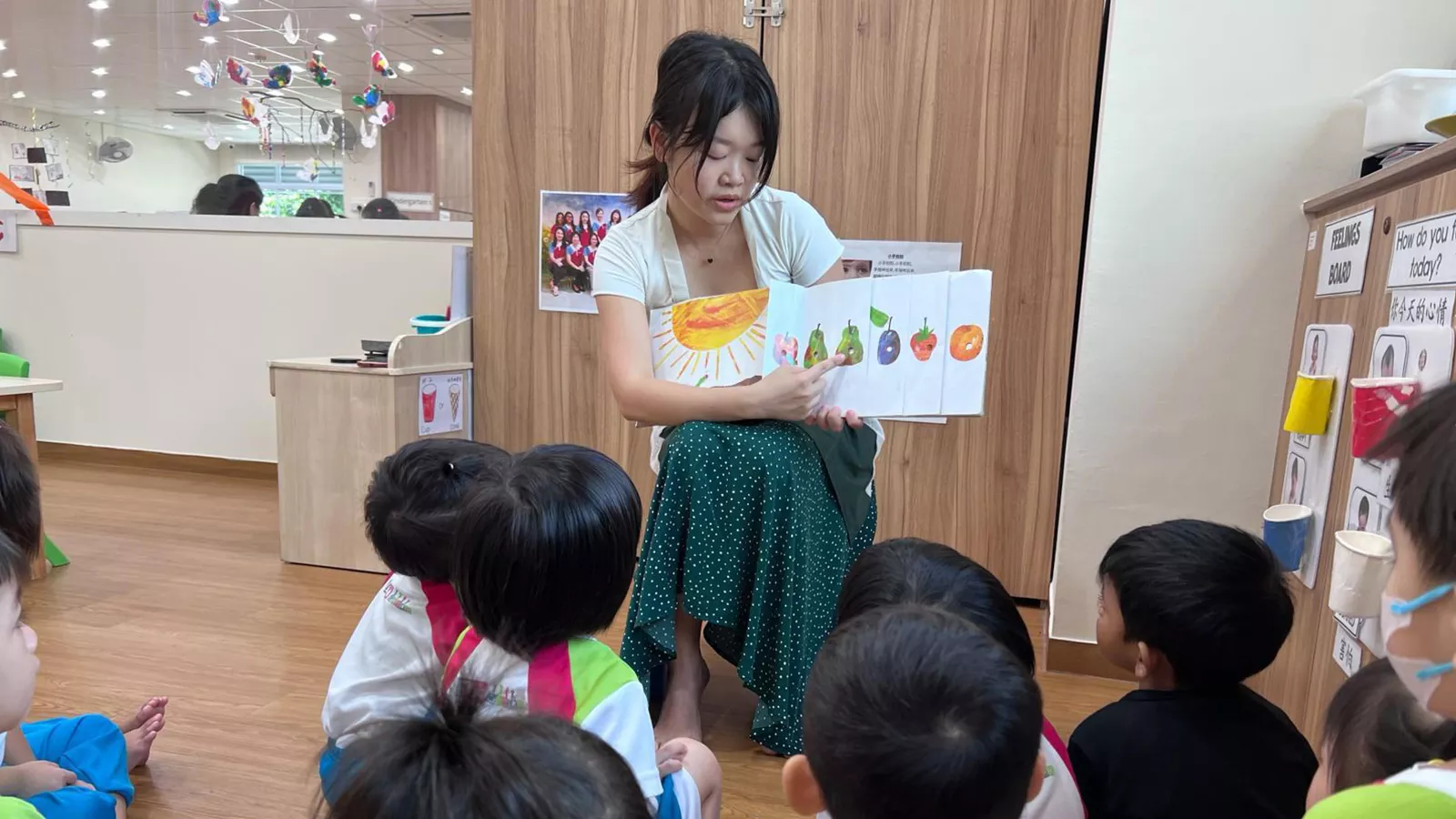 A teacher herself, Ms Kow enjoys reading to the children and is skilled at using storytelling and dramatisation techniques to engage them.
Asked for tips on how parents can collaborate effectively with preschools, Ms Kow says: “It’s important to establish open communication. When educators share things with you about your child, be it good or bad, keep an open mind. If a problem is surfaced, don’t get angry with the educator. Focus on the problem instead.”
Ms Rubegan offers an educator’s perspective. “While it’s easy to celebrate progress, the real strength of collaboration lies in navigating challenges together,” she says, emphasising the importance of trust. “When trust between parents and preschool is nurtured, even in moments of disagreement or difficulty, it transforms the relationship into one grounded in respect, shared purpose and a willingness to learn from one another.”