
When his eldest child entered Primary 1 five years ago, Mr Kelvin Soh admits feeling “a bit blur”. He recalls, “I thought I had to focus on whether my daughter could keep up academically — reading, writing, counting.” But he later realised that what really mattered was whether she felt ready to face a completely new environment.
“The biggest hurdles weren’t spelling tests or problem sums, especially when there is no exam in lower primary , but rather everyday tasks such as buying her own food in the canteen and packing her schoolbag,” he notes. In hindsight, Mr Soh believes the transition from preschool to primary school is less about books and more about building confidence.
This lesson comes in handy now that Mr Soh’s younger child is in K2 and preparing for that same move. He also chairs the Parent Support Group at Queenstown Primary School — a role that sees him welcoming new families to the school community and sharing advice to help their children settle in.
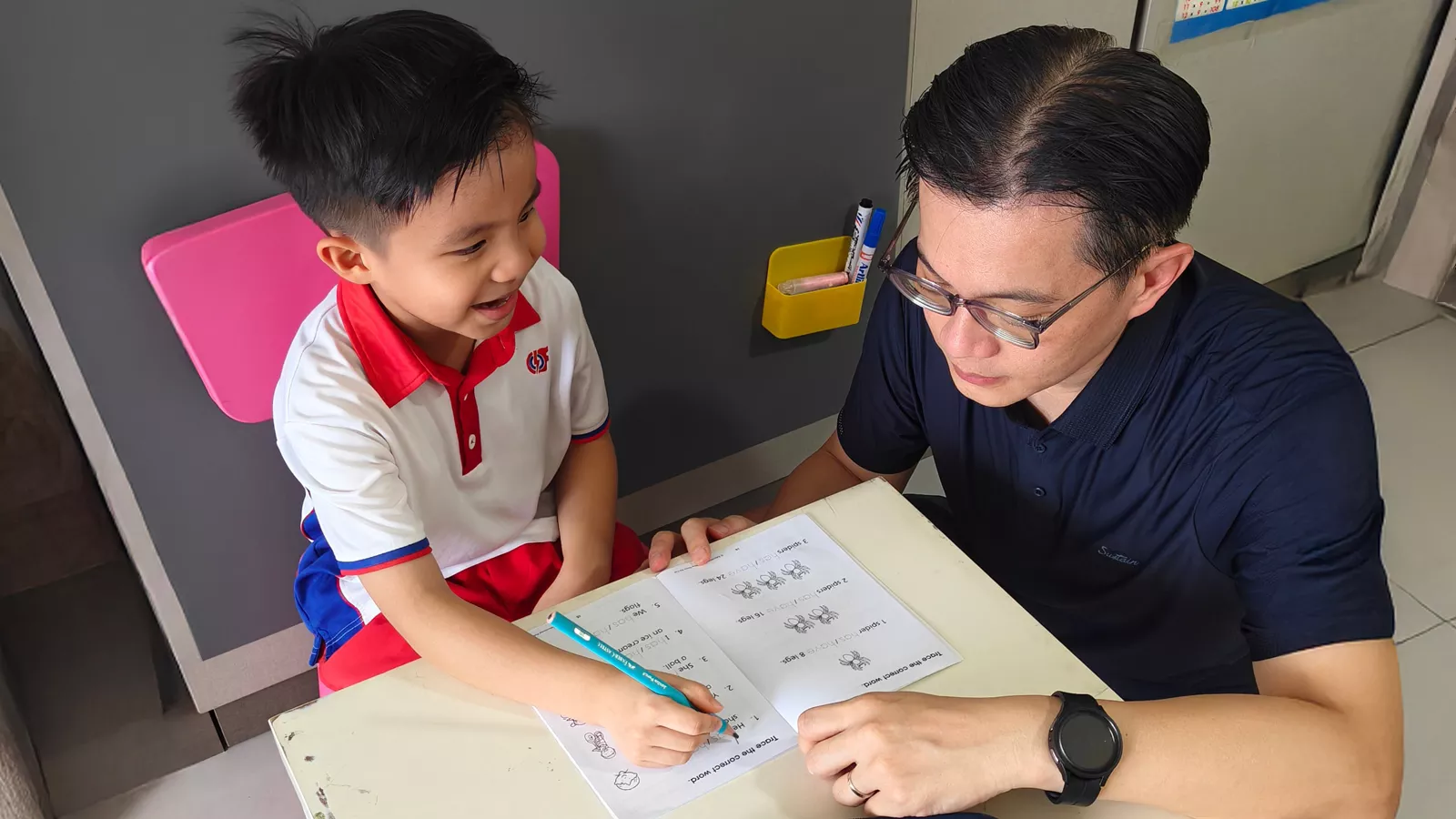 While Mr Kelvin Soh (right) helps his K2 child practise writing in preparation for primary school, what’s more important to him is that his child develops ‘soft’ skills such as confidence and resilience to navigate the transition.
Mr Soh’s advice, drawn from personal experience, mirrors what early childhood experts say on the matter.
ACADEMICS CAN COME LATER
“The transition to primary school isn’t a simple move to a new building,” explains Dr Mercy Karuniah Jesuvadian, Senior Lecturer, Psychology and Child & Human Development, National Institute of Education. “It’s a deep-seated change as children must adjust to a whole new environment, with new routines, authority figures and social demands. If children are anxious, insecure or emotionally unsettled, even the best teaching won’t make an impact.”
Her advice to parents is not to overemphasise academics for primary school readiness. Most children will eventually catch up with lessons, but the stress of an unsupported transition can erode their confidence and love of learning. Instead, focus on supporting your child’s social and emotional adjustment, as this lays the groundwork for future academic success.
Mrs Sharon Siew, Principal of Jing Shan Primary School, who has welcomed many cohorts of P1 students, echoes this sentiment. “I want parents to know that primary schools are ready to meet children where they are,” she says, hoping to ease the anxiety of parents who fear their child may fall behind in school.
In fact, she discourages overloading children with academic preparation: “This may deprive your child of the joy of learning new things together with classmates. Without the anticipation and excitement of discovery in the classroom, learning will become a bore and a chore.”
HOW PARENTS CAN HELP
Instead of drilling children with worksheets, Mrs Siew urges parents to focus on practical skills. Let children pack their own bags, practise simple routines like waking earlier, and try small acts of independence. These ‘small wins’ matter. “A shy child who takes weeks to buy food alone eventually succeeds with gentle support — that moment builds lasting confidence,” she notes.
Preschools are already supporting this, so parents can reinforce these practices at home. “At our preschool, we mirror primary school expectations by getting children to serve their own meals, clear up after themselves and role-play queuing at a canteen,” says Ms Stacey Toh, ECDA Fellow and Deputy Head, Preschools, Star Learners Group.
Here are some things parents can do in preparing their child for P1:
- Build morning routines early. A month before school starts, practise waking up earlier, getting dressed and having breakfast at the same time each day.
- Make the unknown known. If your preschool doesn’t organise a tour to a primary school, bring your child to their future school and introduce them to its surroundings.
- Hand over the schoolbag. Let your child pack their own bag the night before. Resist the urge to repack it for them — mistakes are part of learning responsibility.
- Practise canteen confidence. Role-play queuing, ordering and paying, at home or in public. Even a mock food stall with play money and prop snacks gives children the rehearsal they need.
- Encourage self-help skills. Teach your child to tie shoelaces, label personal items or refill their own water bottle. It builds independence and reduces classroom stress.
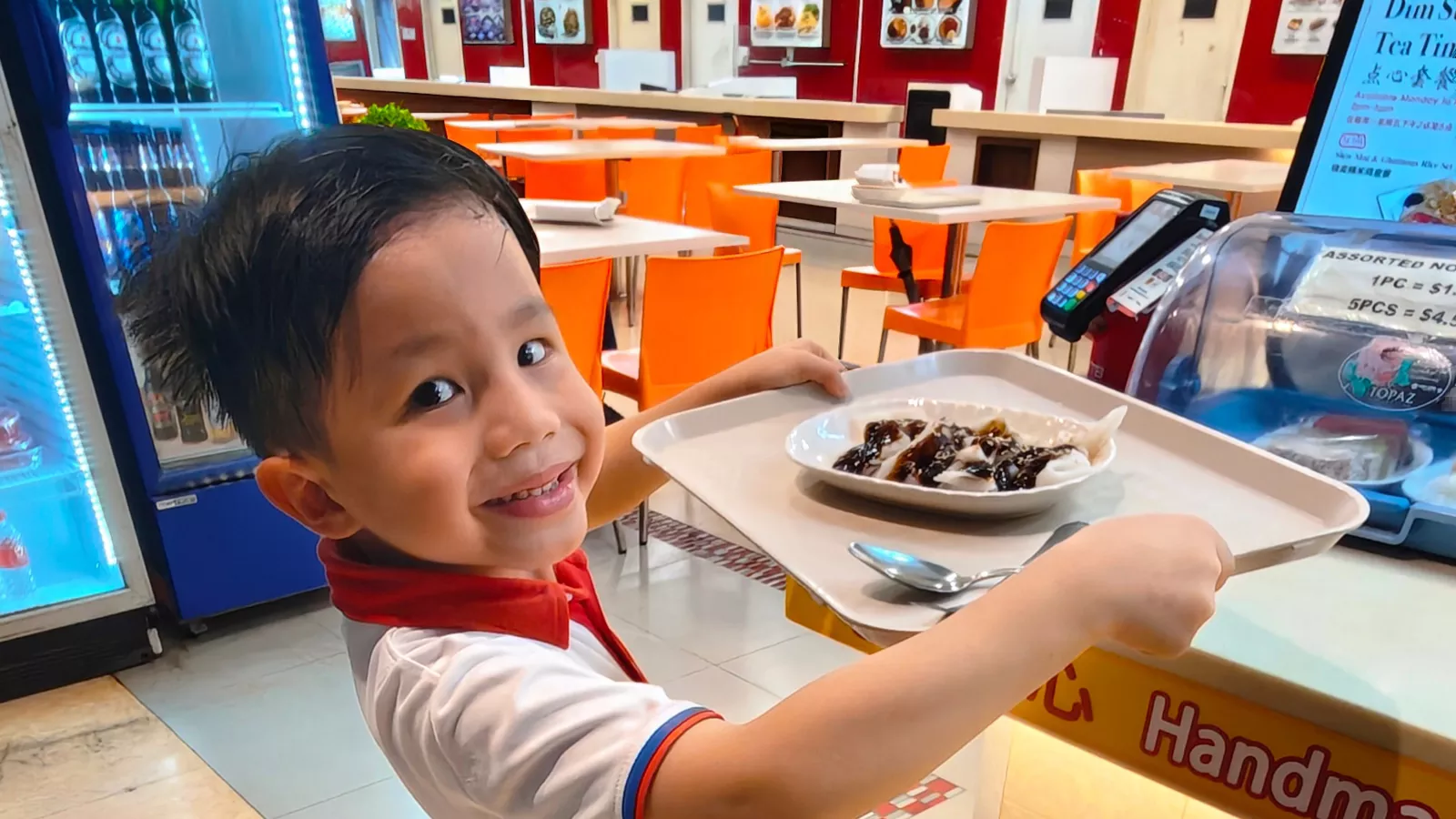 When dining out at food courts, Mr Soh encourages his K2 child (pictured) to order his own food and handle small sums of money.
Another important reminder for parents: Avoid projecting your own anxieties. “Frame change as something exciting, not frightening,” suggests Dr Jesuvadian. “The way parents talk about school — either as an adventure or as a test — sets the tone for how children perceive it.”
These practical steps may seem small, but together they help a child enter P1 with confidence.
WHAT A SUCCESSFUL TRANSITION LOOKS LIKE
A smooth transition isn’t about scoring full marks on the first spelling test. Instead, educators describe success in much more down-to-earth terms:
- Confidence in small tasks. A child who dares to buy food in the canteen after weeks of hesitation has achieved something big. Each small win reinforces their belief that they can handle new situations.
- Settling into routines. Children who can wake up on time, follow classroom rules and manage their own belongings feel more secure in their day. These routines create stability, freeing up energy for learning.
- Emotional resilience. It’s normal to cry in the first weeks, but success means persevering and gradually learning to regulate those feelings.
- Joy in discovery. As Mrs Siew notes, excitement about learning together with classmates is what keeps curiosity alive.
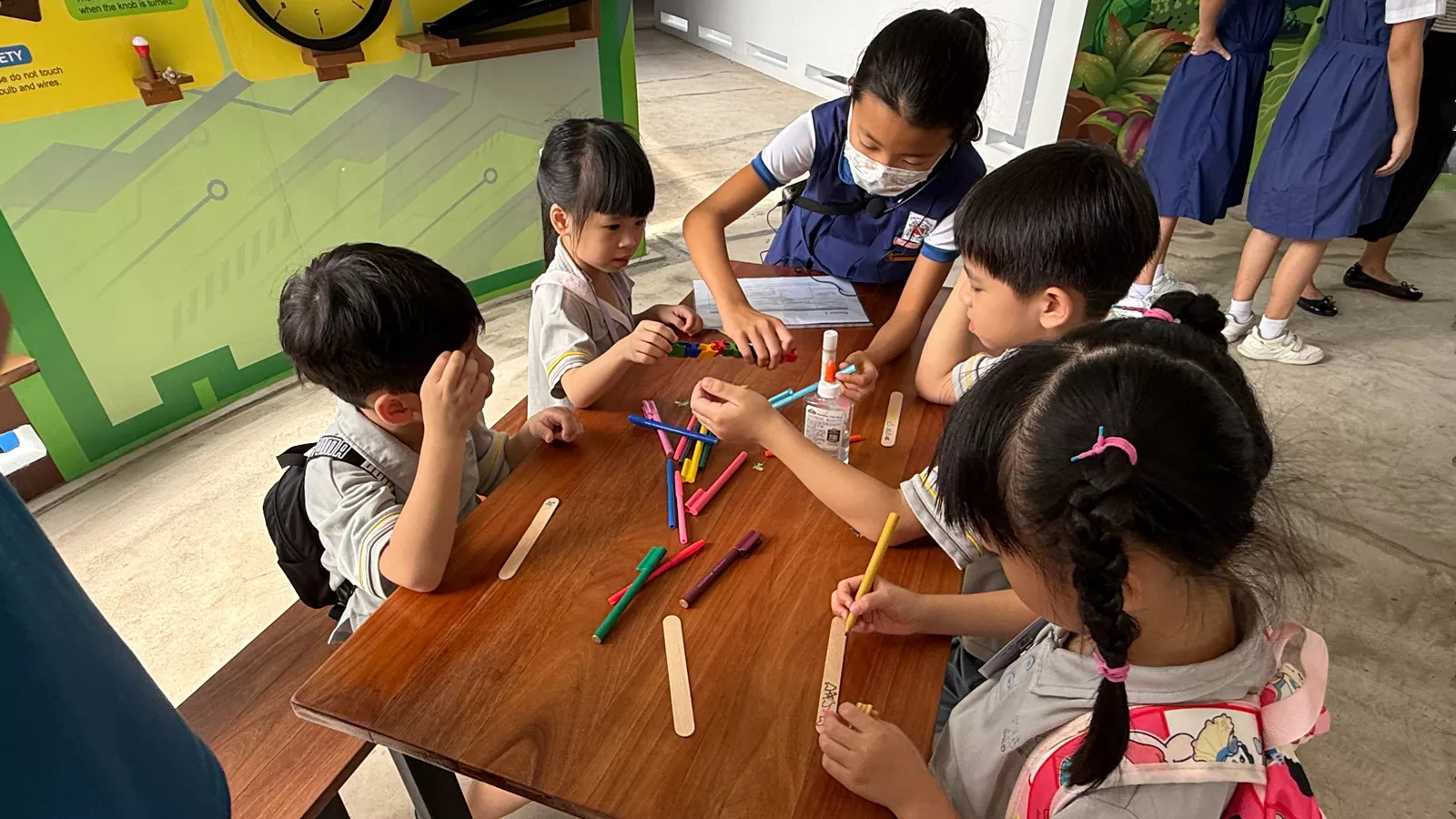 Most preschools organise primary school visits, where children can experience the environment firsthand and interact with their future schoolmates. This helps demystify the ‘big school’ for them, replacing apprehension with excitement and confidence.
Dr Jesuvadian highlights that these markers aren’t just for Primary 1: “Every time a child overcomes a transition, they build the resilience to handle the next one. This won’t be the last big change your child faces.”
Ms Toh agrees. “Even moving from P1 to P2 is a transition,” she points out. “Change will keep happening, whether it’s new classes, new schools, or even new jobs later on. What matters is that your child develops the resilience and adaptability to navigate change with confidence.”