

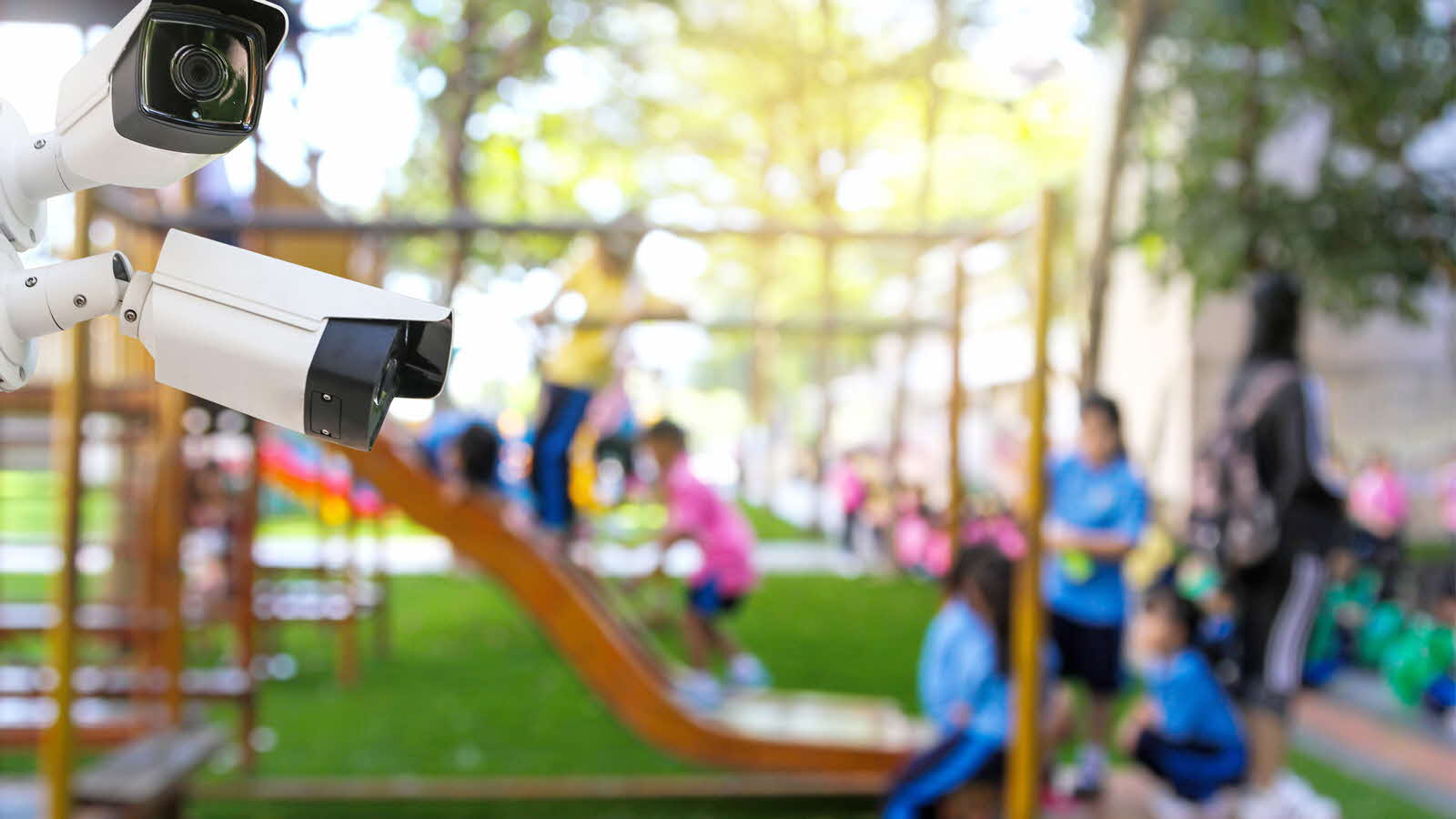

Since 1 July 2024, ECDA has made it mandatory for all preschools to install closed-circuit television (CCTV) cameras in their premises. This was part of ECDA’s ongoing efforts to improve the security and safety measures in early childhood development centres.
“We understand parents want to know their children are safe and well-cared for at preschool. CCTV cameras provide objective evidence to understand how an incident happened and inform on the corrective actions to be made, which also helps preschool operators and educators,” shares Ms Bernice Lee, Director, Regulation & Licensing, ECDA. “While CCTV cameras capture what happens in a preschool, fundamentally, strong partnership and open communication between parents, educators and preschools are more important in fostering a safe and nurturing environment in preschools.”
Find out more about common queries that parents have regarding CCTV cameras and footages in preschools.
When an incident happens to your child at preschool, the preschool must inform you about it, in accordance to ECDA’s regulatory requirement. After knowing about an incident, speak with your child’s teachers and principal, to understand what happened and what their follow-up actions were. You may also contact the preschool operator if required.
To request to view relevant CCTV footage, you may submit a written request directly to your child’s preschool. They will assess if your request is reasonable – such as finding out how your child got injured – and respond to you accordingly. Do note that the footages will need to be masked to be in line with Personal Data Protection Act (PDPA) guidelines, and you may be asked to pay a fee for masking.
Preschools may decline requests to view CCTV footages if the incident is being investigated by ECDA, the Police or other relevant authority, or if the requests are:
- Frivolous (e.g. asking to check if your child finished lunch)
- For an incident for which the CCTV footage is no longer available – preschools are not required to retain more than 30 days’ worth of footages. Longer storage is also costlier.
- Too vague without specific incident details
- Too extensive (e.g. requesting for a whole day’s footage instead of that for a specific incident).
- Likely to affect another child’s safety
If the footage features other children and adults, preschools may charge a fee to mask these individuals’ faces and protect their privacy. This is in line with PDPA requirements and guidelines.
The fee for masking depend on factors such as video duration and complexity, and the CCTV system the preschool has. This fee is determined by the preschool. If you have feedback on masking fees or difficulty making the payment, please raise it with your preschool operator.
Cameras are located in areas where children spend time in the preschool – entrances, exits, corridors, classrooms, activity rooms, nap rooms, dining areas, and play areas within the preschool premises. Cameras are not installed in areas such as toilets and changing rooms, to protect children’s and staff’s privacy.
Although CCTV cameras are not installed in every corner of each preschool, there are other safeguards in place to ensure infants’ and children’s safety in preschools, such as staff training and supervision, walkabouts by centre leaders and incident reporting mechanisms.
Beyond CCTV footage, ECDA obtains other evidence in our investigations to build a complete picture of what occurred, as cameras cannot capture everything that happens in preschools.
Evidence we gather through our investigations include statements from individuals (e.g. preschool staff), physical inspections of locations (e.g. incident site), and relevant documentation.
We are also continuously enhancing our investigation approaches, including the use of AI solutions to more comprehensively detect potential child mismanagement through CCTV footage. This multi-faceted approach ensures thorough investigations, so that safety concerns are properly addressed even in areas without camera coverage.
Preschools have restricted access to CCTV footage, including who can retrieve and view footages. They are also required to follow the PDPA guidelines, which include masking of all other individuals (children and adults).