

ABOUT OUR EXPERT

Ms Shron is a Lecturer at the National Institute of Early Childhood Development – Ngee Ann Polytechnic (NIEC (NP) Campus). With over 15 years of experience, she has developed key courses at NIEC and specialises in motor skills development, birth to three and multicultural learning. She teaches with curiosity and empathy, encouraging risk-taking and learning through failure, while nurturing children’s instinct to explore and grow through movement.
Are children born as blank slates, ready to be filled with knowledge by adults? Or are they competent co-constructors of knowledge, possessing curiosity, reasoning abilities and empathy from infancy?
NIEC lecturer Ms Shron Sugumaran firmly believes that children are active participants in their own learning. “When an adult sees children as blank slates, they fill their minds with information and plan content-driven activities. But when an adult sees children as capable and curious, they create experiences that invite discovery and learning,” she says.
“Educators and parents must learn to pause the impulse to intervene — to step back so that the child may step forward,” adds Ms Shron. “Seeing the child as competent means speaking with them, not at them. It means asking questions that provoke thinking, rather than giving answers that end it.”
THE COMPETENT CHILD: A MODERN WAVE OF THINKING
Proponents of the competent child perspective seek to shape children’s environments, not control their experiences. They design rich and responsive spaces where children naturally engage in questioning, exploration, problem-solving and meaning-making.
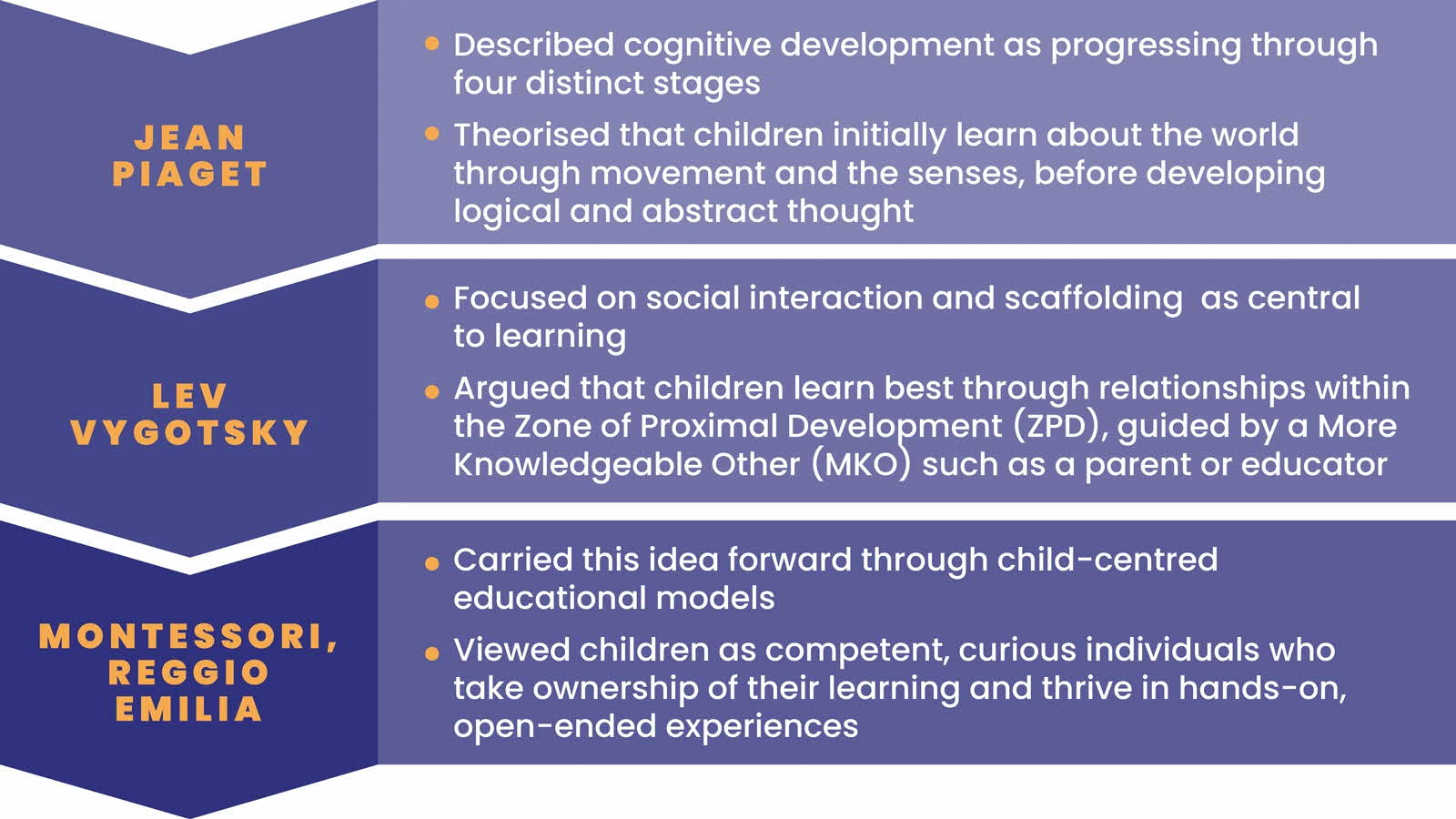 Piaget and Vygotsky, renowned psychologists from the early 1900s, are widely credited with advancing the image of the child we know today — not as passive receivers of experience, but active agents constantly exploring and constructing knowledge based on interaction with their environment.
“Neuroscience and developmental psychology affirm that even infants are capable of independent thought,” says Ms Shron. “During the early years, the brain’s neural connections multiply at an extraordinary rate. By toddlerhood, many of the foundational pathways are established, while ongoing experiences and development continue to shape higher-order thinking, problem-solving and imagination throughout life.
“A baby who shakes a rattle repeatedly is not simply playing. The baby is forming a hypothesis, testing cause and effect, and engaging in reasoning at their own scale. Even the simple act of struggling, then triumphing, in turning from belly to back shows an infant’s competence and determination to act, learn and understand.”
FROM IMAGE TO PRACTICE
Ms Nur Radhiah Binte Ramli, Infant Care Leader at PCF Sparkletots Preschool @ Tampines Central Blk 867A, integrates this concept into every aspect of her practice — from how she plans and teaches to her observations and interactions with children.
The 2025 ECDA Outstanding Infant Educator Award winner led the redesign of her preschool’s classroom space and pedagogy to empower children to play and explore at their own pace. There is an open space where infants and toddlers can explore freely, choosing from a variety of toys and play equipment. Educators sit in designated spots to observe the children, without interrupting their self-discovery unless a child initiates an interaction.
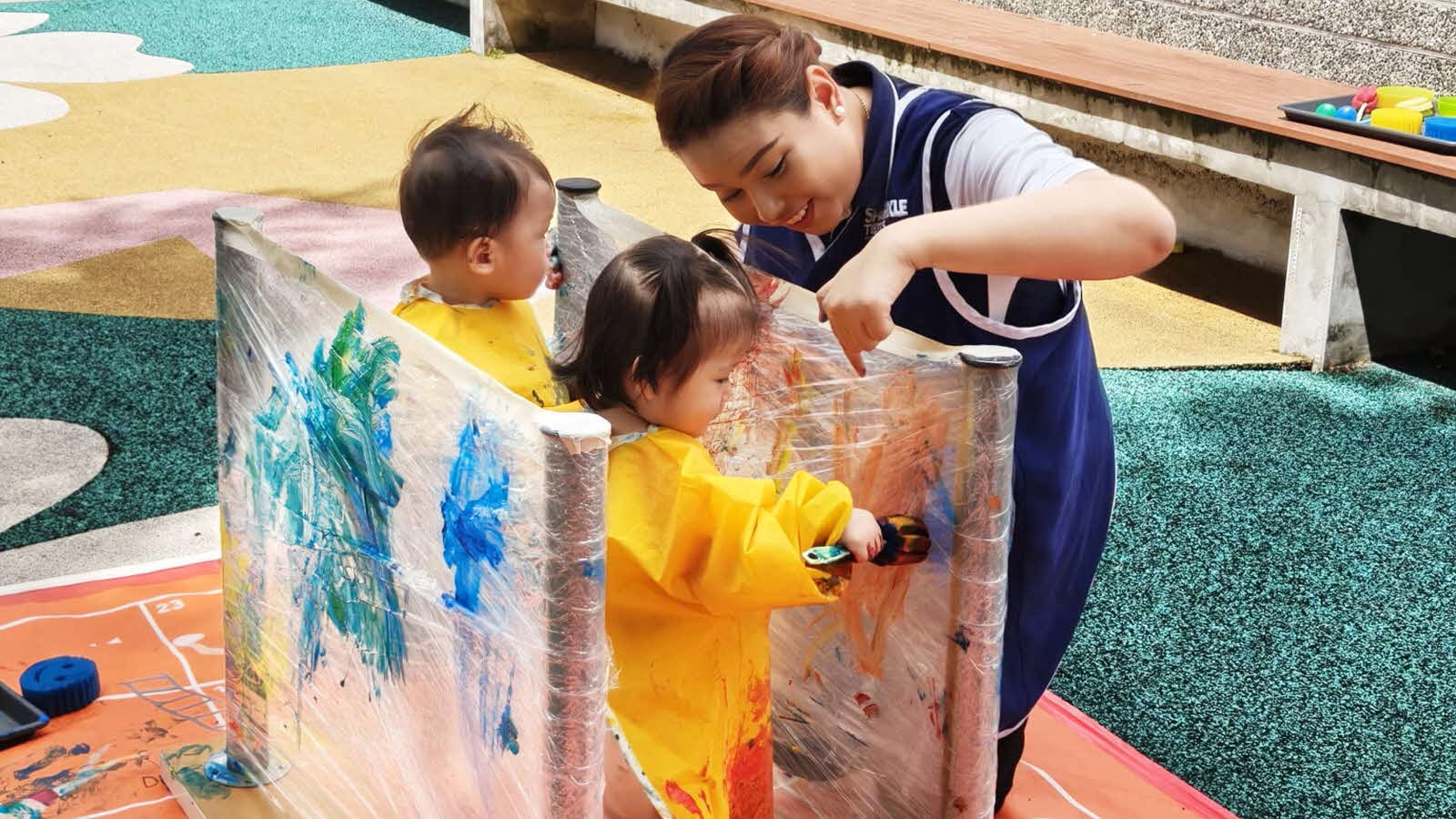 When painting with infants, Ms Radhiah (pictured) reinforces the image of the competent child by giving them autonomy and nurturing their self-expression. She lets them choose what colours to use and whether to paint by brush or hand, refrains from correcting or directing their strokes, and acknowledges their efforts.
“We take observation notes and refer to them to create individual development plans for each child,” says Ms Radhiah. “Based on our observations, we design engaging lessons and activities that align with the child’s needs, interests and capabilities.”
Children are given easy access to play materials, allowing them to choose independently. Some enjoy playing with the ball run, made from cardboard by educators, while others prefer making music by banging pots and pans with ladles. At the centre’s jungle gym, infants confidently crawl, climb and balance on soft play sets, while the storybook corner sees children sitting down and flipping through books on their own, under the watchful eyes of educators to ensure their safety while exploring.
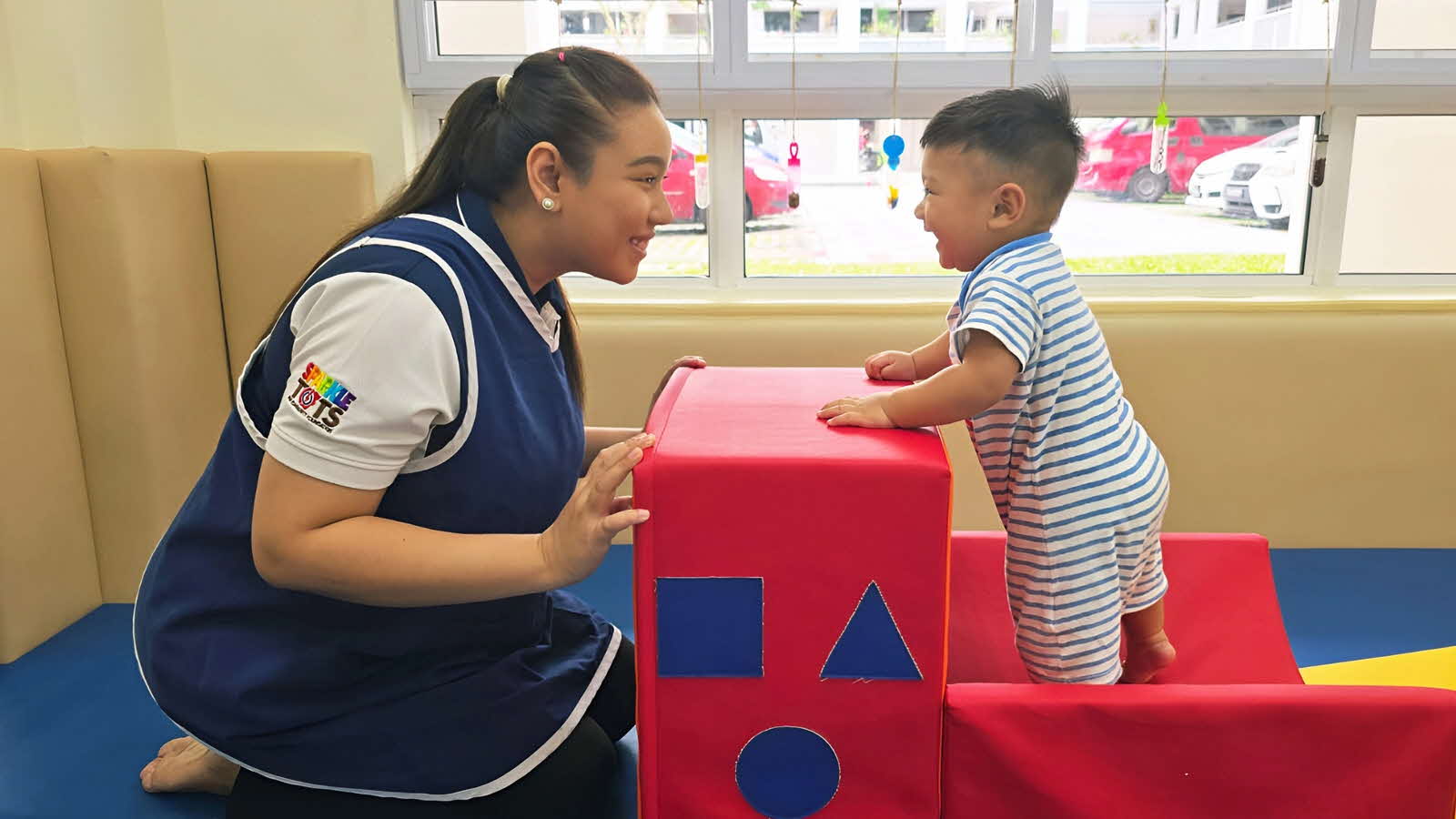
Seeing children as competent extends even to babies who have yet to start crawling. Ms Radhiah embraces the ‘3Rs’ — respectful, responsive and reciprocal — in her interactions with babies, including during diapering routines. “If an infant is in the middle of playing, we don’t abruptly stop them to change their diaper as it is not only disrespectful but could hinder their learning,” she explains.
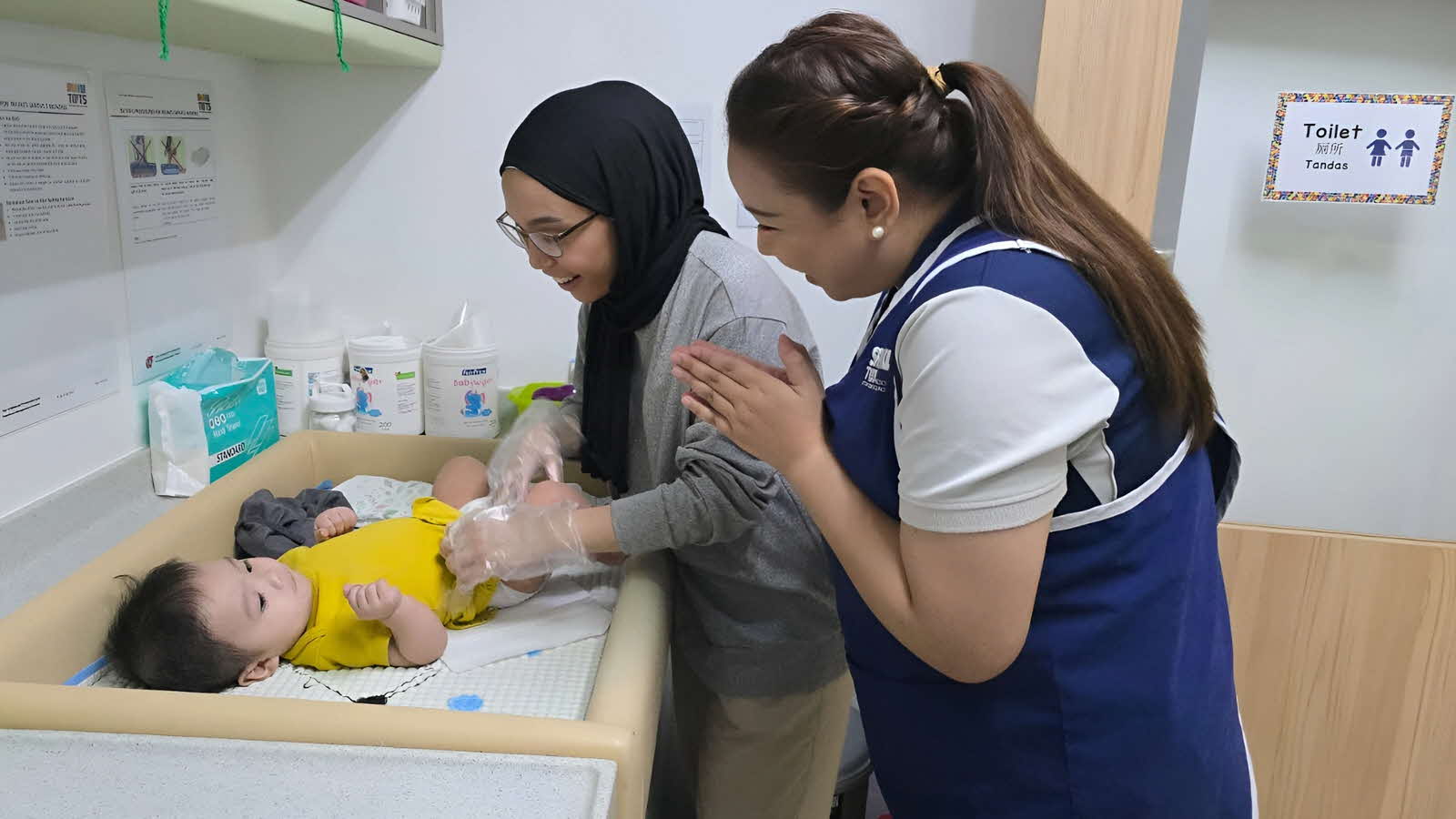 When it is time to change diapers, Ms Radhiah (far right) approaches the infant warmly to seek their approval. She makes eye contact, announces her intention, and waits for them to raise their hands and follow her to indicate that they are ready to get changed.
A close parent-preschool partnership ensures this perspective is maintained both in preschool and at home. For example, Ms Radhiah regularly uploads her observations of the children and shares them with parents. Many parents have also accepted her invitation to join the class on outdoor walks or conduct storytelling sessions. In doing so, they end up learning new aspects of their children’s abilities they had not noticed before.
“What’s important is to respect the child’s choices, observe them, and offer verbal encouragement and support, saying things like ‘You did it!’ when they succeed at a task to reinforce pride in their abilities,” says Ms Radhiah. “Every day brings something new as we witness different actions and reactions from the little ones.”