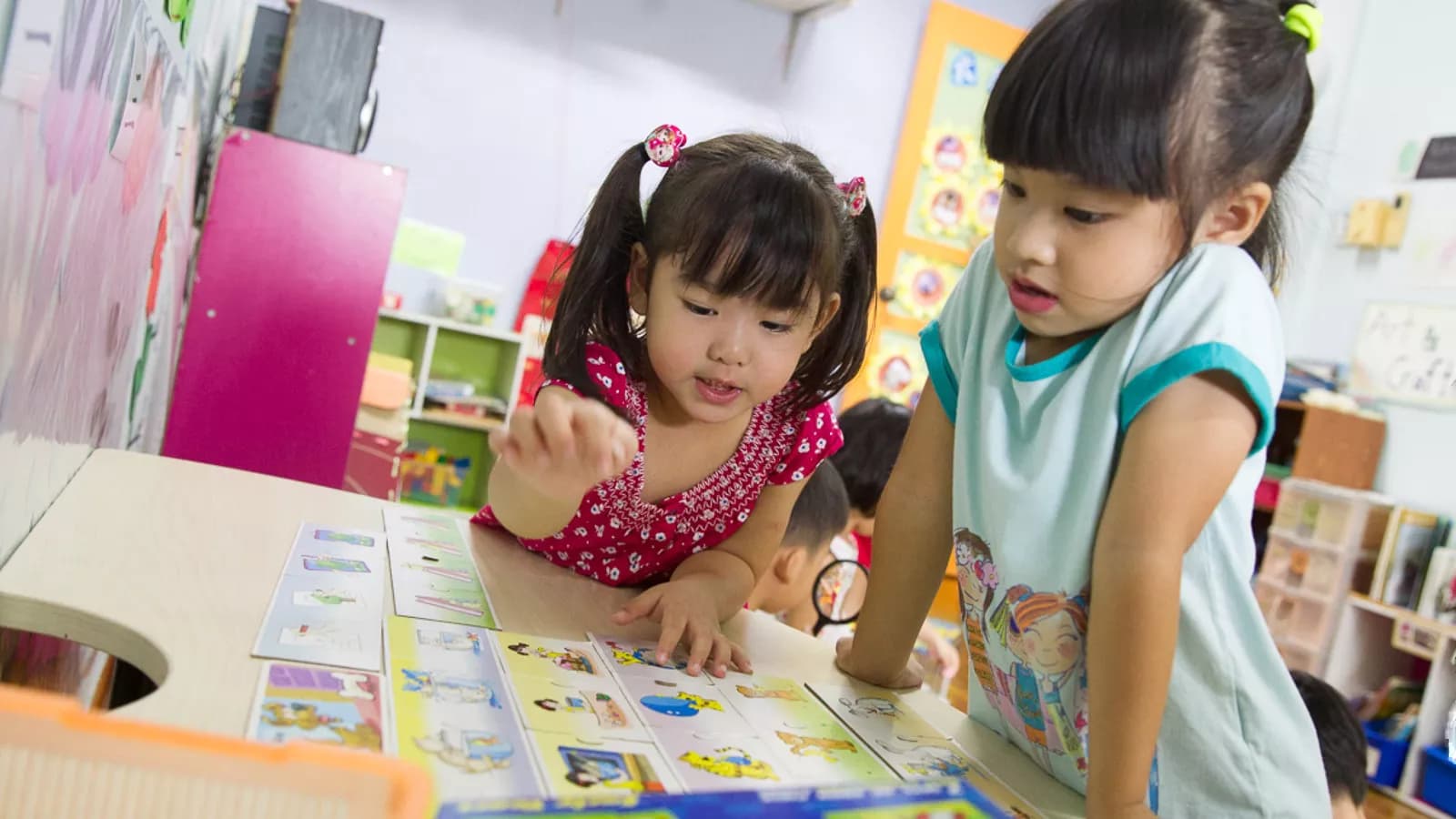

Six-year-old Lavica Shreya Mukhi attends the K2 class at Masterminds Montessori (Sengkang). Her mother Ms Shreya Ananth Kamath, like many other parents with K2 children, is thinking ahead to next year — when Lavica starts primary school.
“I try to read with Lavica more often to reinforce her literacy skills. We’ve also started playing word games and practising simple math problems on our way to preschool, such as randomly choosing car licence plates and adding or subtracting the numbers,” says Ms Shreya. Out of curiosity, she bought a Primary 1 math textbook to get an idea of the syllabus to figure out whether Lavica would be able to handle it next year.
Even so, Ms Shreya is not too concerned about academic achievements. If Lavica does not understand something straightaway or falls a little behind her peers, she feels optimistic that Lavica will catch up eventually. Ms Shreya steers clear of ‘hothousing’ — teaching academic concepts to children at a level higher than usual for their age — as she is cautious about causing Lavica to develop an aversion towards learning.
“Once children think ‘this is too much’ or develop negative feelings about learning, it is difficult to undo them,” she says. “To find out whether Lavica is ready for a new concept, I observe her responses during our conversations and always let her interests lead the way.” Lavica’s current fascinations are with animals and rockets, so Ms Shreya has found some child-friendly podcasts on these topics that they listen to together.
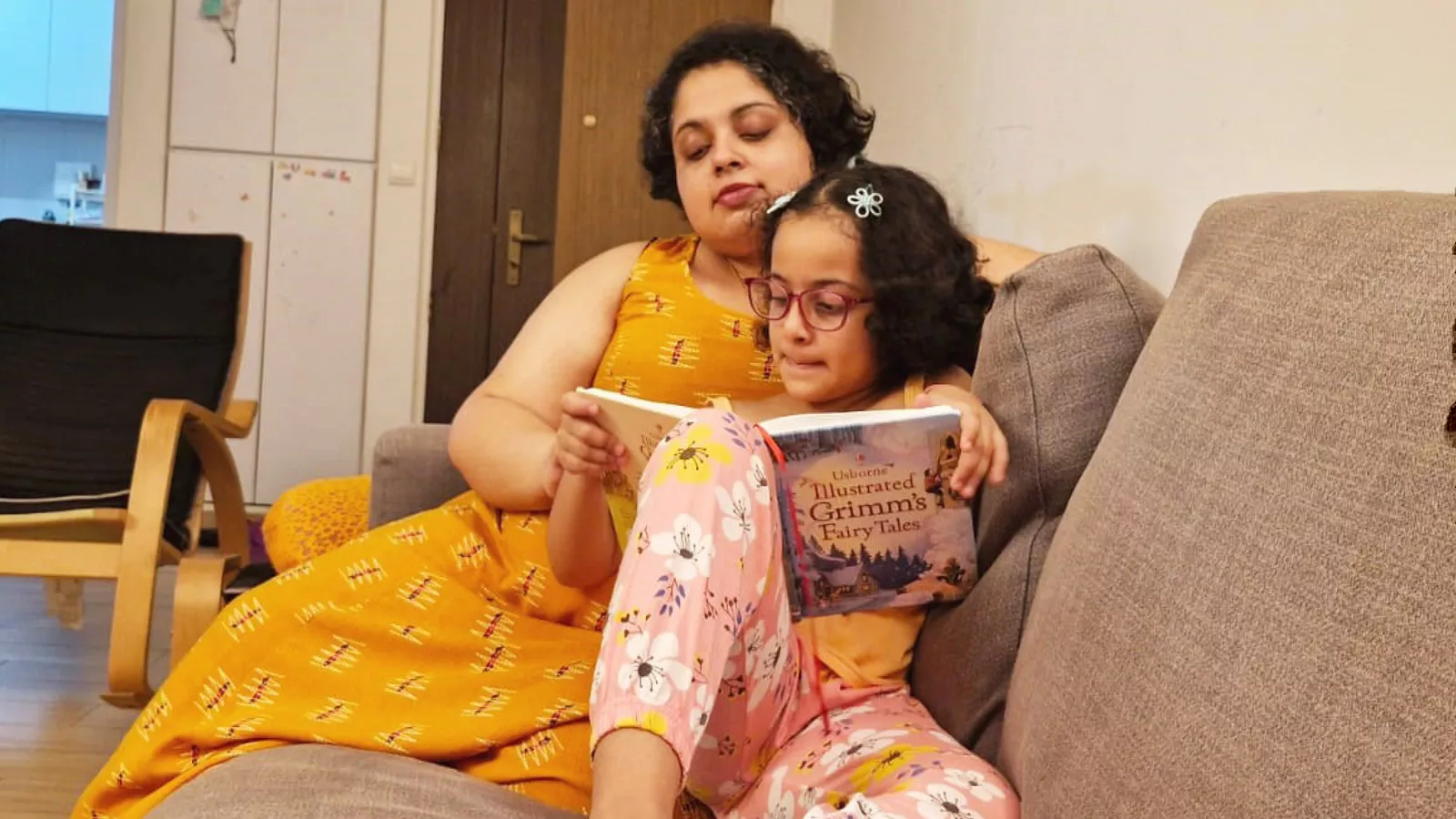 As part of the preparation for formal schooling, Ms Shreya Ananth Kamath encourages her K2 daughter, Lavica, to read more.
As children enter kindergarten, getting them ready for the new routines and rigours of formal schooling becomes a focus for many parents. Preschools have frameworks and guidelines to equip five- and six-year-olds with knowledge and skills in key learning areas, such as language and literacy, numeracy, and discovery of the world. Yet, it is natural for parents to worry whether this is enough. Some may take extra steps, like enrolling their children in academic enrichment classes or having them complete assessment books at home.
Is this kind of content-heavy or ‘overteaching’ approach, where tests and homework replace playtime, developmentally appropriate for young children?
MAKING LEARNING APPROPRIATE AND FUN
Ms Jow Ming Tong, Vice Principal of M.Y World @ Tampines North, highlights that soft skills should take precedence in the early years. Overteaching, while well-intentioned, is likely to backfire as children may feel pressured to meet their parents’ high academic expectations, affecting their love for learning.
“By developing crucial skills such as communication, problem solving, decision making, cooperation and perseverance, we can help children build confidence in themselves and their abilities,” says Ms Jow. “This in turn lays the foundation for a lifelong learner.”
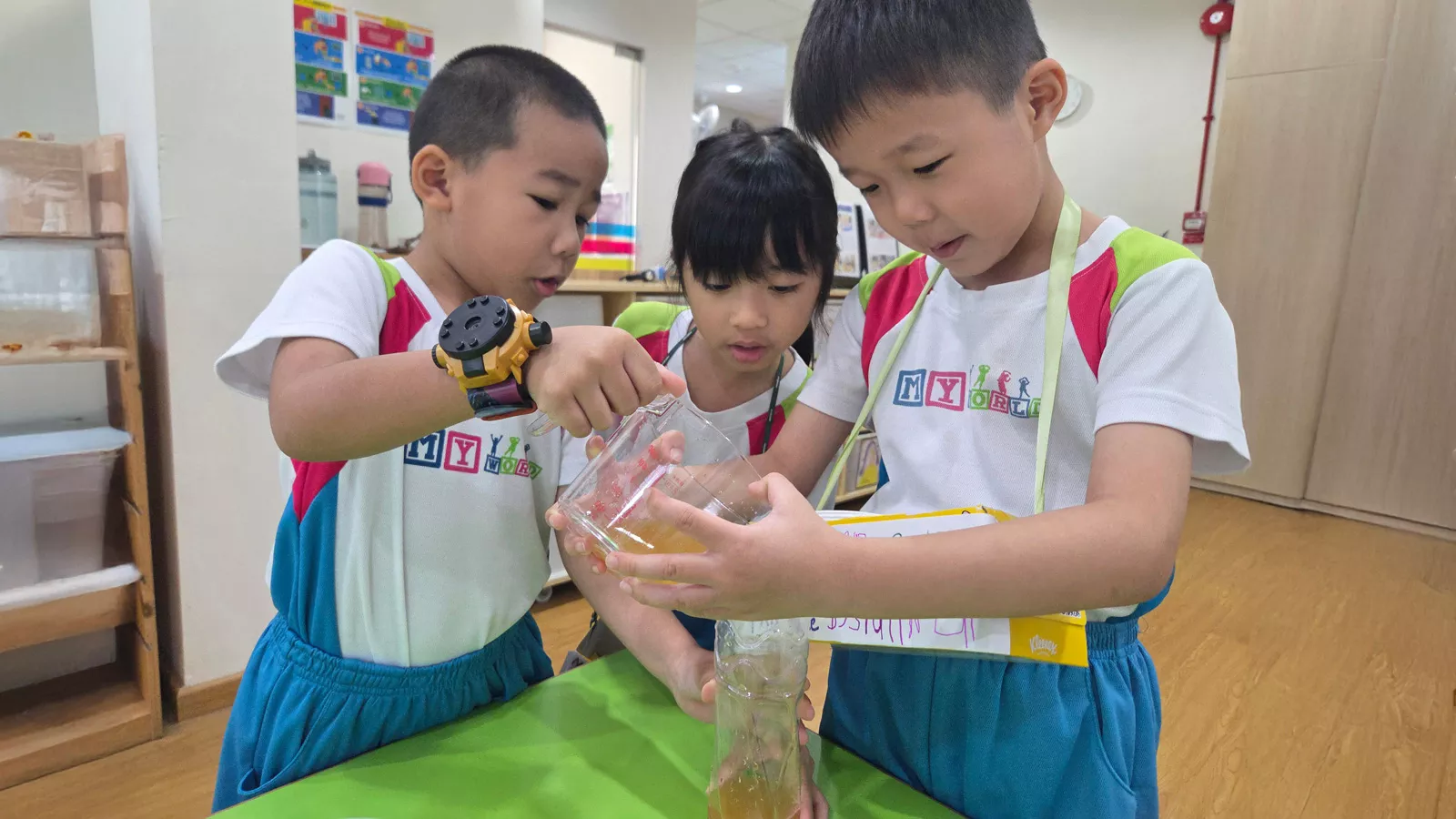 Hands-on experiences that nurture children’s curiosity and invite exploration can create deeper understanding and greater eagerness to learn compared to passively absorbing information through worksheets.
If a child shows early interest in academic subjects, Ms Jow believes it is okay for parents to sign them up for enrichment classes — provided they are age-appropriate and play-based. Young children learn primarily through hands-on experiences, so look for enrichment classes that offer learning-by-doing, sensory play activities. Academic-focused programmes where children complete worksheets, passively read content or watch videos that offer little interaction are not suitable at this age.
“It would be better not to fill their weekend schedules with back-to-back programmes,” adds Ms Jow. “Keep in mind that children need free time to explore and release their energy through unstructured play.
“As children play, they practise skills across various learning domains, including physical, social and emotional, cognitive and language. When playing alone, they learn to solve problems, take risks and express themselves creatively. When playing with others, they learn to interact, socialise, negotiate and resolve conflicts.”
PLAY IS ENRICHING
Dr Sirene Lim, Associate Professor and Dean, S R Nathan School of Human Development, Singapore University of Social Sciences (SUSS), is sympathetic to parents’ anxieties about their children’s future and how this could veer towards overteaching. “In today’s competitive environment, parents have their children’s best interests at heart when they emphasise knowledge acquisition,” she explains. “But they may not realise the importance of play on learning and development.”
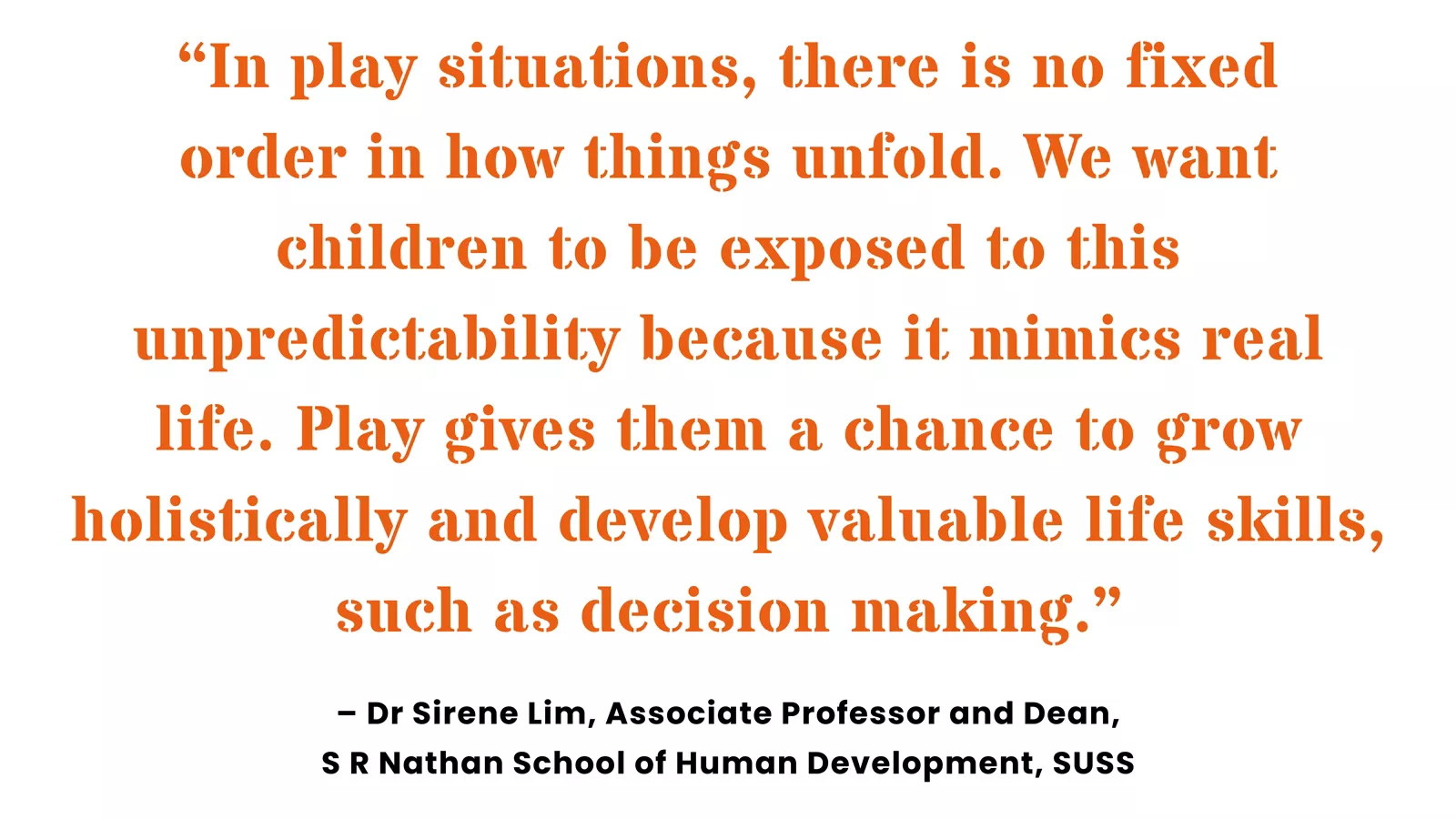
Rather than occupying children with academic experiences and enrichment classes, she suggests that parents spend more quality family time together. This will strengthen parent-child bonds and establish the family unit as a caring home base that the child can lean on when faced with difficult situations in life. Having such a strong support system is far more impactful than academic learning in setting them up for success, both in school and beyond.
“Learning is a lifelong pursuit, and for a three-year-old to associate it with assessment books might limit their worldview about what learning really means,” says Dr Lim. “I would instead advise parents to simply look around and introduce their little ones to the beautiful things and fun activities around us. While young brains are keen to learn and absorb information quickly, it does not mean that everything can be learned within the first years of life.”