





Preschools in Singapore are harnessing data analytics to revolutionise early childhood education. Beyond digitising administrative tasks, data-driven insights are leveraged to enhance teaching practices, personalise learning experiences, and strengthen parent-preschool partnerships.
When Carpe Diem Springs embarked on their digital transformation, they discovered that analysing patterns in children's development, parent feedback, and classroom interactions enabled more targeted teaching approaches. This evidence-based approach helps educators make informed decisions about each child's educational journey whilst providing parents with clearer insights into their child's progress, creating opportunities for meaningful home-school collaboration.
INSIGHTS TO SUPPORT TEACHING PRACTICES
Ms Casey Cheong, an educator at Carpe Diem Springs, appreciates how the preschool management system is used to document and track children’s development. “Having easy access to digital portfolios and data visualisations based on observation notes and checklists, allows me to monitor each child’s progress and identify areas of improvement in a timely manner,” she says. For example, the semester-on-semester progress data for one child highlighted a development area in the socio-emotional learning domain, which provided an opportunity for the educator to reinforce support for the child.
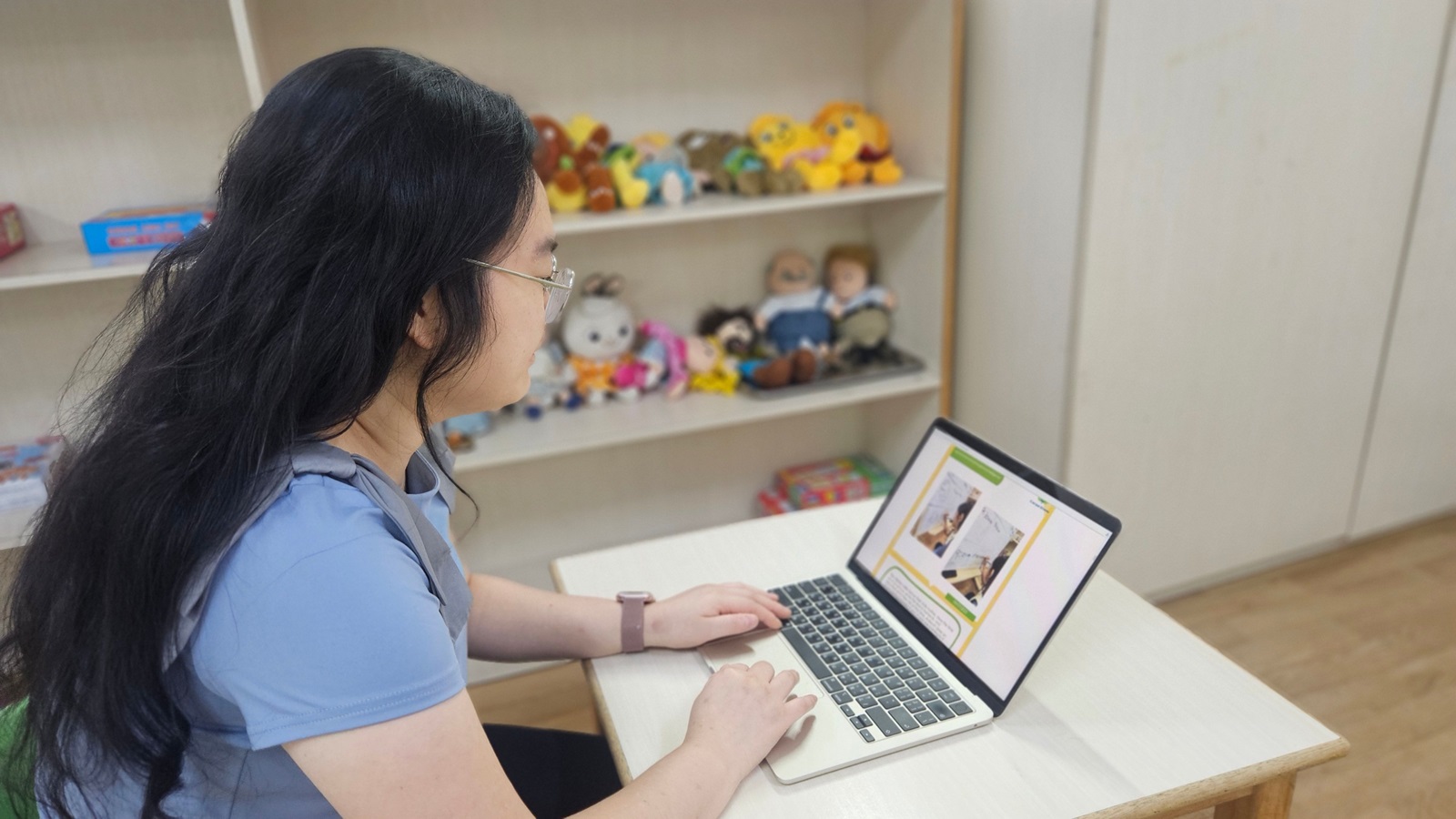 Children’s portfolio in digital format reduces the need for physical storage space in the preschool, and allows more flexibility in how educators can share the children’s progress.
Like Ms Cheong, Ms Nurul Farah, an educator from Star Learners @ Tampines West finds herself a more reflective practitioner with the help of digitalisation. If she did not teach a particular child the previous year, she can easily review the child’s progress by clicking on the app to retrieve his or her records. “Understanding the child’s learning progress helps me focus on and reinforce specific learning needs. It allows me to be more intentional in planning my lessons to support each child’s development,” she says.
STRENGTHENING PARENT-PRESCHOOL COMMUNICATION
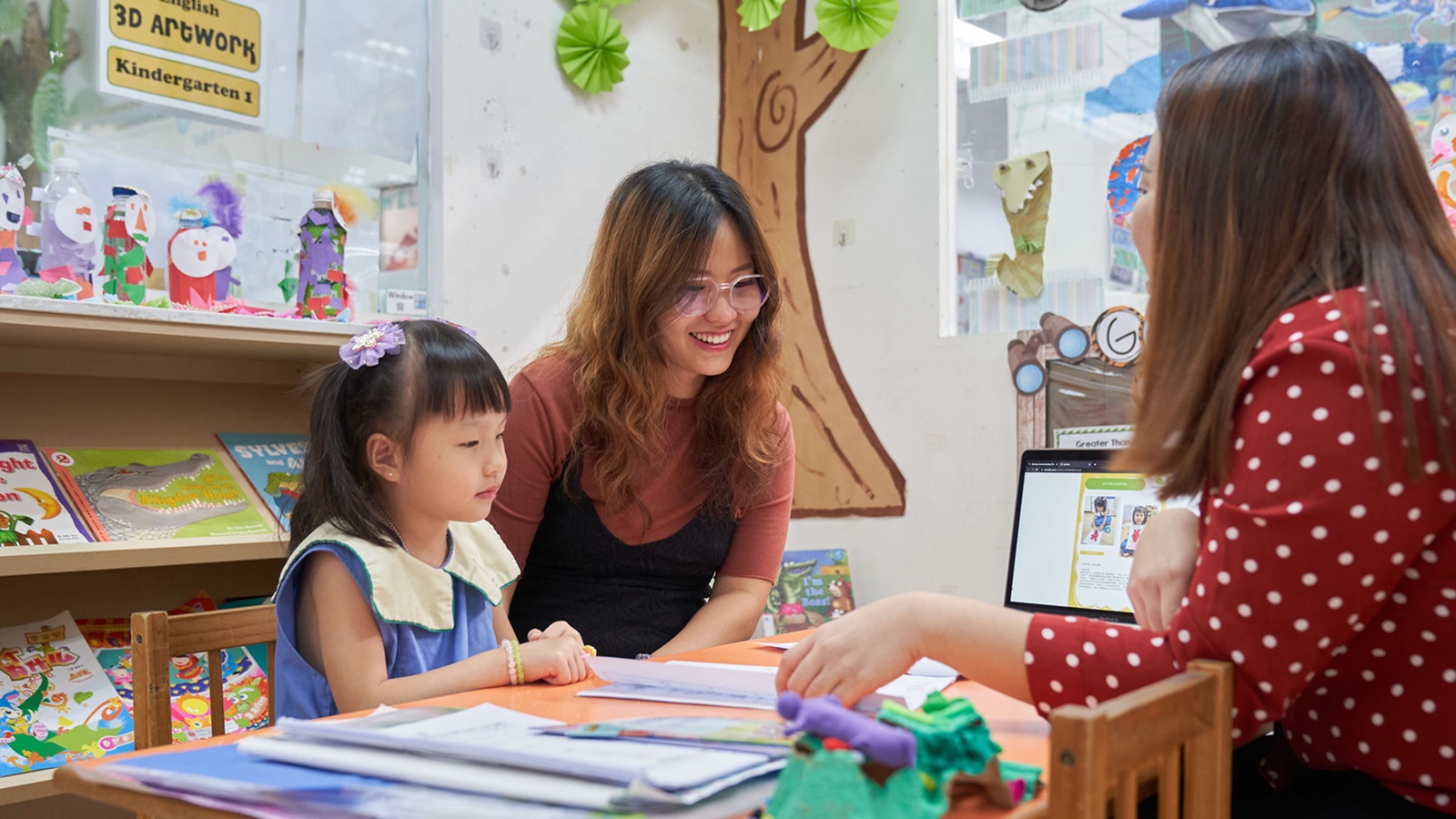
Insights from data are also used to improve parent-preschool partnerships. “When parents provide feedback through a survey, it gives us a baseline of their expectations and how their child behaves at home. We merge this ‘home data’ with our classroom observations, allowing us to work with the parents on specific developmental goals for their children that are consistent across both environments," explains Ms Cheong.
The Parent Engagement Dashboard helped ascertain the number of messages from parents in a day or a month, and responses from educators within the same period, shares Ms Chan Xiu Bin, Director of Carpe Diem Springs. With this, centre leaders can work with educators to identify the concerns and interests of the parents from their class early. This process helps educators with proactive problem-solving and improved responsiveness, which is key in building partnership.
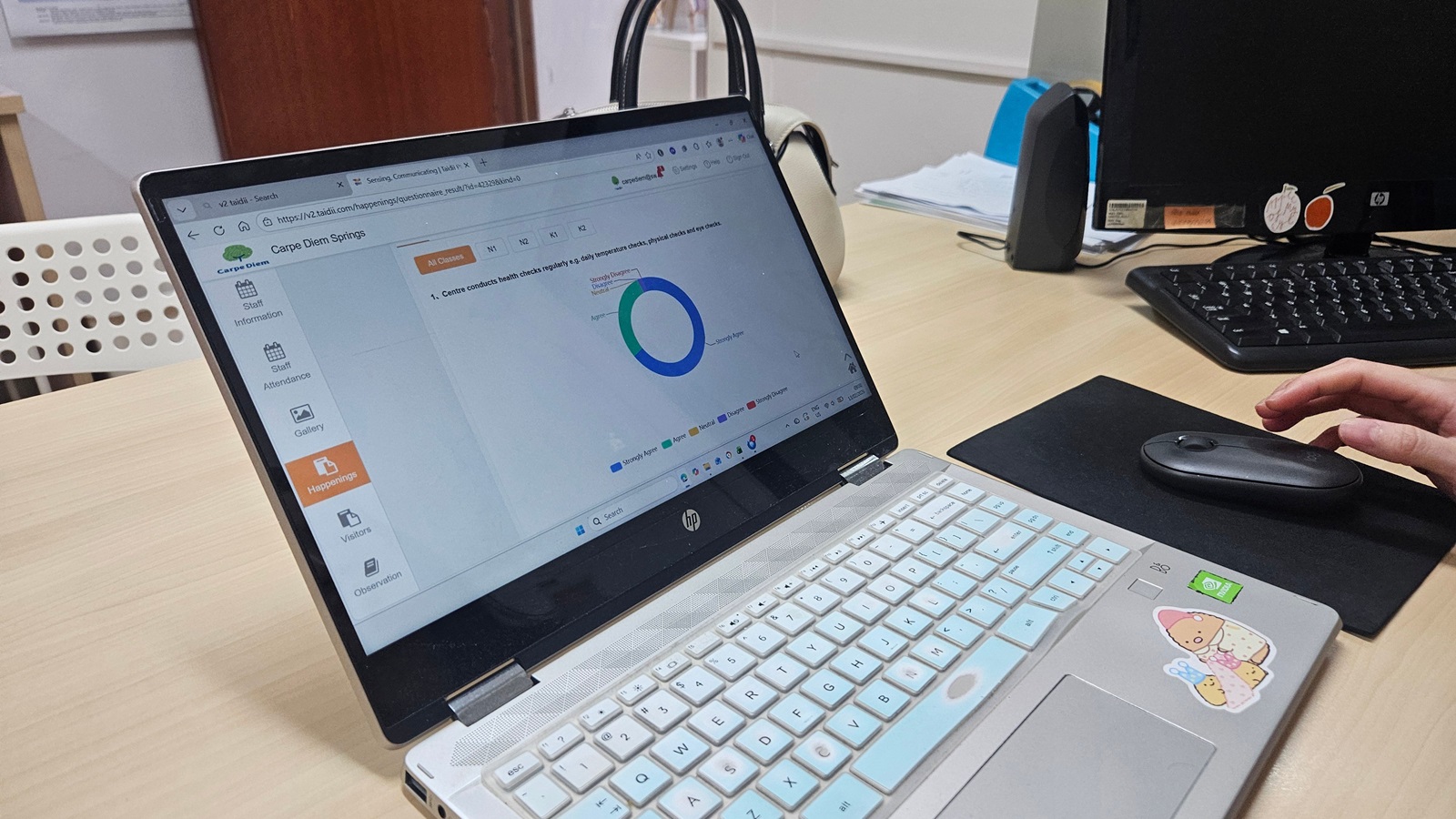 Data collected from the parent survey online can easily be developed into actionable follow-ups by the preschool.
CONVENIENCE & SAFETY
Having been an educator for 12 years, Ms Farah recalls a time when physical consent forms were handed out to parents and children’s daily attendance was manually recorded with pen and paper. In the past, teachers would collect cash for field trips, dispense change, and remind parents to submit consent forms. Digitalisation has streamlined these processes. With an app, parents can pay digitally, access and sign consent forms online as well as receive reminders for submission.
Digital solutions have also simplified pick-up arrangements. For instance, if parents are unable to pick up their child on a particular day, they can authorise an ad-hoc pick-up via the preschool’s app by submitting identification details and uploading a photo. When the child is released at the end of the school day, the app will prompt the educator of the arrangements.
Ms Farah, says that the centre’s adoption of technology also enhances job attractiveness. “Digital tools reduce the time needed for paperwork, which is a constant pain point for educators who want more time to engage with children instead,” she highlights.