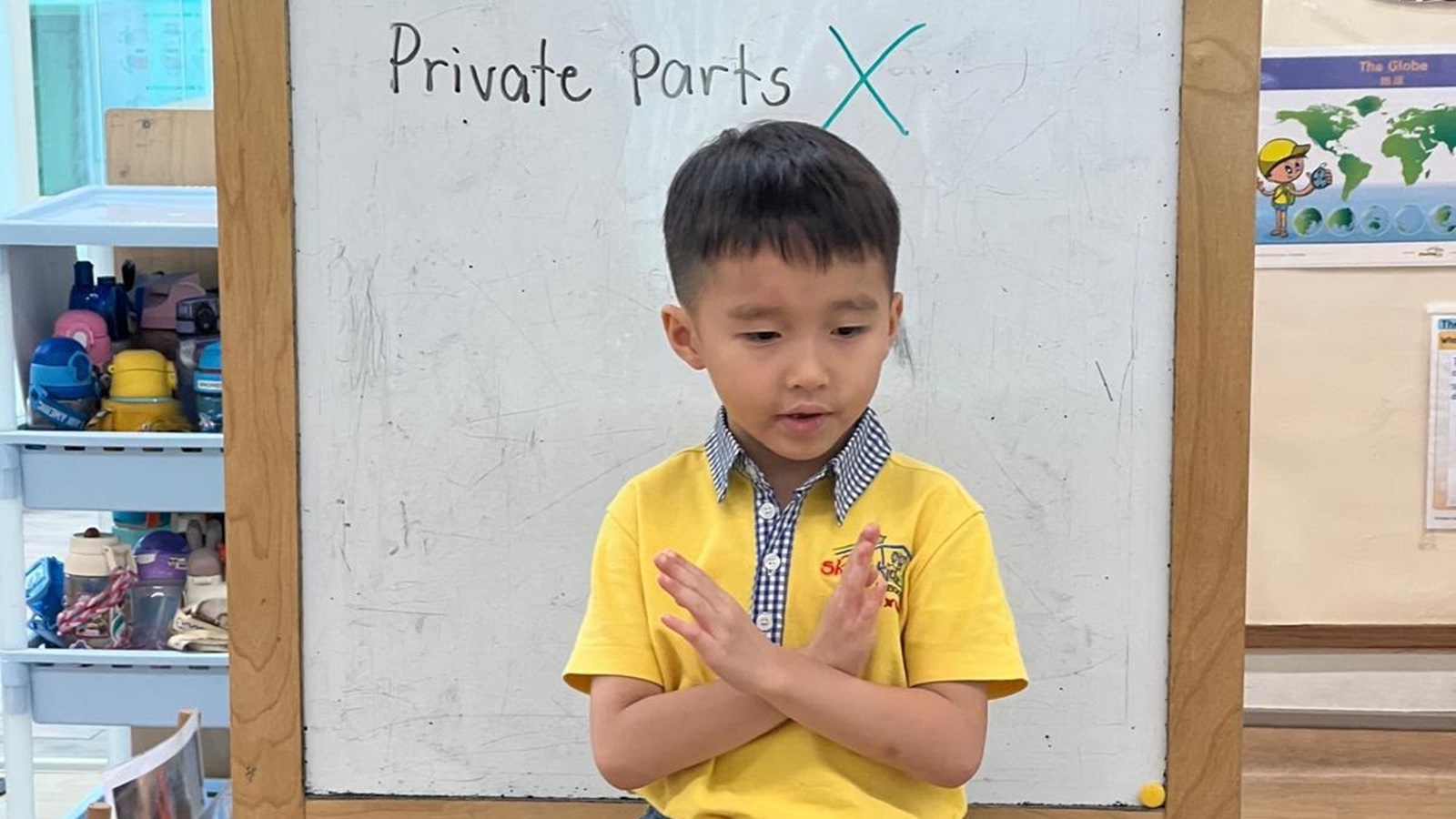

“‘Koo-koo bird’ and ‘neneh’ may be familiar terms to many six-year-olds, but understanding their bodies and personal boundaries goes beyond these familiar nicknames,” says Ms Siti Nasiha, Vice-Principal at Skool4Kidz Campus @ Sengkang Riverside Park.
When body safety lessons were introduced to the preschool's Kindergarten 2 (K2) classes earlier this year, the children could not help but giggle when their educators talked about body parts. But as the lessons progressed, giggles gave way to curiosity, with children becoming more comfortable asking questions and learning how to recognise boundaries, express discomfort and seek help from trusted adults.
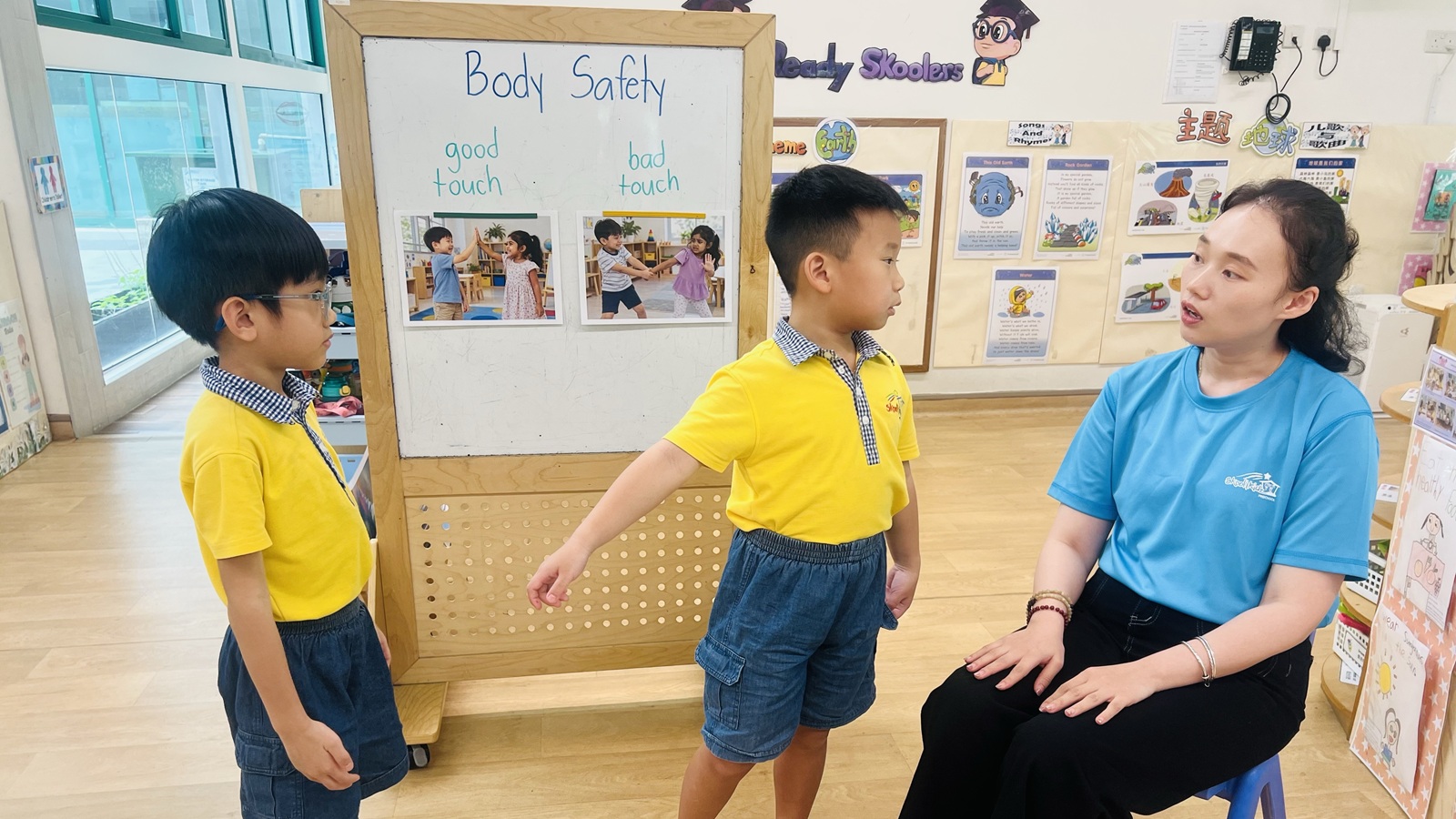 Children engage in a discussion on body safety.
MAKING SENSE OF BODY SAFETY
While some adults may worry that body safety is too complex for young children, preschools such as Skool4Kidz Campus @ Sengkang Riverside Park approach the topic in simple, developmentally-appropriate ways.
Using the Singapore Children's Society's KidzLive: I Can Protect Myself resource, educators teach children the three simple "N.O.T." actions for responding to uncomfortable situations: say No, walk Out and Tell a trusted adult. Through discussions and puppet play, children learn how to recognise boundaries, respond to uncomfortable situations and seek help when needed.
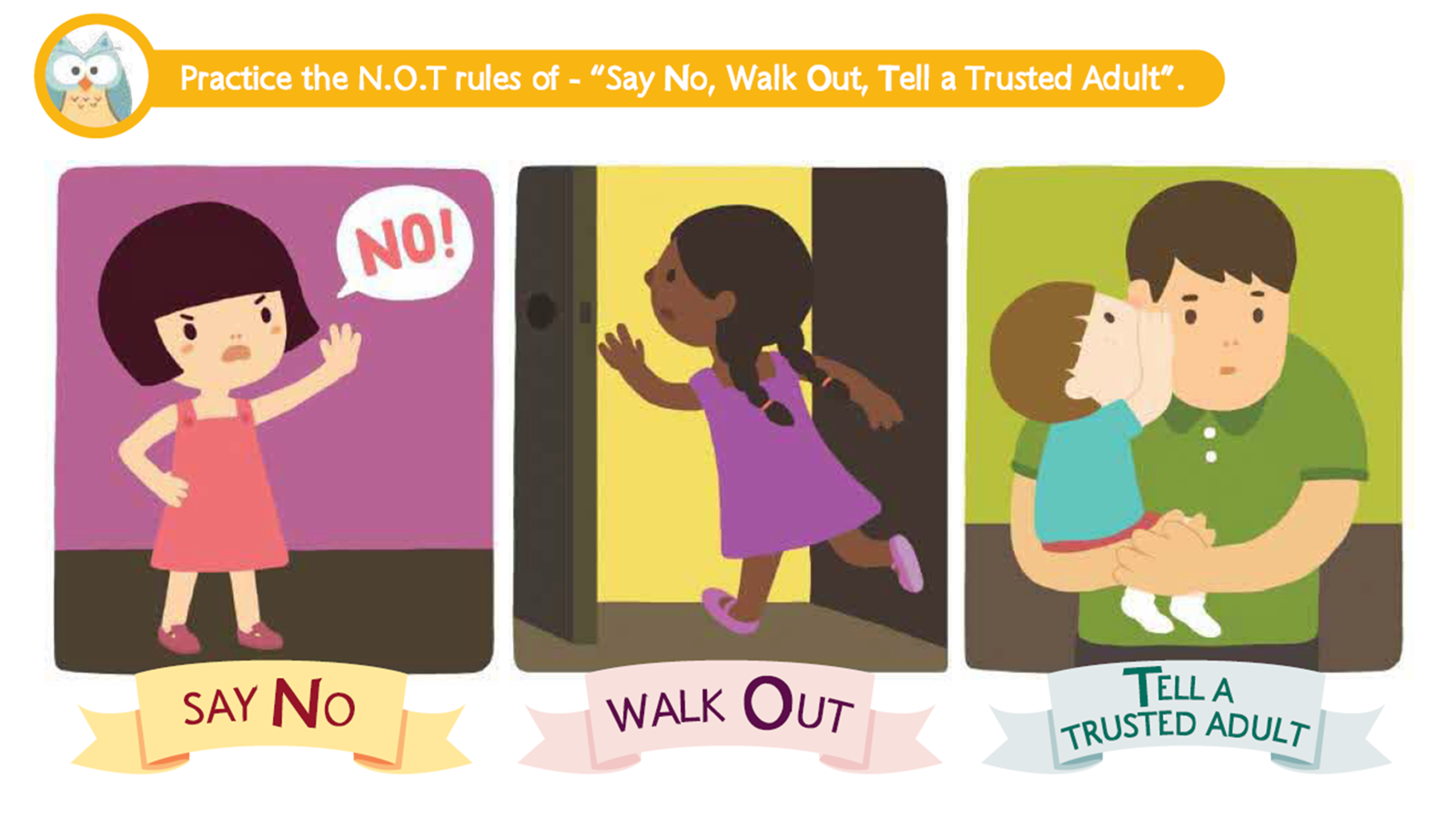 Children may not fully understand what a ‘trusted adult’ means. You can help your child by naming a few people whom they can turn to when they need help. [Credit: Singapore Children’s Society, KidzLive: I Can Protect Myself Booklet]
“Just as we teach children about road safety and healthy habits, body safety is a life skill that can be taught in simple, developmentally appropriate ways from a young age. These skills are essential in helping children develop a sense of body autonomy and learn protective behaviours that can help keep them safe,” shares Ms Lin Xiaoling, Director, Research and Advocacy Department, Singapore Children’s Society.
CREATE SAFE SPACES FOR CHILDREN TO EXPRESS THEMSELVES
Body safety is part of everyday life, not just a classroom topic. Grounded in respectful, responsive and reciprocal interactions with children, educators reinforce body safety messages through daily routines, conversations and gestures of affection.
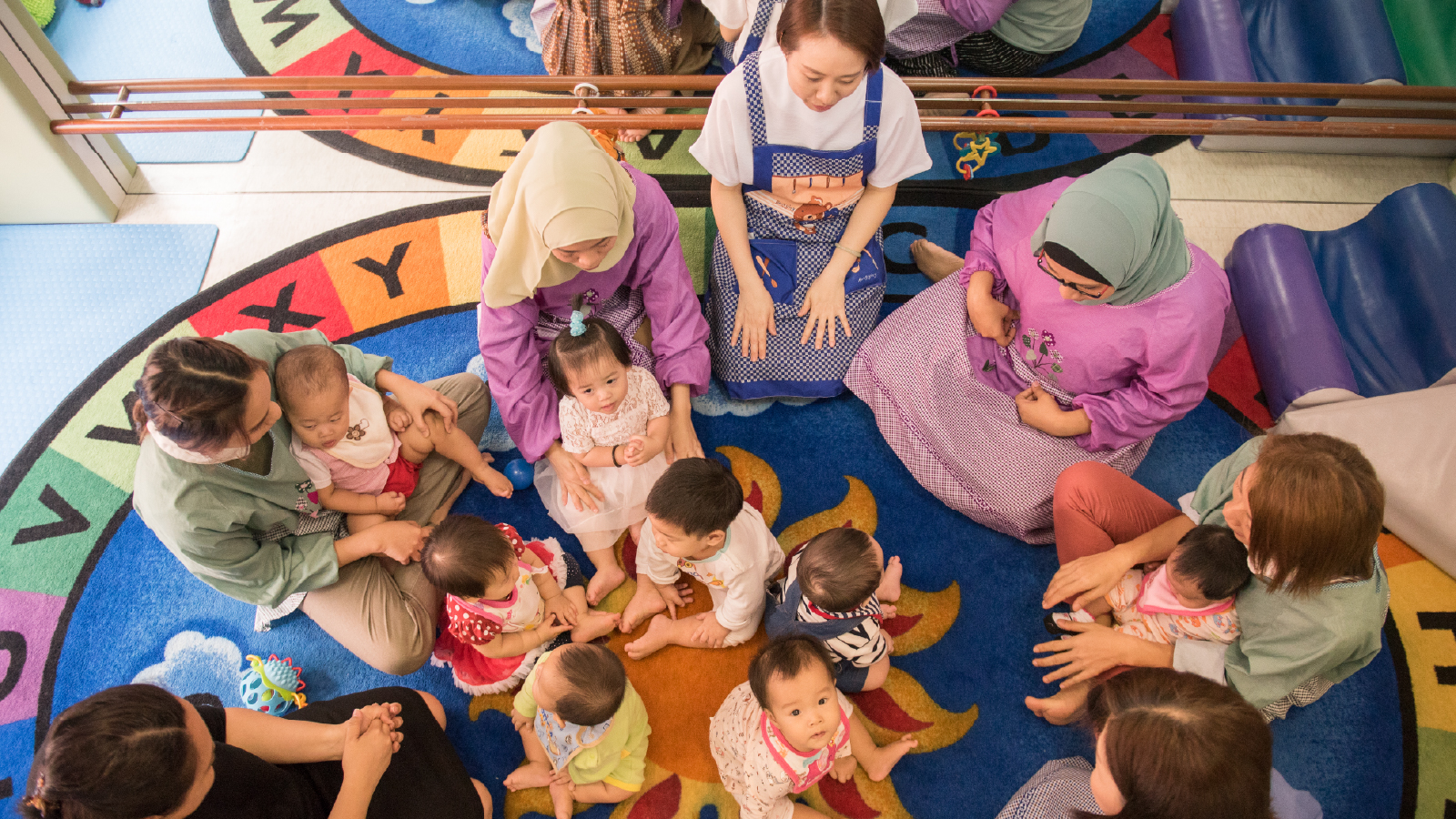
This begins even before children are able to speak. During diaper changes, for instance, educators explain what they are about to do rather than simply proceeding. Saying, “I'm going to change your diaper”, helps infants understand what to expect and shows respect for their bodies and feelings.
Equally important is how educators respond when children express discomfort. Rather than dismissing their feelings, they should pause, listen and acknowledge what the child is trying to communicate. Even a simple "Thank you for sharing with me" reassures children that they have done the right thing by speaking up.
Through these everyday interactions, children learn that trusted adults will listen, respect their boundaries and support them. They also learn that if someone's actions make them uncomfortable, they can seek help from another trusted adult.
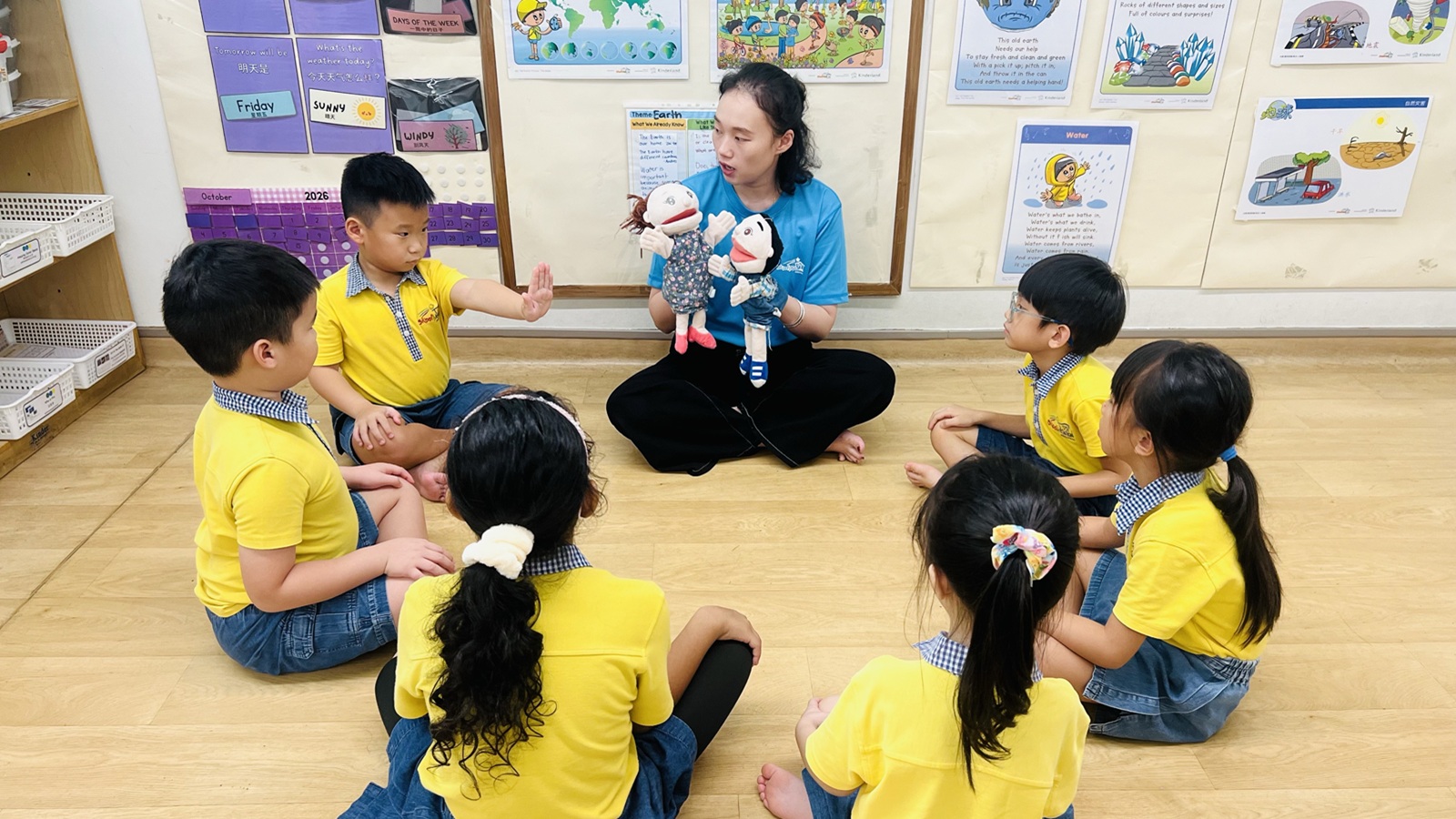 Through puppet play, educators can help children explore body safety in a way that feels safe and familiar — making abstract concepts tangible and easier to grasp.
KEEP THE CONVERSATION GOING AT HOME
For Ms Koh Pei Qi, whose son is in K2, knowing that the preschool shares her belief in introducing body safety concepts early has been reassuring. At home, she reinforces personal boundaries through everyday conversations and situations.
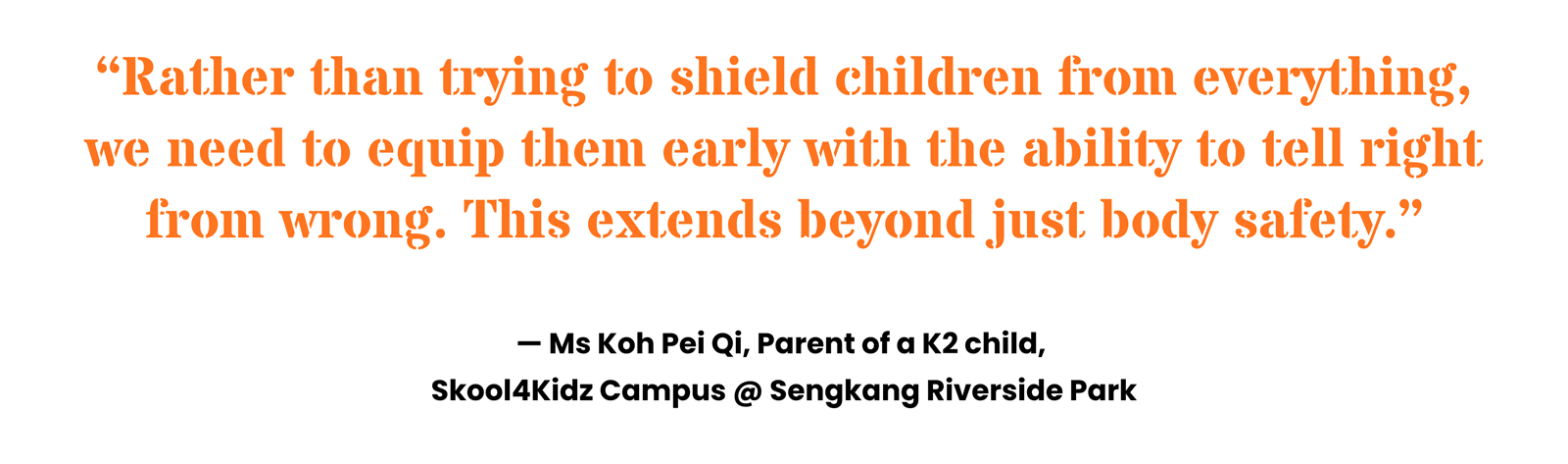
Since then, Ms Koh has noticed her son becoming more mindful of personal boundaries, from knocking before entering a bathroom to respecting his own and others' personal space.
With the preschool reinforcing the same messages through regular updates and parent-teacher discussions, children receive consistent guidance both at home and in school. Together, parents and educators can help children understand that their feelings and boundaries around body safety and protection, and that it is okay to say “No” when they feel unsafe or uncomfortable.