

ABOUT OUR EXPERT

Ms Lim is Lead Lecturer at the National Institute of Early Childhood Development (NIEC) – Ngee Ann Polytechnic campus. A former preschool principal, she teaches modules on learning environment, classroom management, social-emotional learning and child development. She is also a practicum and internship supervisor for pre-service teachers and a coach for in-service teachers.
Imagine there are two children playing with blocks in a classroom. Child A cries when her tower is accidentally knocked down by Child B. This may seem to be a negative experience at first glance, but it can be an opportunity to help children build emotional resilience and develop problem-solving skills.
First, acknowledge Child A's feelings and model emotional expression and empathy (e.g. “I see you're feeling sad because your tower was knocked over”). Next, gently suggest a perspective shift (e.g. “How about both of you work together to build a bigger tower?”), which reframes the negative experience.
In this way, everyday experiences become meaningful opportunities for authentic, teachable moments — helping to lay a strong foundation for emotional resilience in the early years.
SECURING A SUPPORT SYSTEM FOR EMOTIONAL DEVELOPMENT
Resilience does not mean suppressing strong or negative emotions. Instead, it's about developing the skills and capacity to cope with adversity and adapt to challenges.
Self-regulation and resilience are closely linked. To foster resilience in children, parents and educators should guide them in recognising and expressing their emotions constructively within a safe and supportive environment. Feelings like anger or sadness should never be dismissed but acknowledged as part of healthy emotional development.
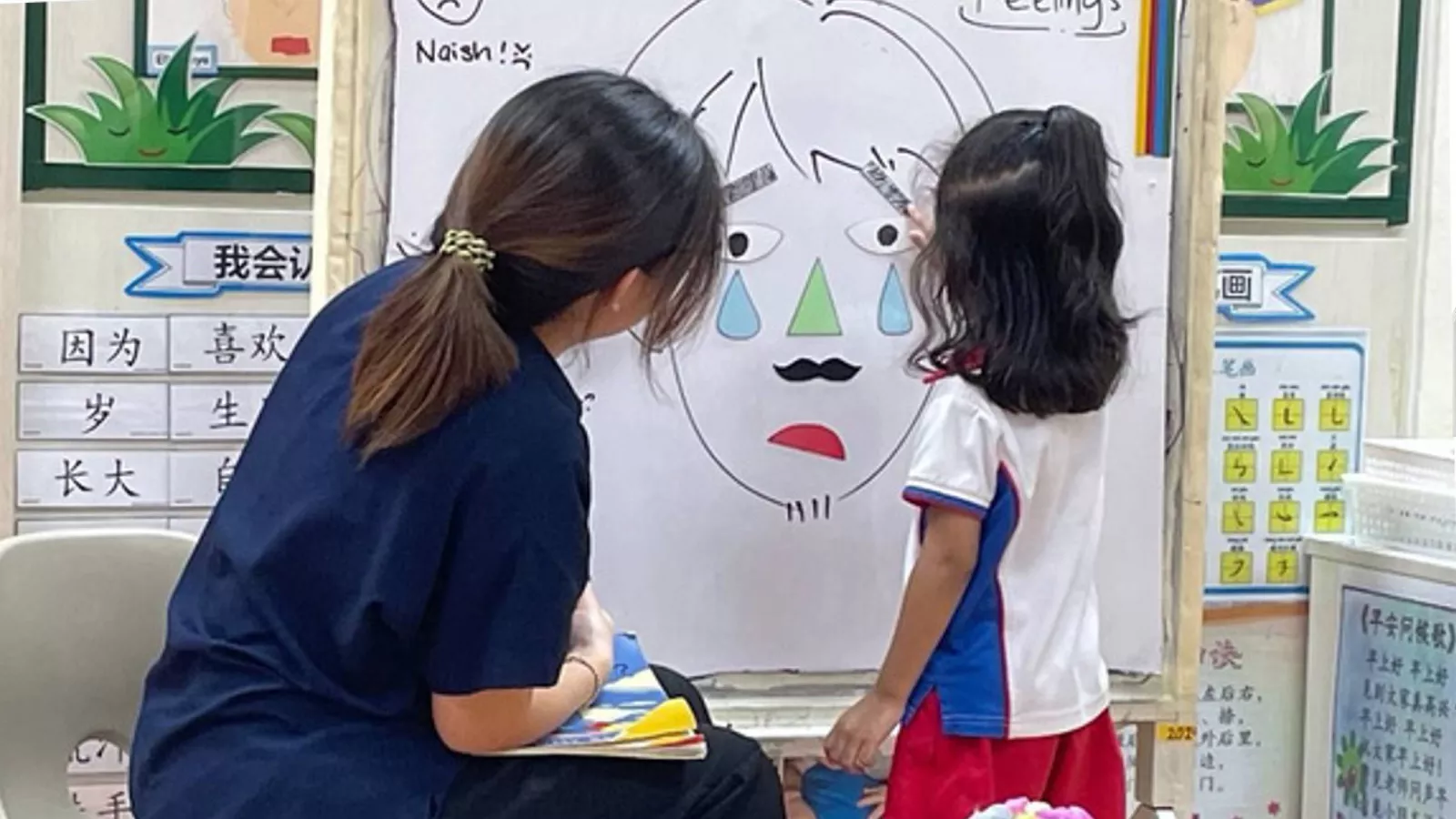 Craft activities are a good way to help children recognise, understand and express different emotions.
Learning to read and write is important — but so is social and emotional learning. Children learn best when they feel safe and supported. Parents can complement educators’ efforts by using the same emotional regulation strategies at home.
For example, if your child has an outburst or meltdown at home, you can work together to practise what they have been learning in class, such as:
- Taking deep breaths
- Counting to three
- Walking to another area to calm down
- Drawing their feelings on paper
Don't reserve praise only for when children succeed at a task. Praise the effort they put in, and not just the outcome. This helps children build a positive self-image and see setbacks or mistakes as opportunities for learning and growth.
KNOWING WHEN AND HOW TO INTERVENE
Intentional collaboration and regular communication between parents and educators are essential to provide consistent support for children.
Families and preschools may sometimes have different approaches. For instance, the parenting style could be one where children are expected to meet standards without making mistakes. What's important is finding common ground. Parents can discuss their expectations, while educators can explain their classroom practices and how the child is progressing. Working together ensures a supportive environment for the child.
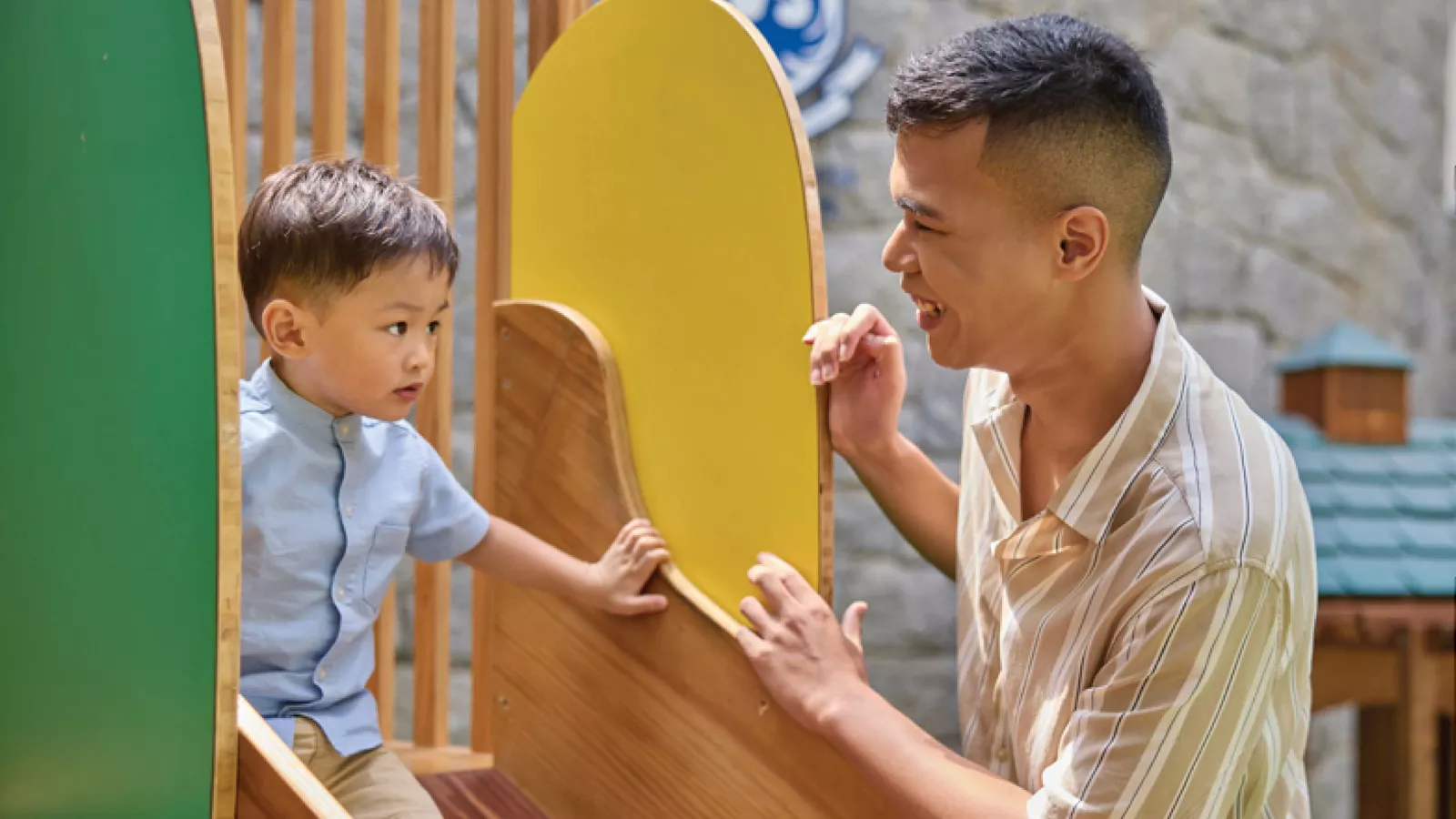 Children should be allowed to fall and make mistakes, within safe limits, so they can learn to persevere and become more resilient.
It is natural for parents to step in when their child faces a challenge. However, intervening too quickly can lead to learned helplessness, causing the child to avoid trying new things.
Keep this in mind when working on take-home activities such as craft projects. Encourage your child to complete it on their own. Recognise and encourage their efforts, even if the work is not neat or perfect. It might take two or three or five tries, but with your understanding and support, they will gradually gain confidence to complete the task more independently.
Can perseverance and resilience be taught? Yes, but not by simply explaining the word. These qualities must be steadily fostered through daily routines, supported by a caring and nurturing environment that offers guidance and comfort during challenging or stressful moments.