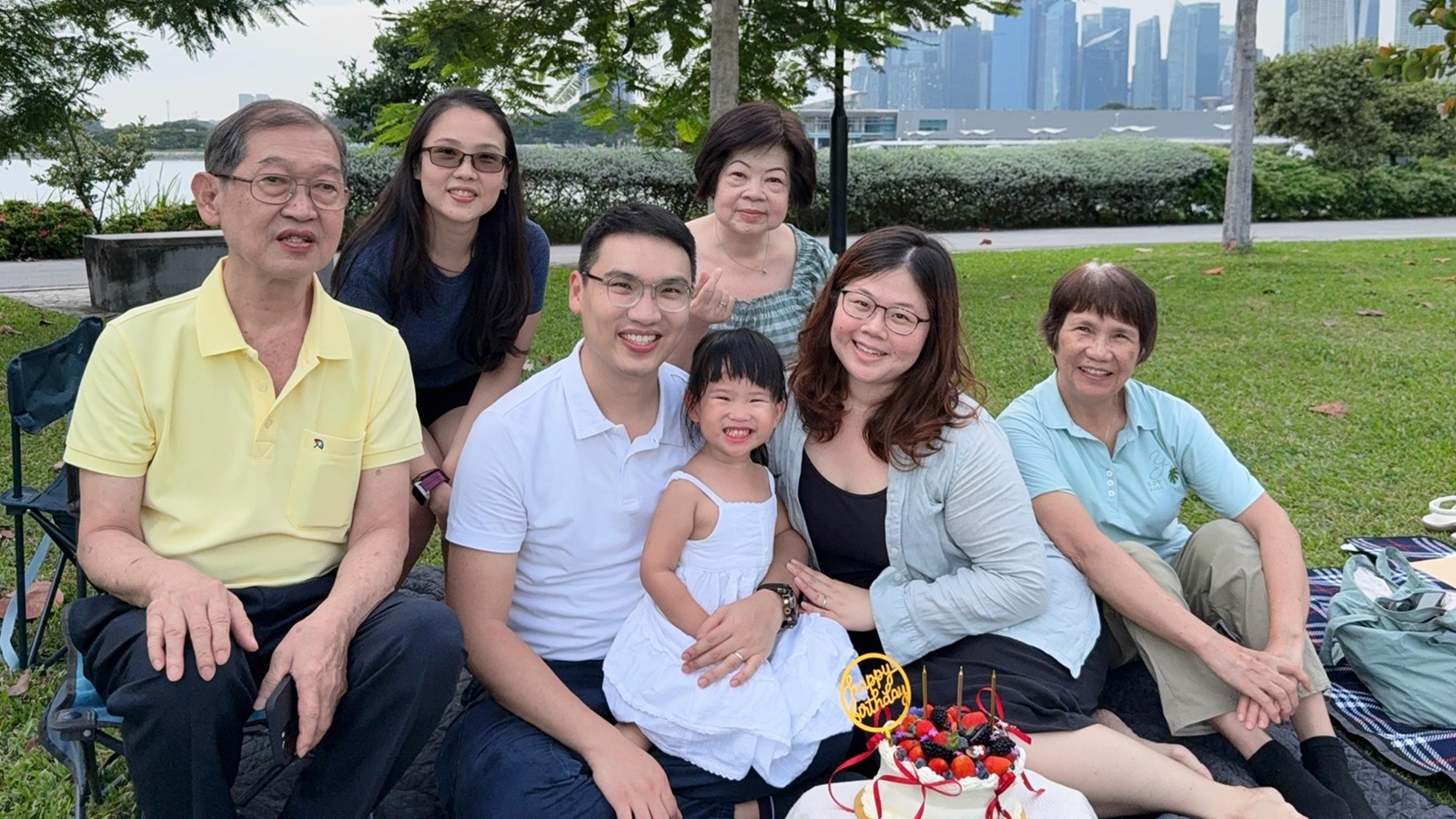

Like many children in Singapore, three-year-old Sarah Tan has a comfortable relationship with her grandparents. The preschooler from Star Learners @ one-north lives with her parents and maternal grandmother, while her paternal grandparents care for her on an ad hoc basis.
Grandparents from both sides meet regularly, and Sarah sees everyone as one big family, said her mother, Ms Michelle Seah. “Every time my husband and I plan to take Sarah somewhere, she will ask, “Will Ah Gong be there? Will Ah Ma be there?”
MORE THAN AN EXTRA PAIR OF HANDS
Research by the Centre for Holistic Initiatives for Learning & Development (CHILD) highlights the many ways grandparents can contribute to children’s learning, well-being and everyday experiences. It also points to the importance of parents and grandparents working together to support children’s development.
Grandparents’ contributions often go well beyond feeding children or helping with pick-ups, highlighted Dr Wang Yihang, research fellow at CHILD, a research centre based on Yong Loo Lin School of Medicine, National University of Singapore.
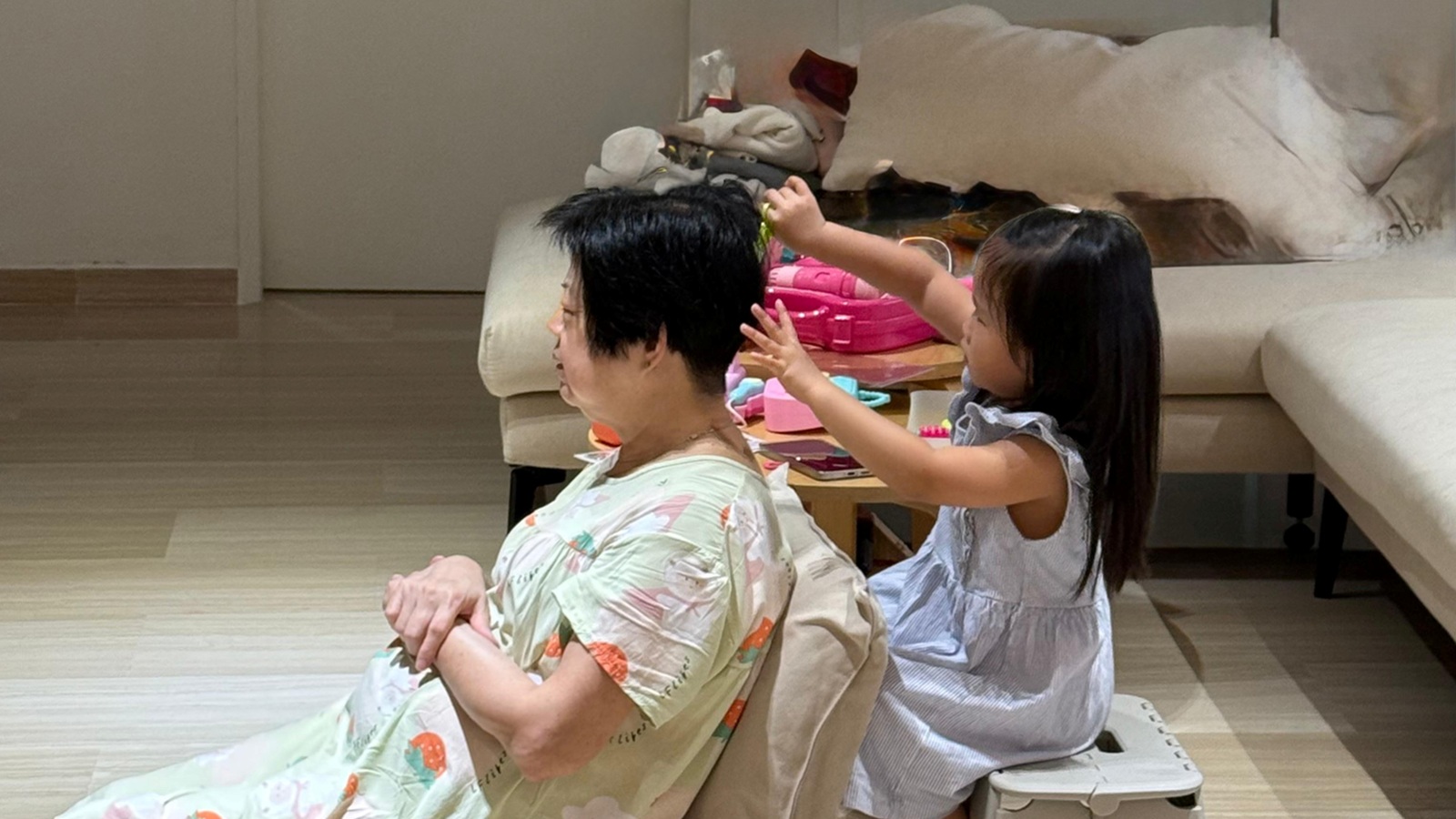 Sarah engaged in role-play at a ‘hair salon’ at home with her grandmother.
By reading, playing games and spending time with their grandchildren, grandparents can support everyday learning, social skills and emotional security.
“It’s not just about how many hours grandparents spend looking after the child but the different ways they contribute to the child’s learning, emotional security, family relationships and everyday experiences,” highlighted Dr Wang.
PASSING ON LANGUAGE, CULTURE AND FAMILY STORIES
Grandparents can make unique contributions to children’s language and cultural continuity, especially in Singapore’s multilingual and multicultural society. A child may speak English with their parents but use Malay, Tamil, Mandarin or dialect with their grandparents. Through these conversations, children can learn about cultural values, family history, heritage and identity.
Even an everyday trip to the wet market, for example, can become a learning experience. Grandparents may explain why the family eats a particular dish during a festival, name different foods, count out ingredients, and encourage questions. Such moments can support language, early numeracy and social understanding, said Dr Wang.
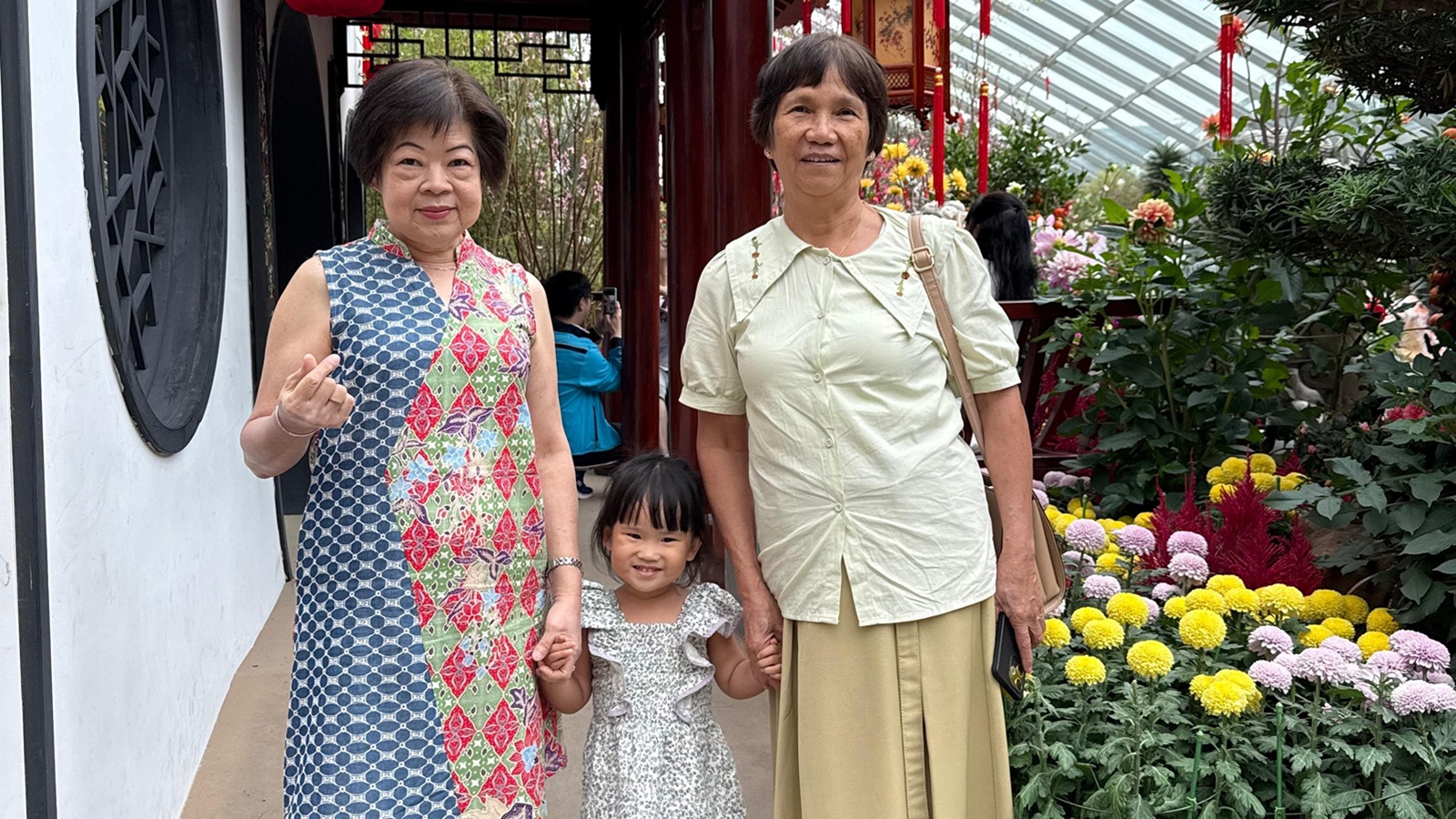 Viewing flowers and decorations during Chinese New Year together gives Sarah’s maternal and paternal grandmothers natural opportunities to talk about CNY traditions, memories and what different practices mean to the family.
WHEN CAREGIVING STYLES DIFFER
Differences between generations are natural. Some grandparents may draw on practical experience to inform their caregiving, while some parents may seek out relevant websites, parenting programmes or artificial intelligence for guidance. Dr Wang stressed that both lived experience and scientific evidence have value.
“What looks like a disagreement about food, toys or daily routine is sometimes a disagreement about values, expectations or caregiving roles. The challenge is for both generations to recognise that they share the same underlying intentions. They should then work towards a shared approach that supports the child’s development,” she said.
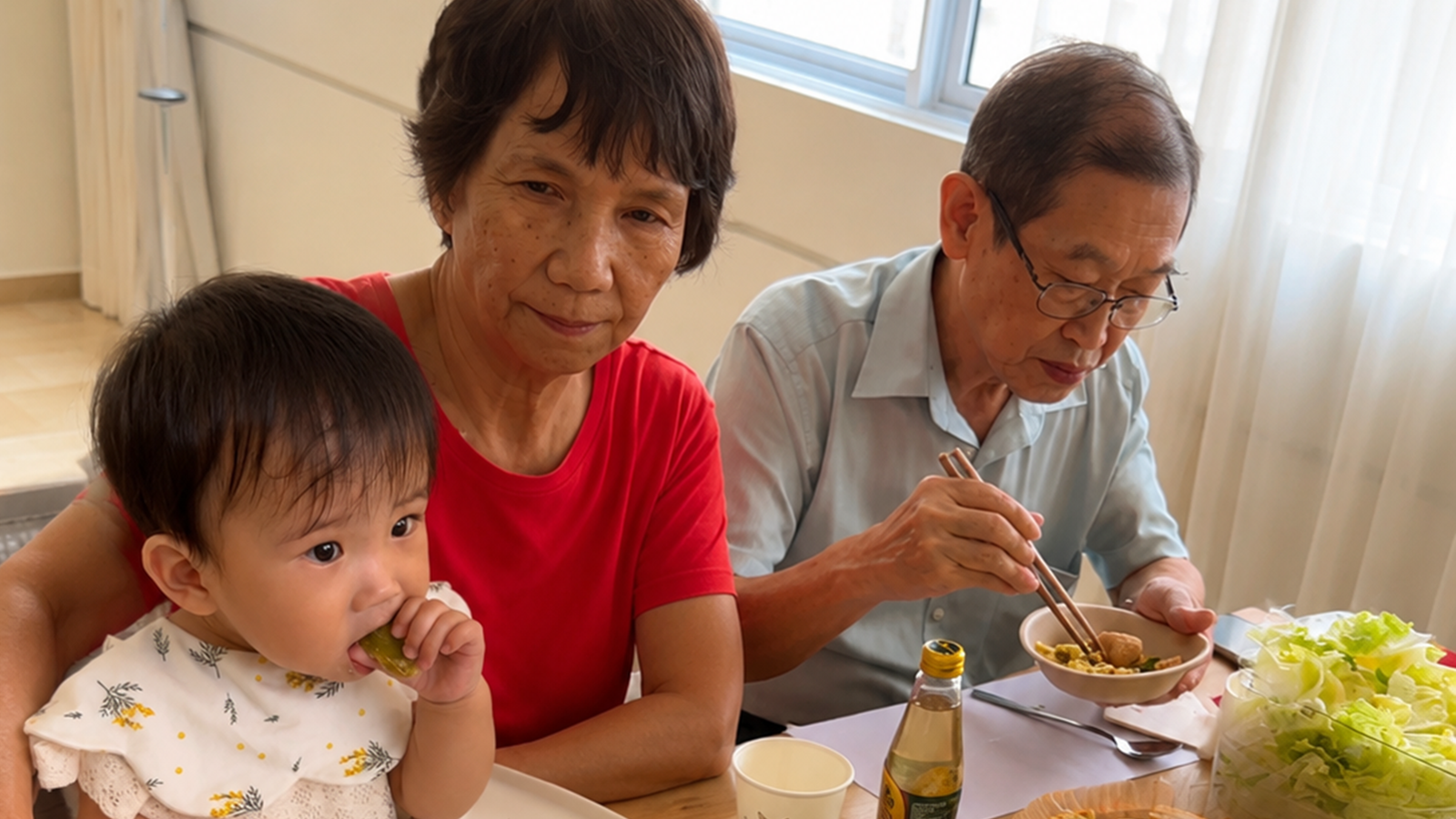 Mealtimes create natural opportunities in regular and predictable time for children to connect with parents, grandparents, siblings or caregivers. This can help children feel secure, noticed and included in family life.
For example, a grandparent may want a child to finish everything on the plate during a meal, while a parent may want the child to recognise hunger and fullness cues. Rather than criticising the amount of food served, the family could agree on shared principles, such as providing balanced meals and respecting the child’s cues. Parents can also explain that a recommendation is connected to a developmental goal, rather than presenting it as a critique.
“Good co-caregiving isn’t about grandparents following a list of instructions from parents. It’s a partnership where everyone has a voice and clear responsibilities,” shared Dr Wang.
LEAD WITH APPRECIATION
Ms Seah tries to approach differences collaboratively. When Sarah was younger, she preferred that her daughter learn to feed herself rather than be spoonfed by her grandmother. “I told my mother-in-law, ‘Maybe we can let Sarah try and use her fingers to pick up the food?’ I am thankful my mother-in-law is respectful of our preferences,” she shared.
She also encourages parents to show grandparents that their contributions are valued.
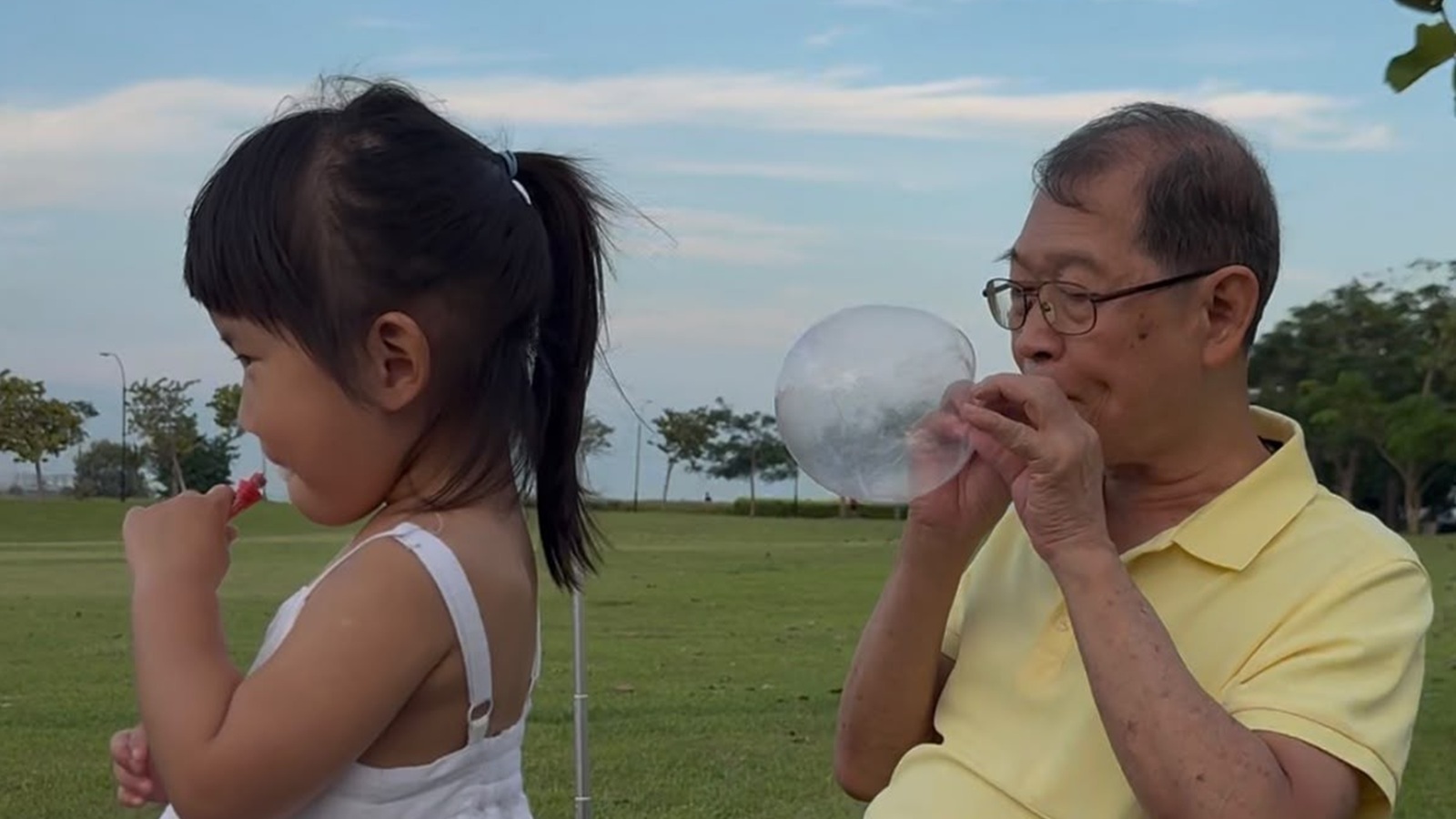 With Sarah’s grandfather participating rather than just supervising her outdoor play, the experience becomes a shared play, strengthening discovery and relationship.