

“He looked at me and called me ‘Teacher Nadia’. I was overjoyed!”
For Ms Siti Nadia Binte Jomari, an educator at Small Wonder Preschool Gambas (Nordcom II), this moment marked a significant breakthrough. Ali (not his real name), a four-year-old boy suspected to have autism, had struggled with communication and engagement. It was the first time in over a year he spoke her name — a sign of growing trust and connection.
“When he first joined, he had difficulty interacting with others. He would avoid eye contact and often expressed himself by hitting or throwing things,” Ms Nadia recalls. Over months of patient, intentional teaching, Ali began to open up, becoming more willing to engage and play with his peers. Using Universal Design for Learning (UDL) principles, Ms Nadia created an inclusive environment using visual cue cards and simple language to help Ali follow routines and communicate more effectively.
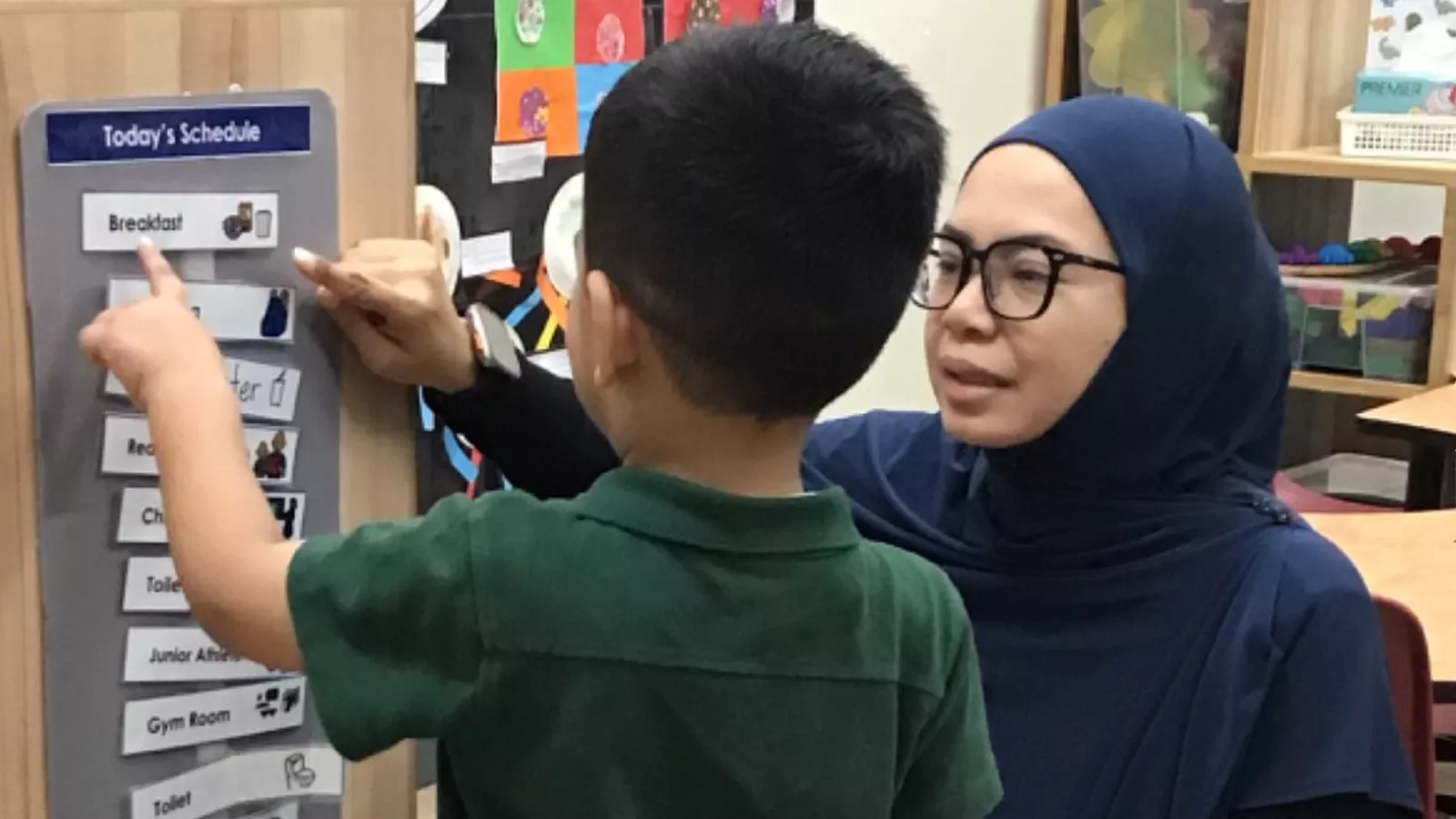 Teacher Ms Siti Nadia Binte Jomari used visual schedules to help Ali, a child who requires additional support, understand daily classroom routines.
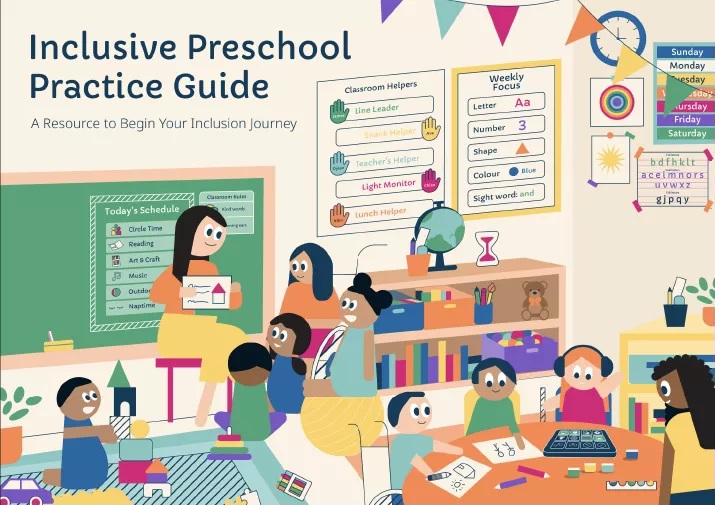
Such moments show the profound impact of dedicated educators — turning challenges into joy and growth. These and other strategies are featured in the Inclusive Preschool Practice Guide (IPPG), developed by ECDA and piloted through the Inclusive Support Programme (InSP).
SUPPORTING INCLUSION THROUGH PRACTICE AND PARTNERSHIP
Small Wonder (Nordcom II) is one of six preschools in the InSP pilot, launched in 2021 to support children aged three to six requiring medium levels of early intervention (EI) support. The aim is to create preschools where all children with developmental needs can learn, play and participate meaningfully in daily activities together.
To support the roll-out, a Technical Assistance (TA) team led by the Community Psychology Hub (CPH) worked closely with pilot preschools to strengthen early childhood (EC) educators’ skills in EI and inclusive practices.
“From the pilot programme, we’ve seen real shifts in educators’ mindsets and practices,” says Ms Christina Van Huizen, Senior Assistant Director and InSP Team Lead at CPH. “Educators are embedding inclusive strategies into their daily routines and learning environments. Centres are showing greater ownership in differentiating instruction and building inclusive classrooms.”
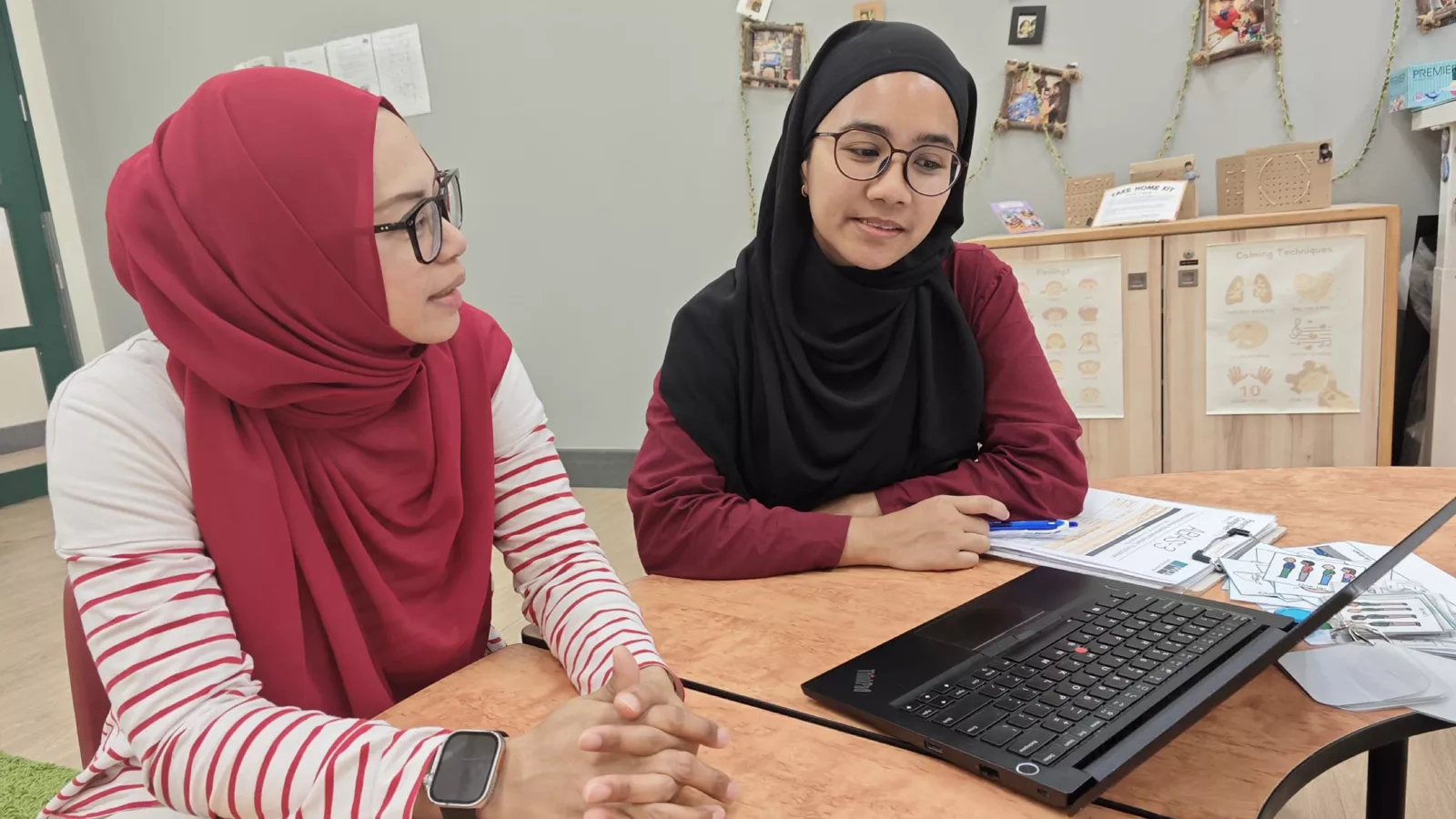 Ms Nadia (left) reviews lesson plans with an on-site EI educator to set learning goals and strategies for children with additional needs, and to ensure that all diverse needs in her class are met.
Ms Nadia has worked in the EC sector for nearly 20 years. While she had some experience supporting children with developmental needs before, she had not received formal training. The InSP pilot and CPH trainings were transformative for her.
“Previously, I had to come up with my own ways of supporting children, often unsure if I was helping in the best way,” she says. “The InSP TA team and on-site EI educator made a huge difference. Their guidance made learning enjoyable, and I now feel far more confident in my role.”
LAYING THE GROUNDWORK: THE INCLUSIVE PRESCHOOL PRACTICE GUIDE
The IPPG distils features from the InSP into seven practices any EC educator and preschool can implement:
- Inclusive environments
- Intentional teaching and developmentally appropriate practice
- Collaborative teaming
- Active child engagement
- Family engagement
- Leadership that supports inclusion
- Supervision, coaching and professional development
Anchored on the four Cs — Child, Class, Centre and Community — the guide helps educators focus on the child’s needs, foster inclusive classrooms, adjust centre processes, and actively engage families as partners.
At Ms Nadia’s centre, staff teamwork has strengthened. With TA team support implemented, educators, therapists and families now work closely together. This collaborative teaming — a key recommended practice in the IPPG — combines diverse expertise and experiences to build collective capability to help every child learn, grow and thrive.
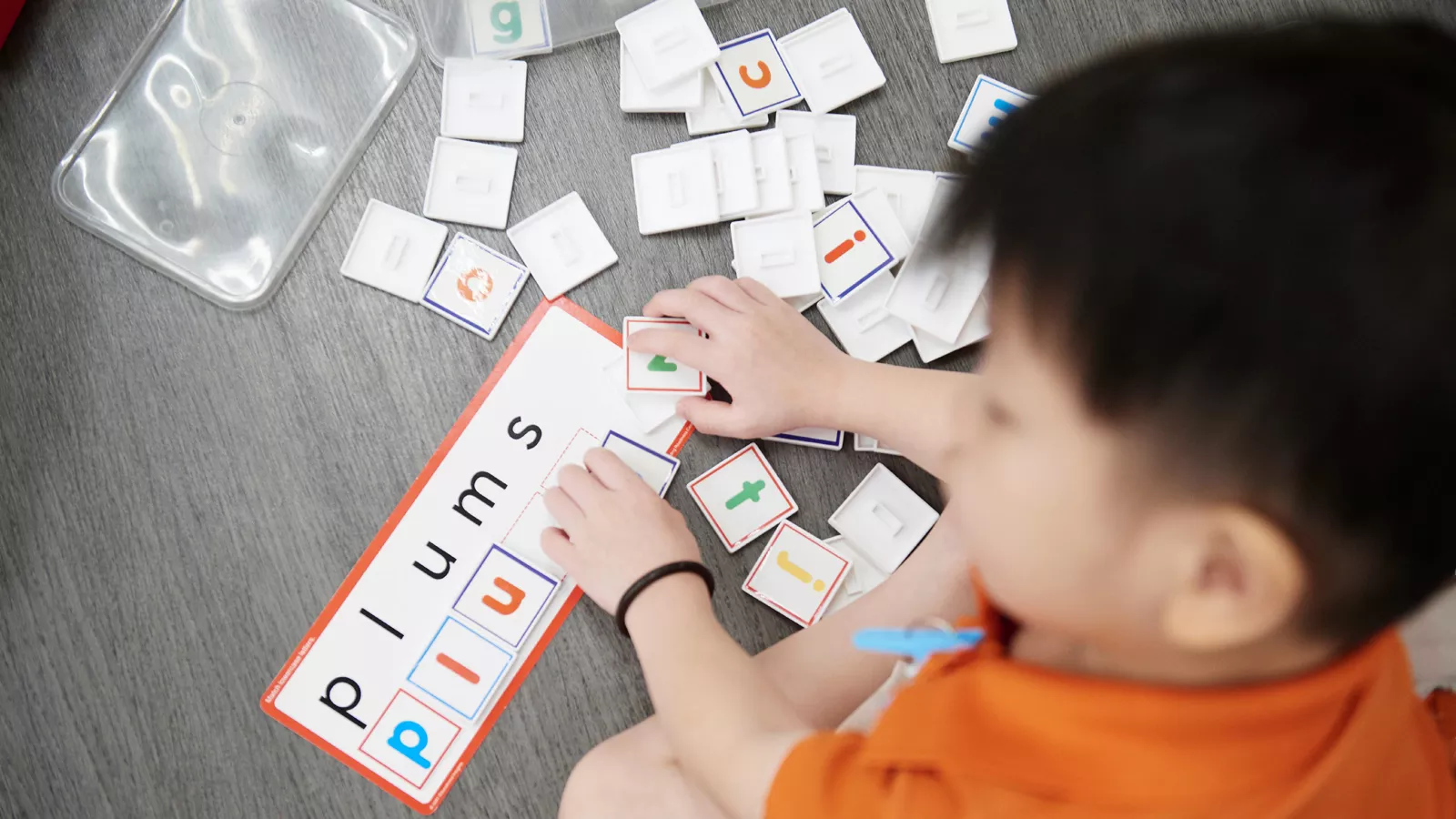 By implementing the seven recommended practices in the IPPG, preschools can cultivate high-quality learning environments and learning opportunities for all children.
START WITH SMALL STEPS
Inclusion benefits all children, not just those with developmental needs. Ms Van Huizen encourages educators to begin with small steps from the IPPG. For example:
- Talk openly about differences in age-appropriate language. You can say, “Some friends need extra help with their words, and that’s okay. We all learn differently.” This helps children make sense of what they see and respond with empathy.
- Model inclusive behaviour. Show patience, use respectful language, and celebrate small wins (through high-fives or sharing words of appreciation).
- Create opportunities for positive peer interactions. Introduce buddy systems, cooperative play or turn-taking games. These help children learn and collaborate with each other.
- Affirm contributions. Praise pro-social behaviours, such as helping or encouraging others or waiting for their classmate.
- Guide children through conflicts. Coach them in problem-solving, empathy and perspective-taking.
Drawing on the UDL framework, preschools can also design environments and practices that support the diverse needs and abilities of every child.
SMALL STEPS, BIG CHANGES
Through consistent strategies, Ms Nadia observed her children making steady, meaningful progress. “They became more independent, followed routines better and needed fewer prompts,” she shares. “Some even began using visuals to communicate their needs, reducing frustration and building confidence.”
Most heartening of all, Ali has begun to find a sense of belonging with his classmates. “Before, the other children would get upset when he took their toys,” says Ms Nadia. “Now, they sit together, include him in play, and guide him through routines.”
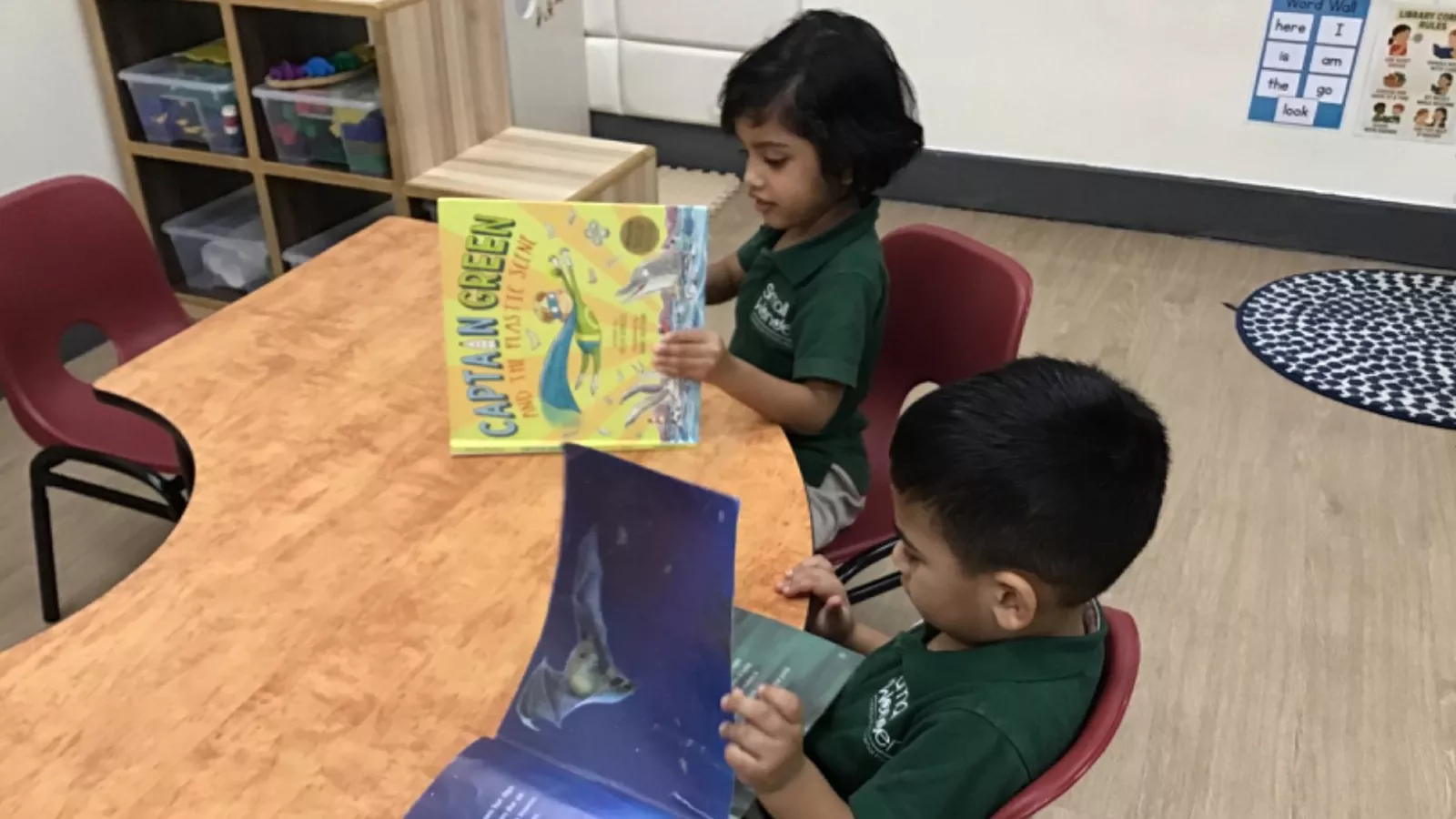 Children in Ms Nadia’s class have become friends with Ali, and they learn and play together.
These experiences have strengthened Ms Nadia’s passion for inclusive education. She believes that true support begins when educators, therapists and families collaborate with each other and work hand in hand.
Ms Van Huizen agrees, noting that sustaining inclusion requires long-term commitment — from training educators to aligning policies and practices. “Deep, sustainable capacity within preschools is key,” she says. “When policies, practices and professionals come together, every child can learn and thrive.”