When a child in her centre was working through challenges with meals and food, Ms Cara Lee spoke with the mother: "I feel your pain as a mother. Can I have your permission to do what I can for her as an educator?"
She warmly welcomed the child and her family at the gate each morning, kept food off the agenda, and worked with the mother to identify the root cause of her daughter's challenge. Slowly, the child returned to eating normally.
"Parents and educators are on the same side of the table– the child’s side," she said.
With nearly 20 years in early childhood education, Ms Lee, Assistant Director of Faculty and Leadership Development at the National Institute of Early Childhood Development (NIEC), has seen what strong parent-preschool partnerships look like, and what causes them to fray.
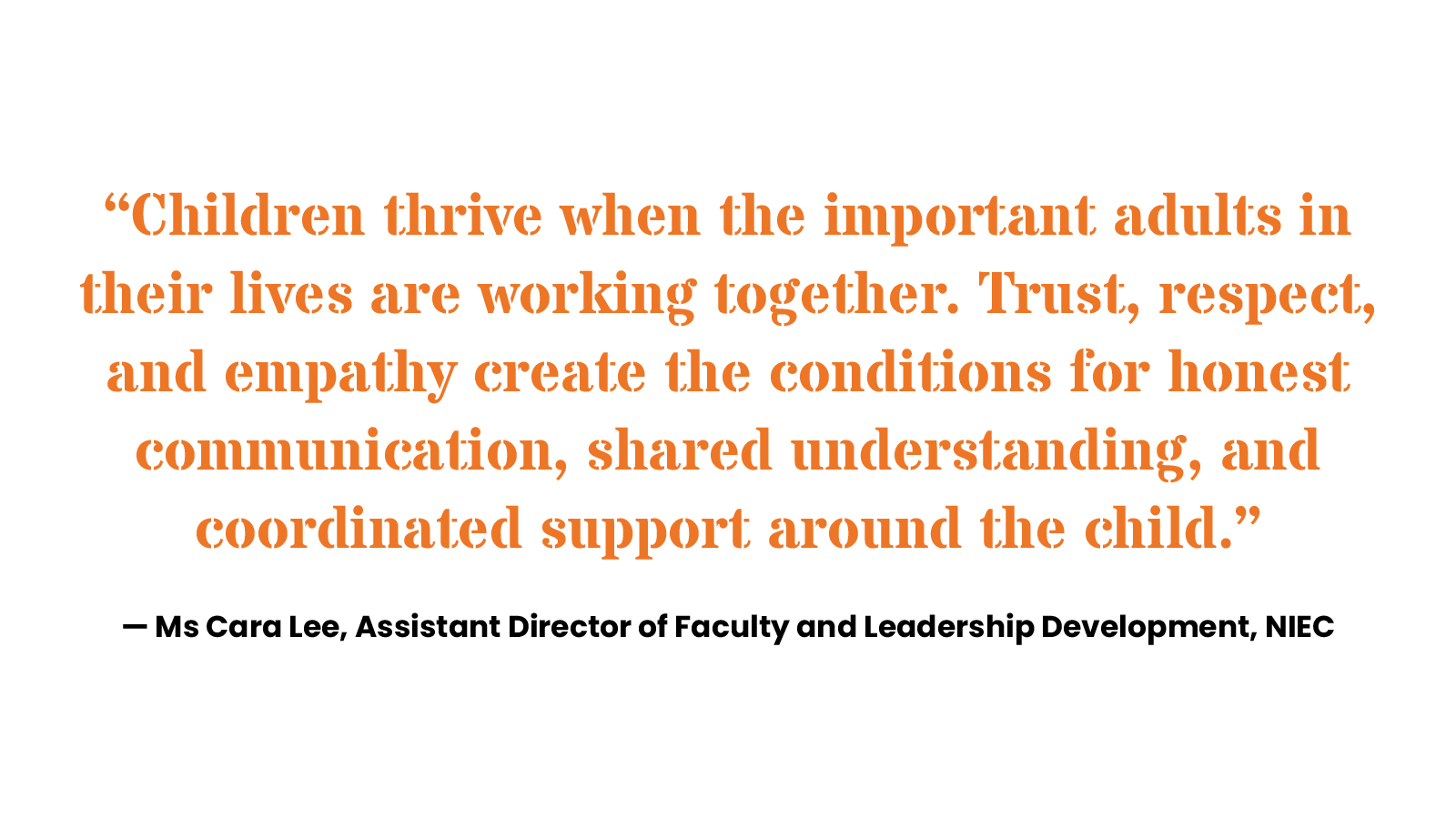
At the heart of it are the three qualities of trust, respect and empathy, which she has found to be transformative. These principles underpin the Our Wonderful Partners! Parent-Preschool Partnership Guide launched by the Early Childhood Development Agency.
TRUST: BUILT SLOWLY, TESTED QUICKLY
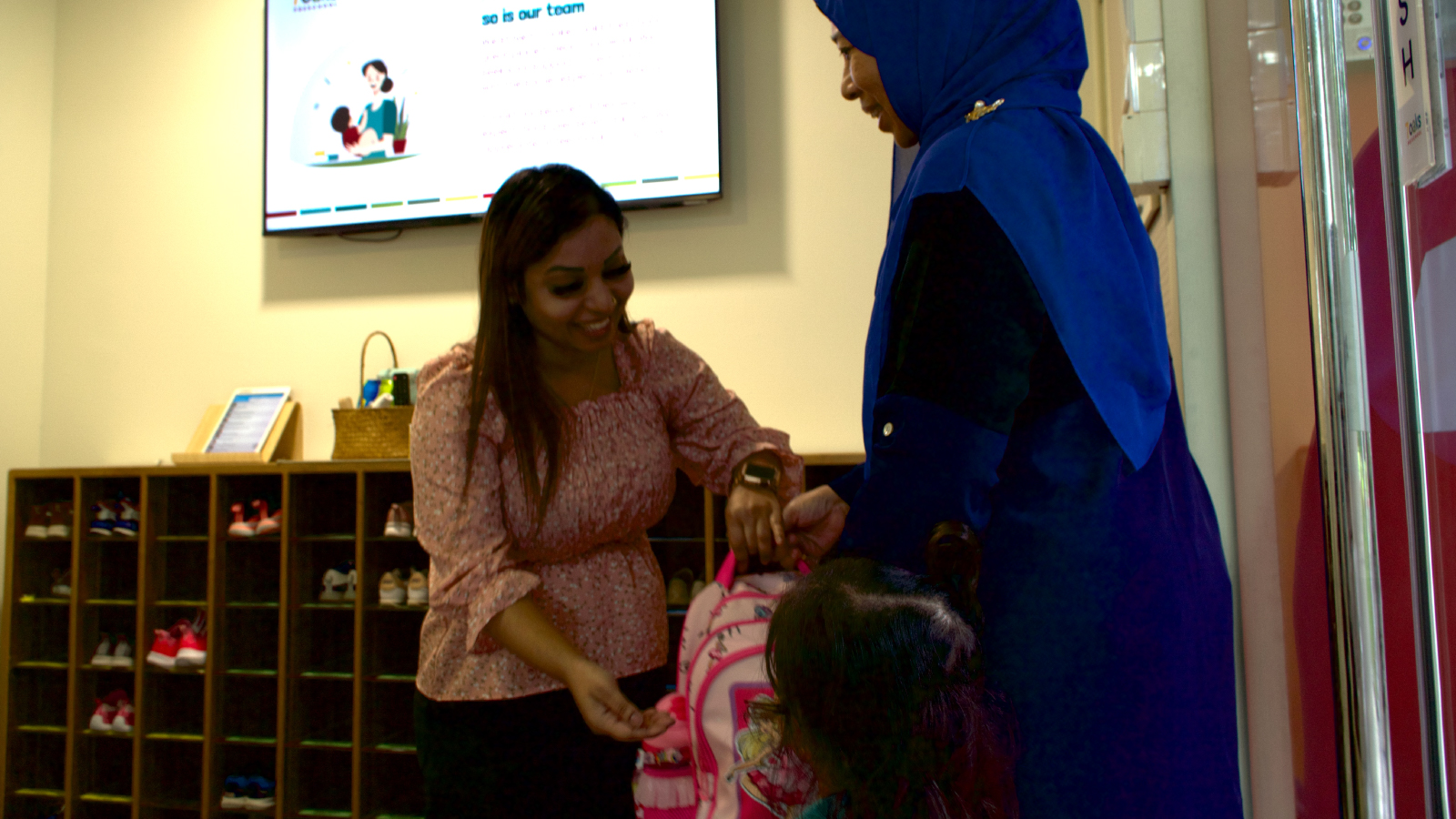 An early childhood educator receiving a child from a parent at 7oaks Preschool Jurong West
Trust is accumulated through many small, consistent interactions over time, allowing parents and educators to share concerns openly.
Educators can build trust by communicating regularly and being transparent about children's strengths, progress and challenges, while parents can do so by remaining curious, expressing appreciation and seeking to understand the full picture.
But trust may be eroded, particularly in moments of vulnerability, said Ms Lee – such as when a child is struggling with behavioural issues or when parents feel they are not getting enough information from the preschool.
To diffuse an emotionally charged conversation, parents and educators can ask, “What’s right for the child?”, instead of “Who’s right?”
How both parties handle that first conversation can set the tone for everything that follows.
SCENARIO: When a child refuses to go to school for days
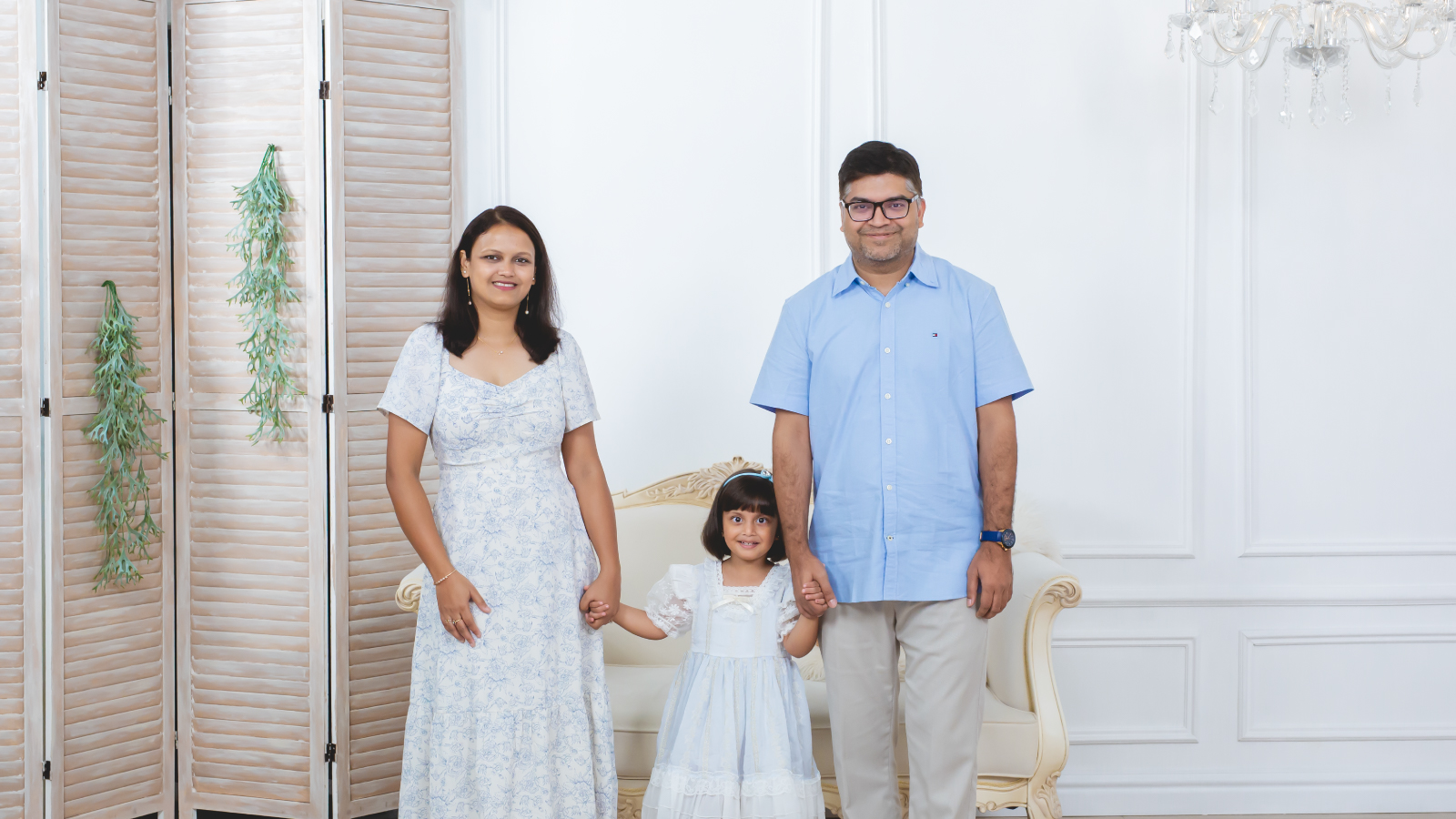
Ms Surabhi Pandey (left), mother of a K1 child at Riverlife Kindergarten, said her instinct in such moments is to resist jumping to conclusion. I would say, “I wanted you to let you know this has been happening at home. Could you help me observe if anything has changed in class?”
Parents, try this: Speak to the educator openly, but not accusingly, so it becomes a shared concern rather than a complaint.
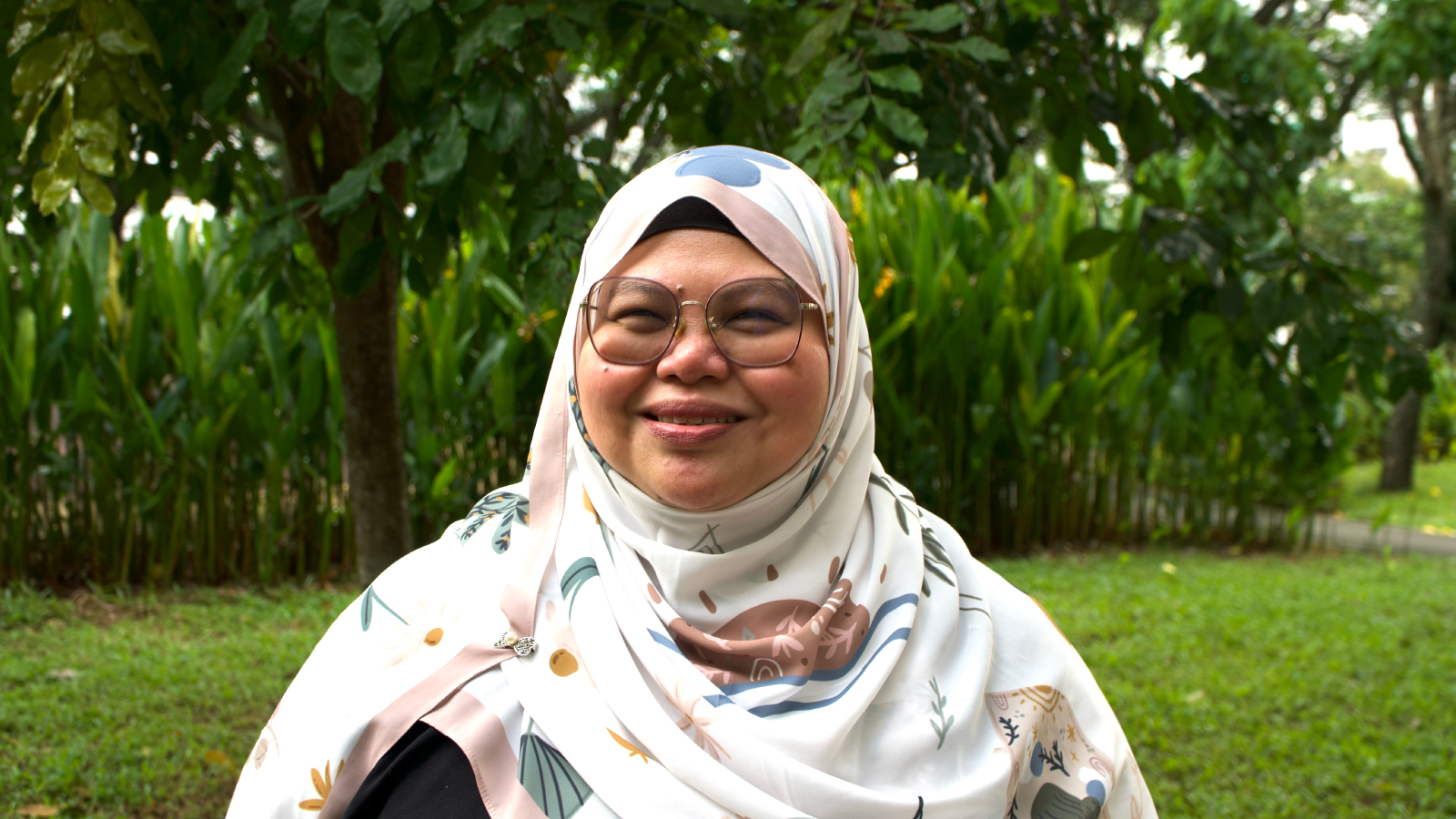
Ms Norizan Rahmat, lead preschool educator at 7oaks Preschool - Jurong St. 81, believes in reaching out early to facilitate speedy interventions.
Educators, try this: Check in with the parents to see how things have been at home and whether they’ve noticed anything that might help educators better support them.
RESPECT: TWO PERSPECTIVES, ONE CHILD
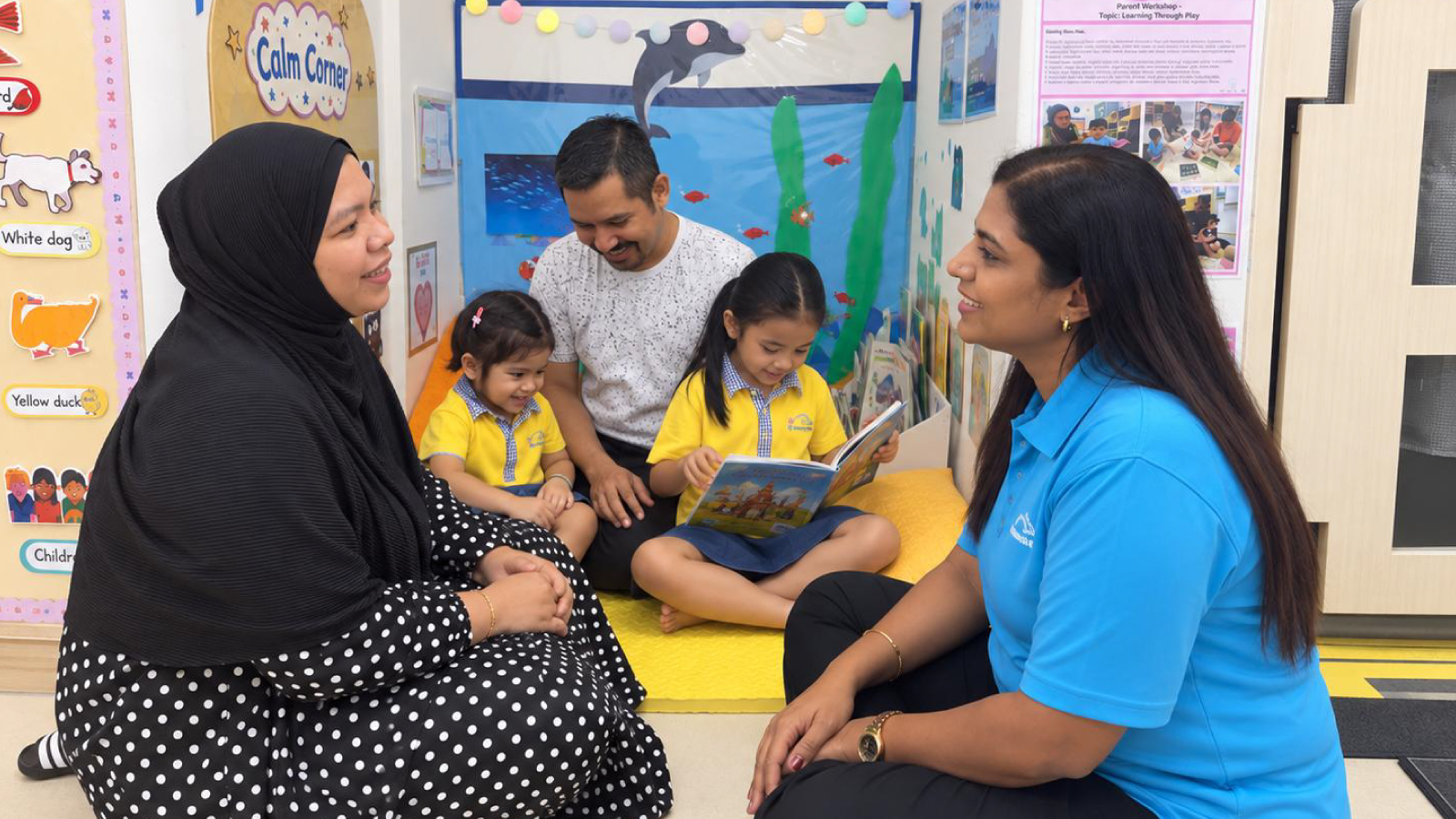
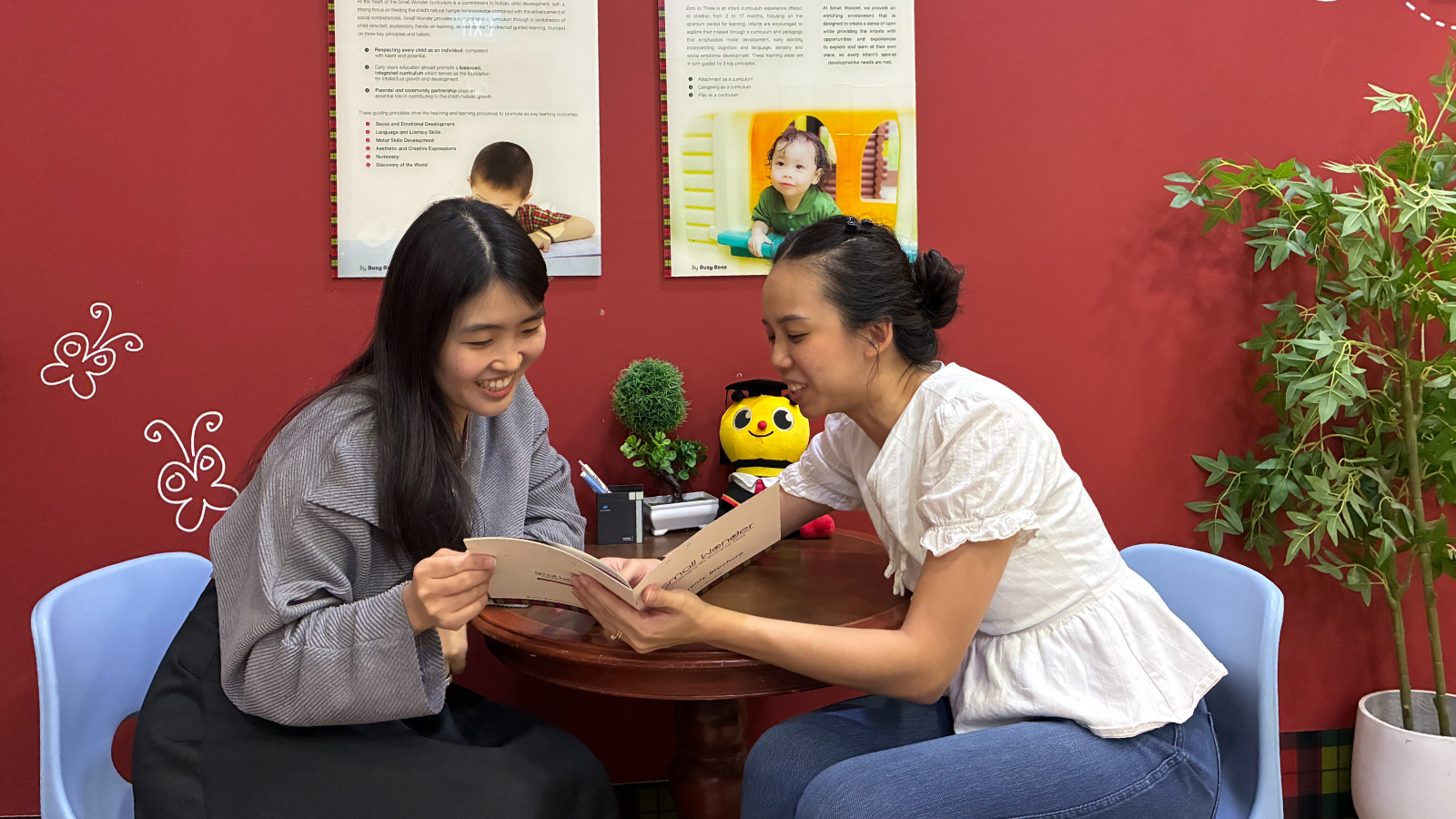 Ms Jasmine Ang (right), Vice-Principal at Small Wonder @ Nee Soon, sharing a conversation with a parent
Both parents and educators bring something invaluable to the holistic upbringing of a child. Parents know their child within the context of home, while educators know the same child within a preschool environment. “Mutual respect means recognising that both perspectives are valid pieces of the same puzzle,” said Ms Lee.
One way tension can surface is when a child struggles to interact with other children at preschool but appears perfectly confident at home. Whose picture of the child is accurate? Often, both are, stressed Ms Lee.
SCENARIO: When a child behaves differently at home and in preschool
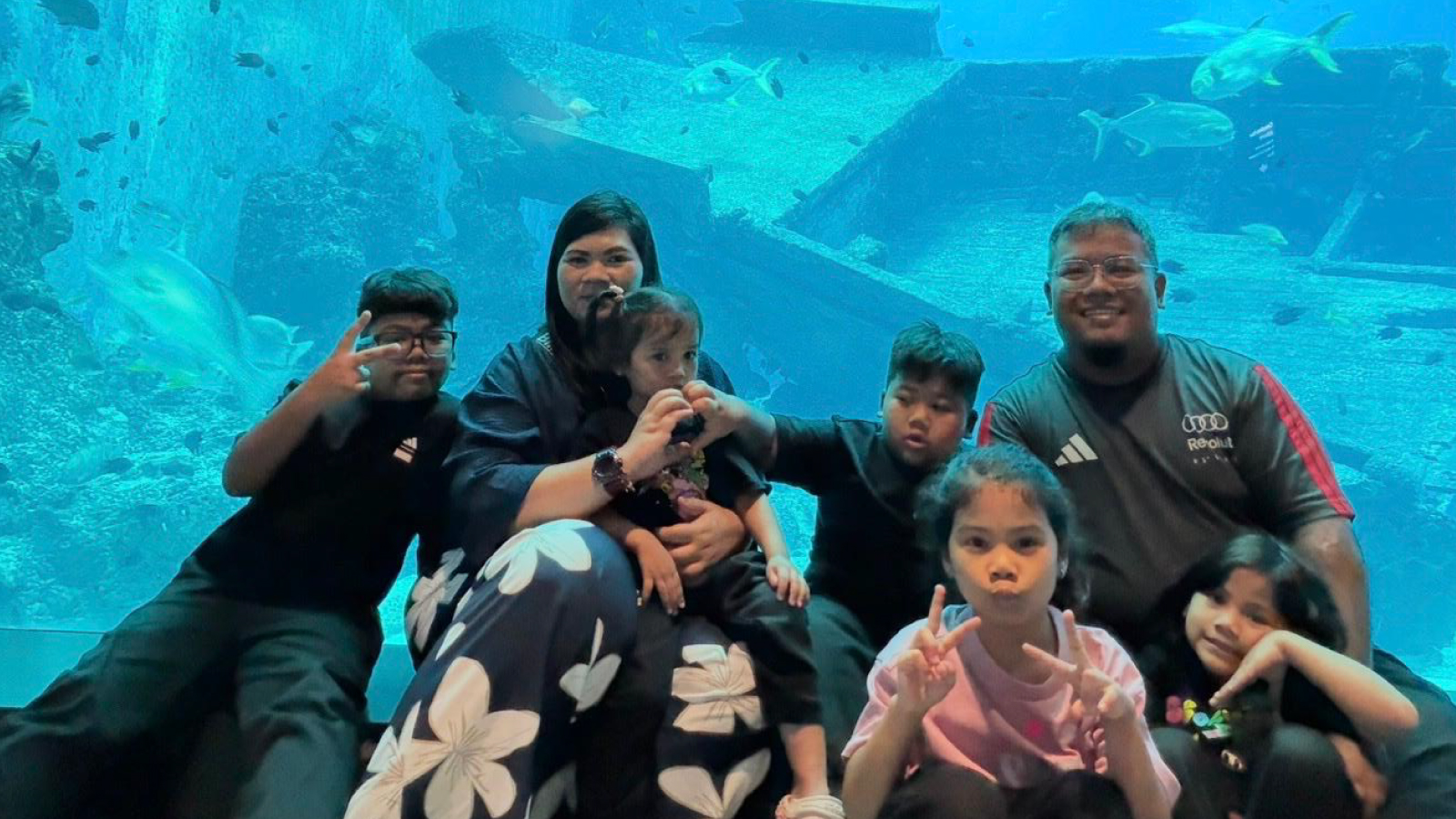
Ms Farhanah Othman, whose child attends PCF Sparkletots Preschool @ Ang Mo Kio, said the key is keeping an open mind, “Working together, she said, is always the goal.”
Parents, try this: Rather than assuming the educator has missed something, ask for specific examples and remind yourself that your child may simply behave differently in different environments.

Ms Joey Lim, principal at M.Y World @ Rivervale Shores, reminds her educators that children often behave differently at home and at school. “When parents see that we are genuinely trying, and feel respected and heard, that’s when they start trusting us again,” she shares.
Educators, try this: Share observations that capture both strengths and areas of growth — not just concerns. View parents’ perspective as valuable information rather than resistance.
EMPATHY: WALKING IN ANOTHER'S SHOES
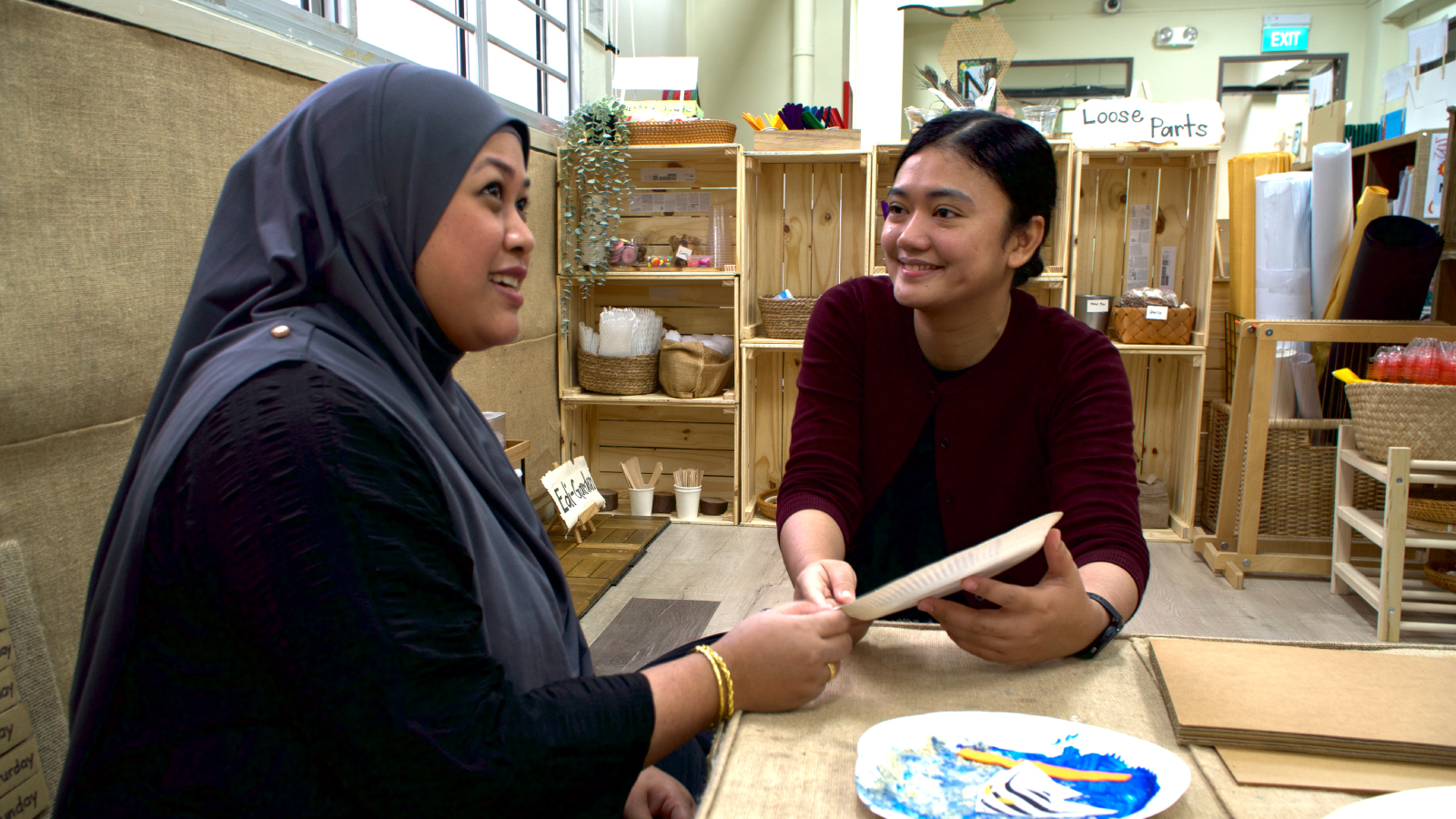 Parents and early childhood educators need to empathise with each other as they work together for the best interests of the children under their care. (Image provided by 7oaks Preschool Jurong West)
Empathy, Ms Lee acknowledged, may be difficult to sustain, particularly when stress is high and time is limited.
Parents are often juggling work, caregiving, financial pressures and anxieties about their children’s futures. Educators are simultaneously managing the needs of many children while building relationships with multiple families.
Specificity also matters – recognising the uniqueness of what a person is carrying makes empathy personalised, and “its value goes up by leaps and bounds,” she said.
Some conversations are more challenging than when parents question whether the preschool’s learning approach is providing enough academic preparation for their children.
SCENARIO: When parents are unsure if the child is learning enough

For Mr Danial Chan (extreme left), whose child attends Agape Litte Uni @ Jurong West, shared that framing his concerns as questions with a focus on the child would help create a respectful conversation. “I would remind myself that educators are balancing the diverse learning needs of many children,” he said.
Parents, try this: Consider what the educators might be managing before walking into the conversation. Rather than leading with criticism, ask the educator to explain the goals behind the activities and how progress is assessed.

Ms Jasmine Ang, Vice-Principal at Small Wonder @ Nee Soon, listens first. She shares, “A parent’s worry may be driven by anxiety about their child's future, comparisons with other children, or fear of falling behind,” she said. “Understanding this helps me respond with empathy rather than defensiveness.”
Educators, try this: Invite parents to share their expectations, then explains how the preschool builds foundational skills — language, problem-solving, confidence and resilience — that support children’s learning in the long run.
At the end of the day, it is not about who is right. It is about what is best for the child.