





By Ms Kang Lizhen, Senior Teacher, The Orange Academy (Yishun)
I joined the EC sector because of my genuine love for children and my belief in their unlimited potential. Over the past 15 years, I have realised that my role is so much more than “teaching Mandarin”. It is about journeying with them through their formative years, contributing to their growth and development. I feel a strong sense of responsibility to provide a steady foundation of care, attention, and guidance they need to thrive.
EACH CHILD IS UNIQUE
As an educator, I believe we must place the child at the heart and centre of everything we do. It takes time and patience to understand their specific interests, abilities and individual needs. Every class is different — the responses and reactions I get from children vary from day to day. This is why reflection is my most important tool. After every session, I ask myself: how could I have adapted my approach to better suit the situation? By continually refining my teaching approach and strategies, I stay responsive to the children I serve.
I had a K2 student who left a lasting impression on me. He was very lively, active in class and grasped concepts fast. Because he would often finish his tasks before everyone else, he would begin engaging his friends. Observing that he was developmentally ready for a challenge and interested to learn more, I began introducing him to simple Chinese proverbs, which he enjoyed. I shared this with his parents who eagerly reinforced what he learnt in school at home.
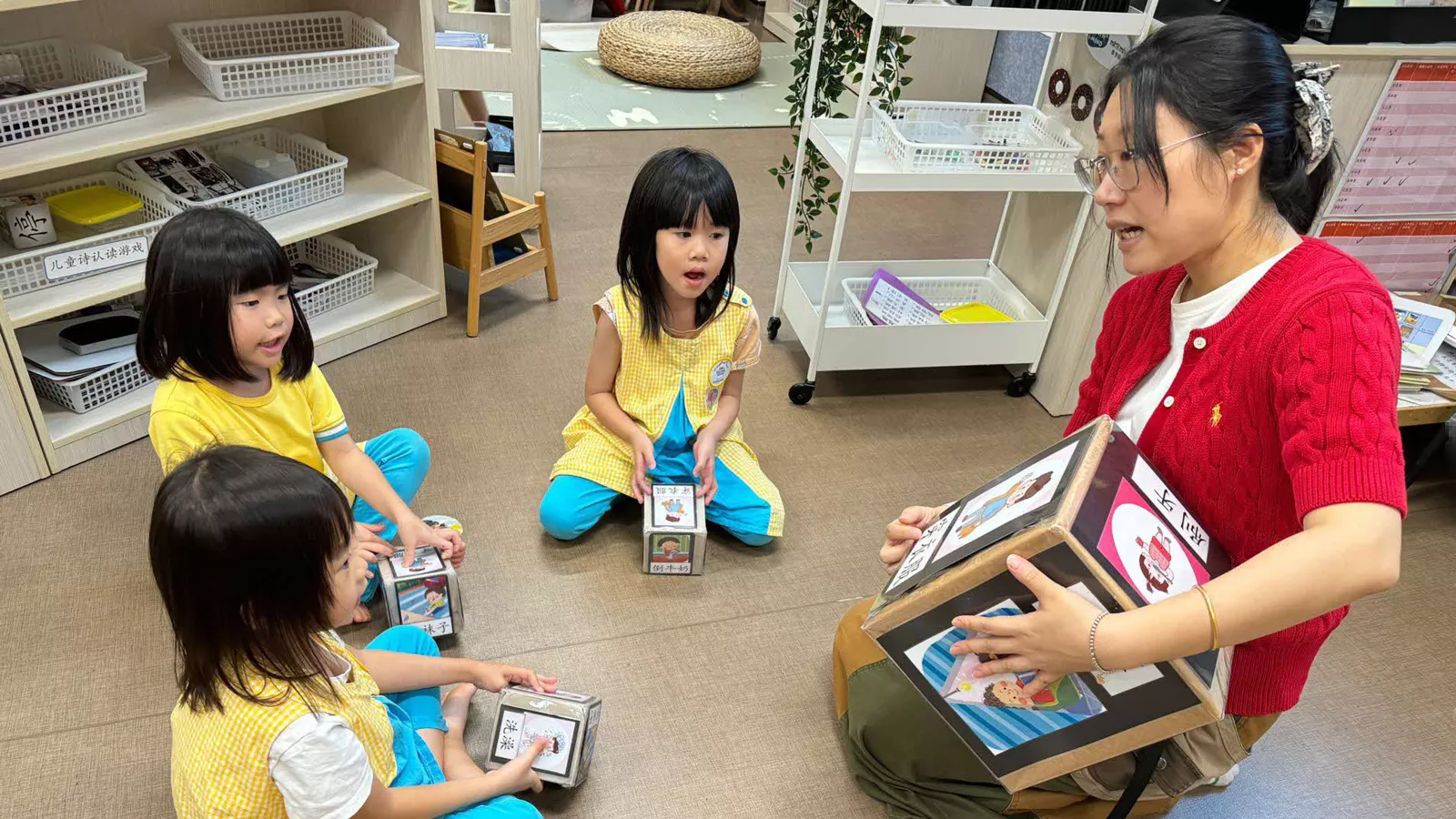
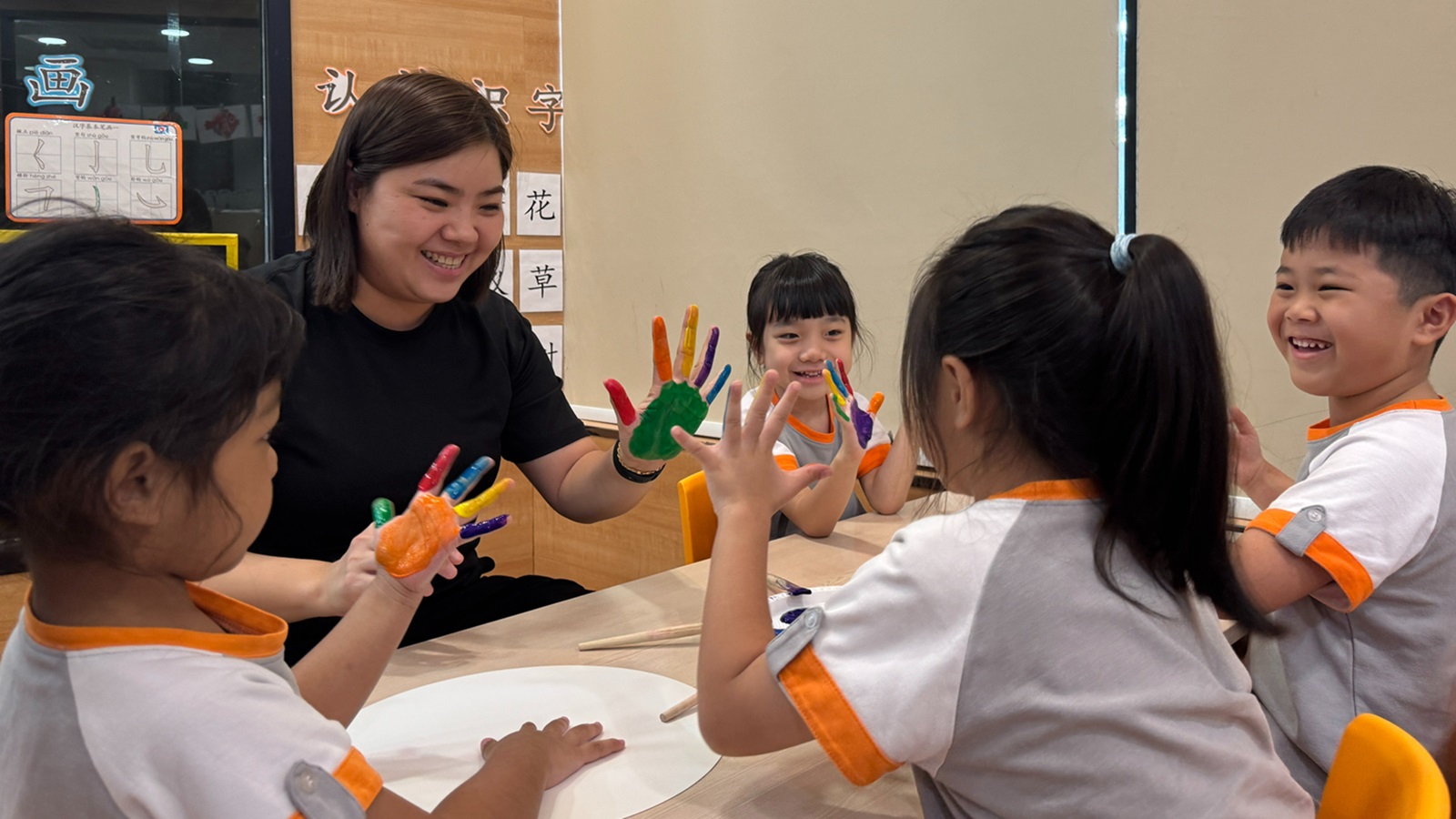
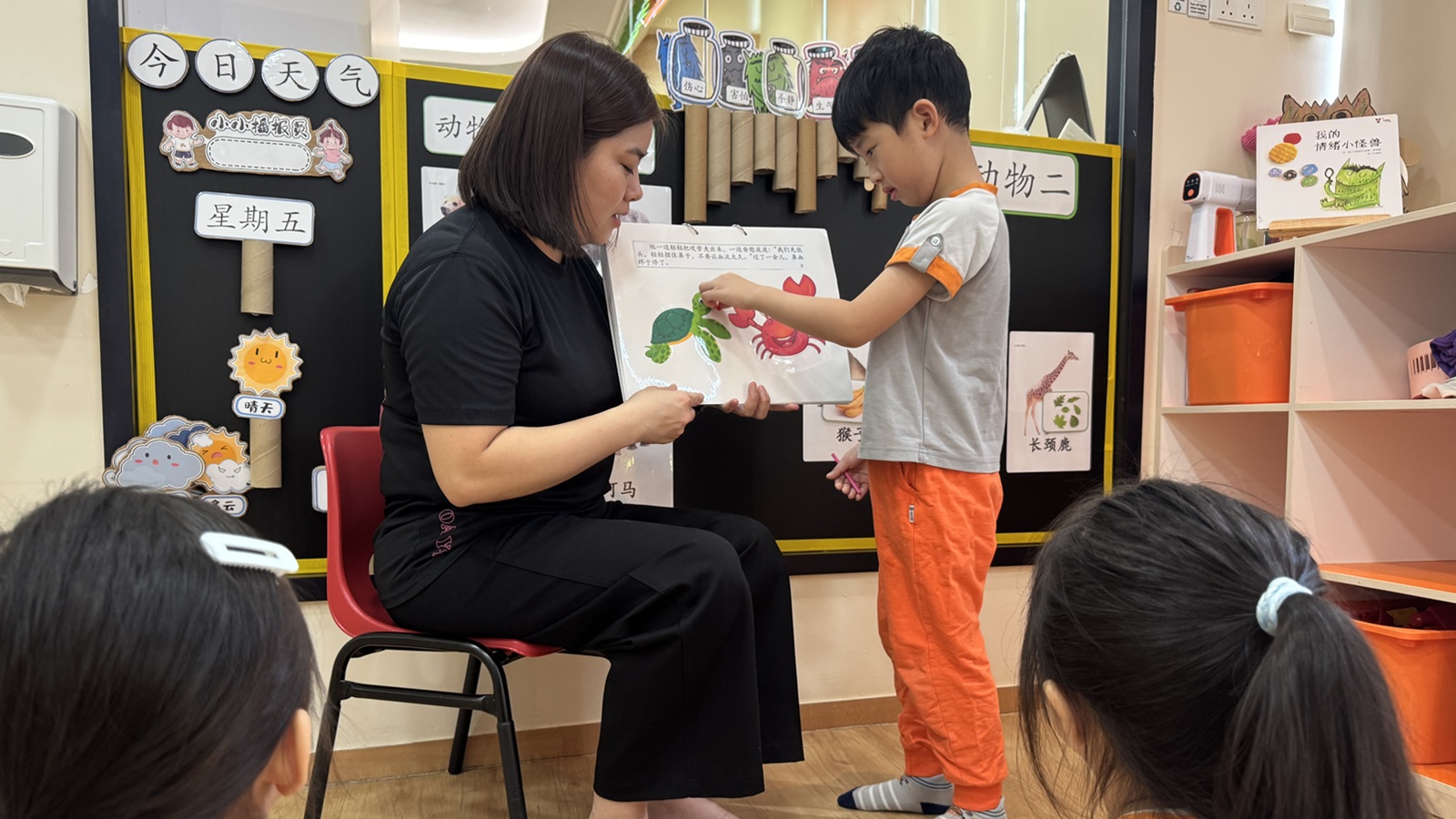 Kang Lizhen designs her teaching materials with colour visual aids to engage the children in her class.
WHEN CHILDREN ARE READY TO LEARN
Children need to feel safe and secure before they can begin to learn. It is key to establish an environment where they feel comfortable expressing themselves without the fear of giving ‘wrong’ answers.
I think teaching is most effective when we incorporate everyday situations, games, storytelling and role-playing to engage children.
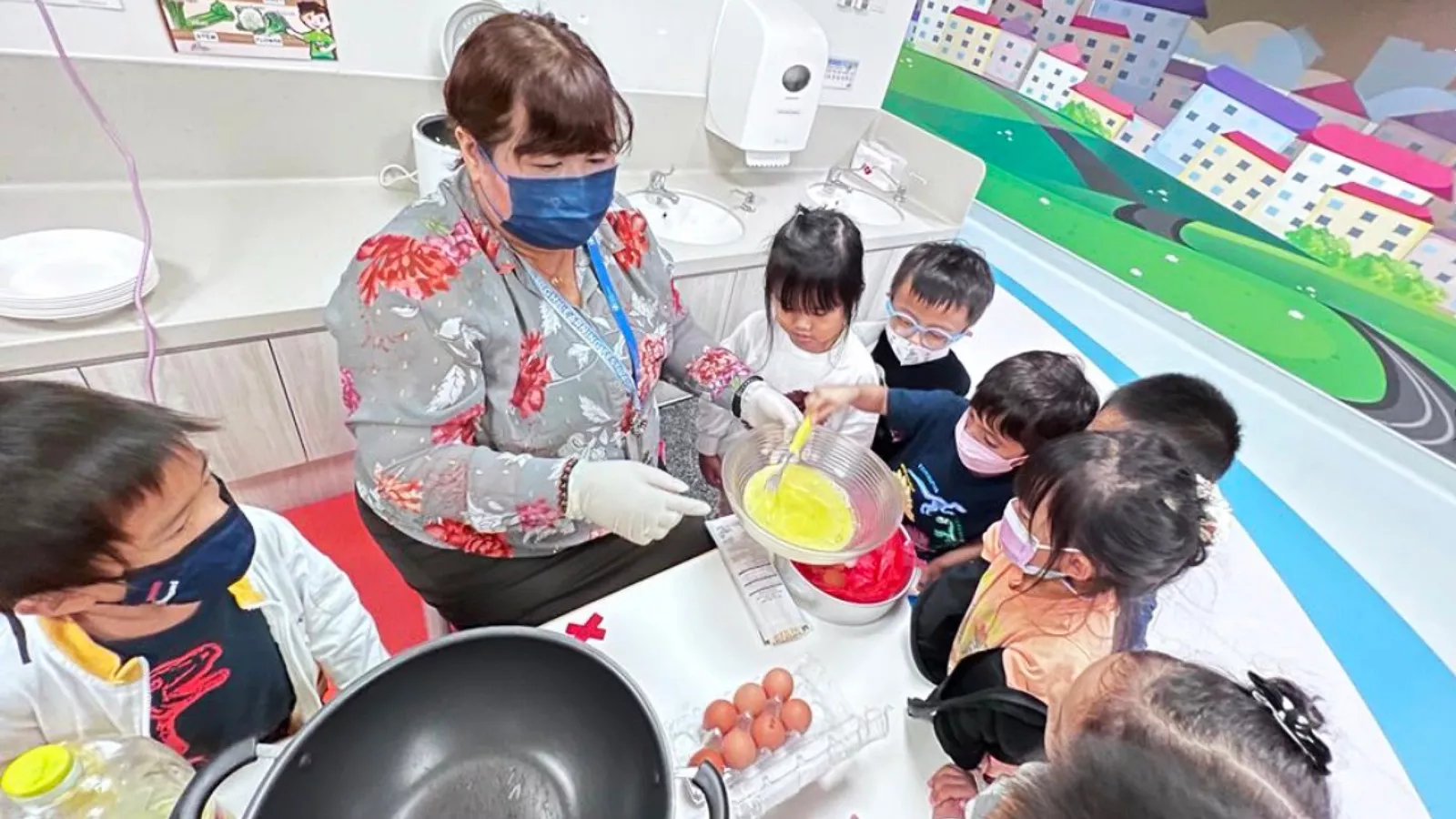
It is in authentic settings — such as a learning journey to a neighbourhood supermarket — that children pick up language most naturally. For those who need more support, I use one-on-one guidance with visual cues and physical actions to help them progress.
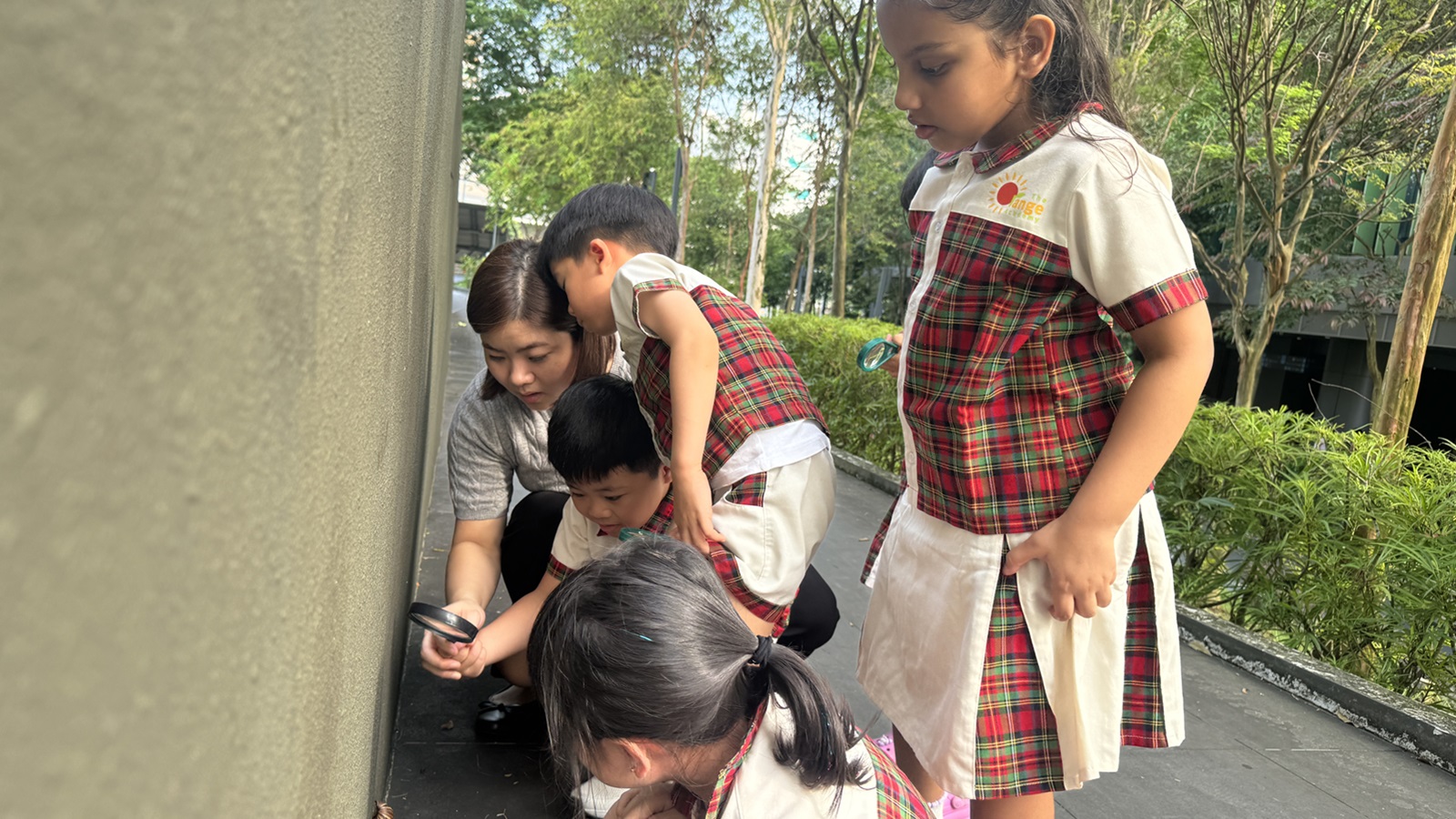 Kang Lizhen bringing the children outdoor to pick up language skills in natural settings.
In Singapore, it’s quite common for children to start a sentence in Mandarin, get stuck and switch back to English. In these moments, instead of correcting them immediately, it is more important to recognise their efforts. In developing language skills, self-confidence is key. When children receive affirmation from adults, they feel happy and develop an interest in the language. Encourage them and offer more opportunities for them to speak up.
FEELING VALUED
As a senior educator, I enjoy guiding new teachers and sharing teaching strategies. I often share my own journey and assure new teachers that it is natural to feel a little lost in the beginning. Helping my fellow teachers gives me a sense of self-worth and confidence. I find it very meaningful to watch them grow and develop in the profession.
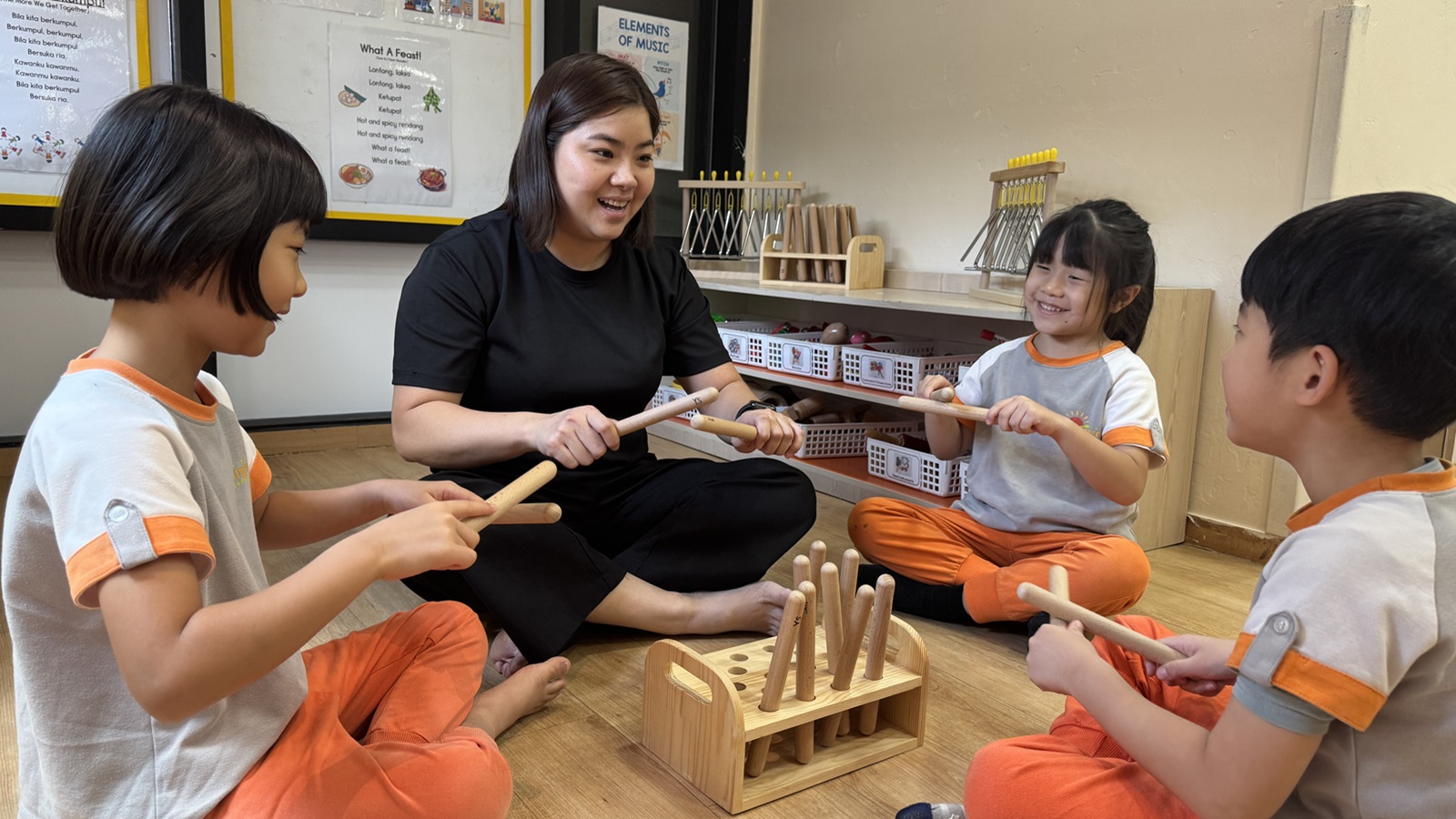 Kang Lizhen using drum sticks to make simple music to engage the children.
At the end of the day, the key to being an effective preschool educator is love. You have to love children, understand them and be prepared to continuously improve yourself. Love the work you do. Stay true to your aspirations of supporting the learning and development of children.
Educators feel a sense of accomplishment when they impart knowledge to children, and it is an honour to receive affirmation from parents. Moving forward, I hope that future EC educators find the support they need to balance professional development with their mental and physical well-being. My wish is for all educators to feel seen, respected and to always stay true to their aspirations.