

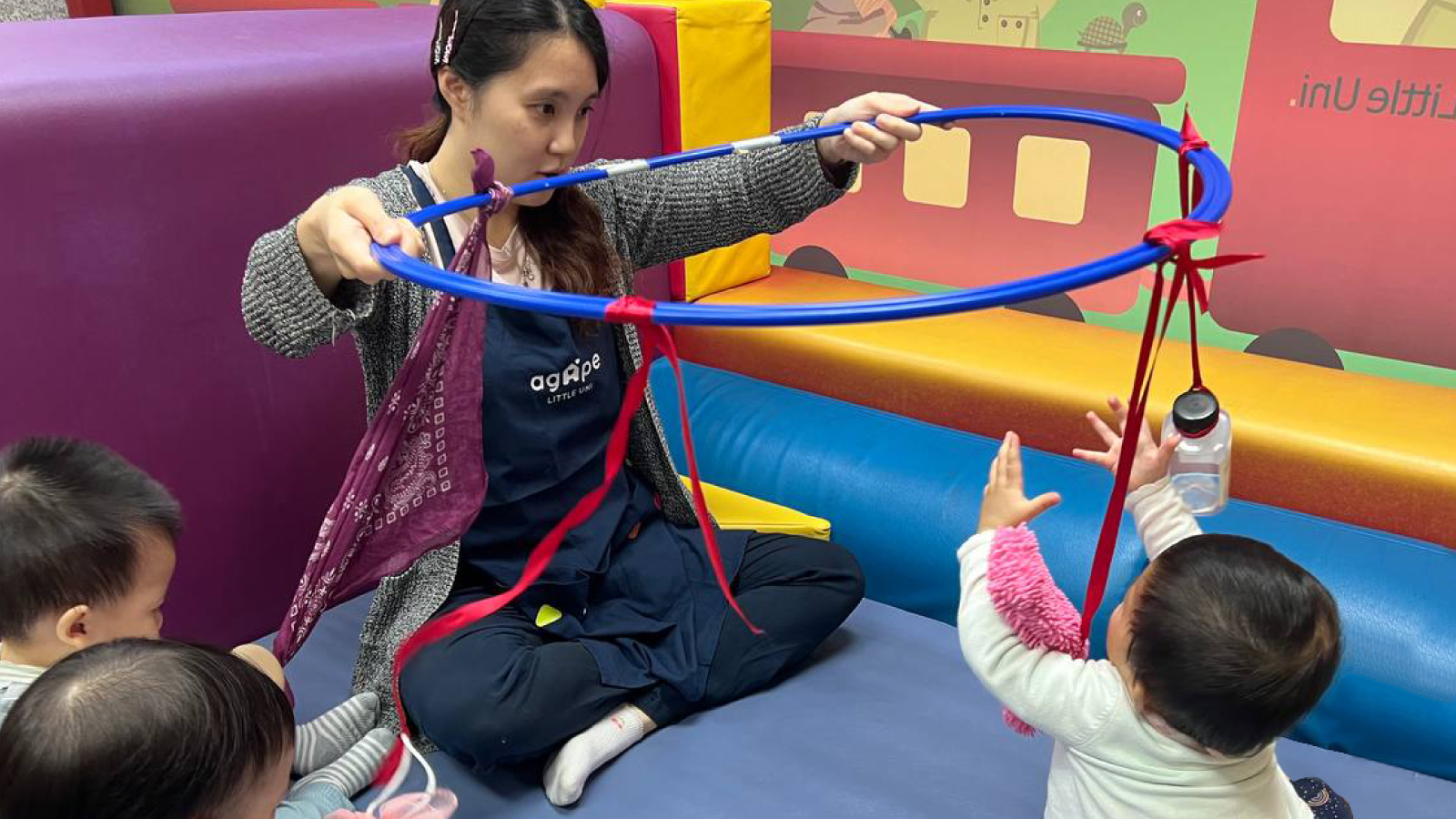

Unlike many others, Ms Michelle Ang Wenyin first entered the early childhood (EC) sector not as a preschool teacher, but as an administrative assistant at Agape Little Uni.
Encouraged by her principal to pursue a diploma in EC education, Michelle began her teaching career at Agape Little Uni Cecil, where she taught toddlers aged 18 months to three years.
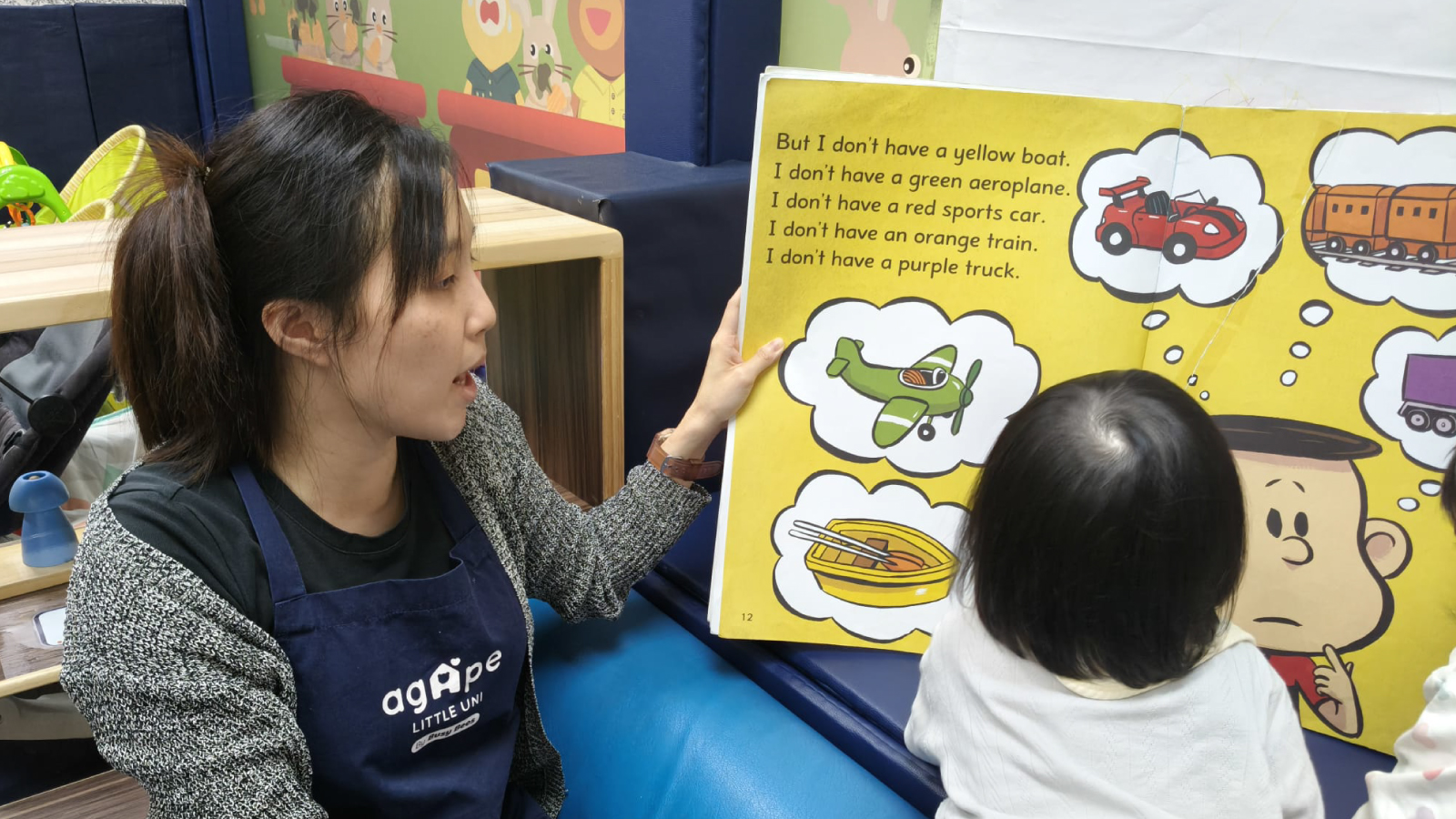 Michelle engaging a child using storytelling techniques.
FOLLOWING HER CURIOSITY
Michelle loved teaching toddlers, but the sounds coming from the infant care room caught her attention. Wanting to better understand infants and their development, she decided to make the leap into infant care. “It got me curious,” she said, explaining that she wanted to learn more about infants and “the reasons behind their cries and the sounds they make”.
The additional training required to work with infants did not deter Michelle. Drawn by a desire to better understand their development, she embraced the challenge wholeheartedly. In return, she discovered one of the most rewarding aspects of infant care: the genuine connections she formed with the children.
"Infants are very honest with their feelings and expressions," she said. "You just need to know how to read them." Seeing an infant light up with a smile or reach out for a hug, she added, makes every effort worthwhile.
MAKING THE MOVE TO INFANT CARE
After speaking with her principal, Michelle signed up for the Advanced Certificate in Early Years (ACEY) offered by the National Institute of Early Childhood Development. Educators can take the ACEY or an equivalent qualification to teach infants aged two to 18 months.
A bundle of nerves on her first day in infant care, Michelle was surprised by what happened next. “I didn’t really know what to do. I was just standing there,” she recalled. The infants approached her first, giving her the confidence to ease into her responsibilities.
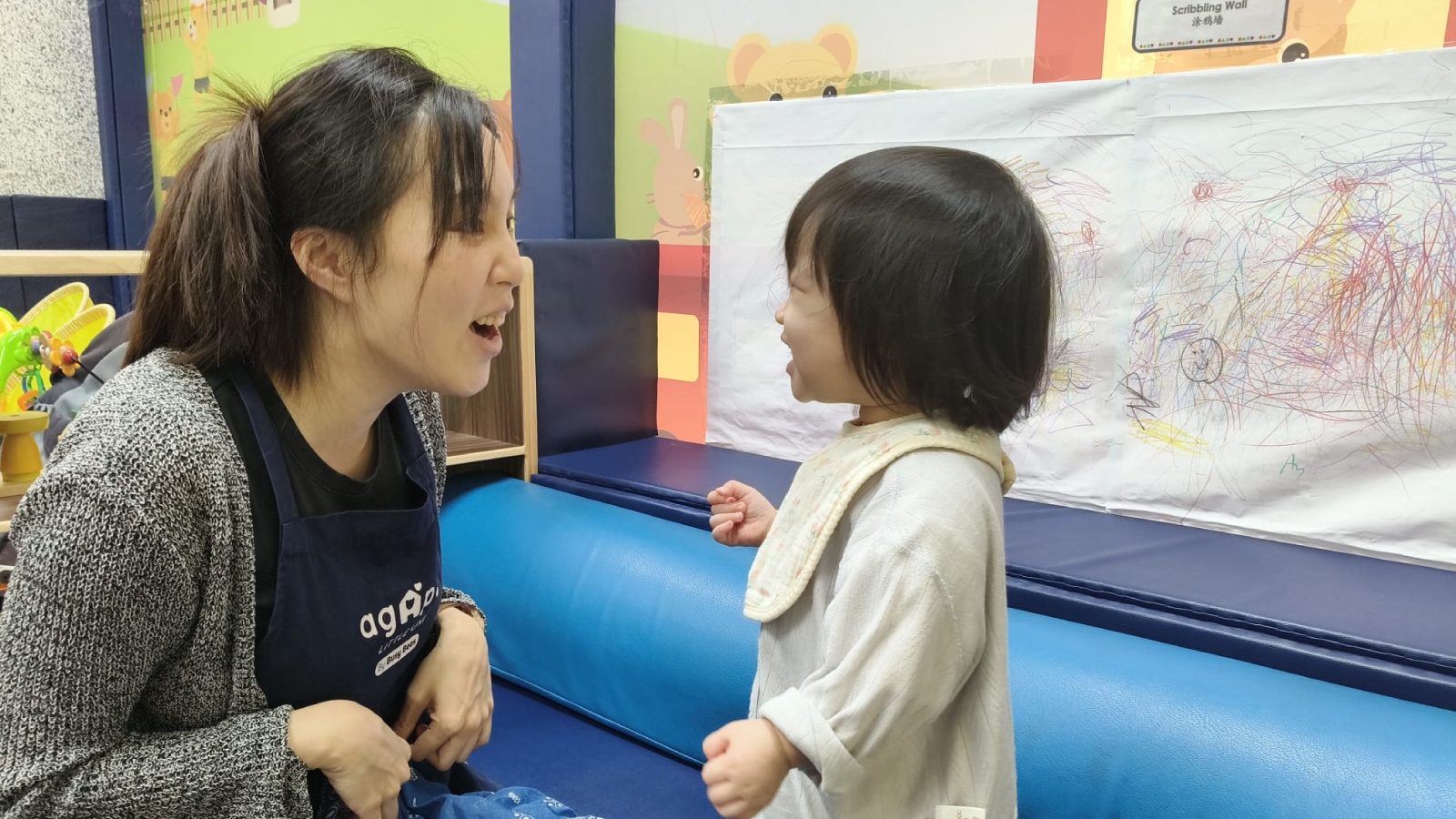 Michelle engaging a child in sensory play using a scarf.
A DIFFERENT WAY OF LEARNING
Now three years into her role as an infant educator, Michelle shares how working with infants differs from toddlers.
- Focus and goals
In infant care, I've learnt that the little things matter, whether it's responding to a cry, sharing a smile or offering comfort. These everyday moments help babies, who are still so new to the world, build trust and a sense of security. When I am with toddlers, I focus on developing their social skills, language and self-help skills.
- Communication and interaction
Unlike toddlers, infants can't yet tell me in words what they're thinking or feeling. I've learnt to pay close attention to their expressions, gestures and cries to understand what they need and how they're experiencing the world.
- Environment and routines
Some of the most meaningful learning happens during everyday routines. Mealtimes, diaper changes and playtimes all become opportunities to connect with infants and support their development.
As a mother, Michelle sometimes finds herself drawing on the same observation skills she uses at work. Whether in the classroom or at home, she has learnt that every cry, smile and tiny gesture can tell a story.
"It's like being a detective sometimes," she shared with a laugh.