


On the morning of 23 March 2026, a fire broke out on the second floor of Sembawang Shopping Centre, sending smoke through the corridors.
As soon as the fire alarm went off, Ms Fiona Hong, principal of My First Skool, moved swiftly from classroom to classroom, alerting her team and activating evacuation procedures.
More than 150 children were guided calmly to the assembly point outside the mall in under five minutes. No one was hurt. Moments after the Singapore Civil Defence Force had given the all-clear, the children were back in their classrooms, ready for their parents to pick them up.
Regular drills and constant vigilance, not luck, led to this outcome. Here are three important lessons that Ms Hong took from the experience:
1. Drills build the confidence that counts when it matters
When Ms Hong announced the evacuation, some children assumed it was just another drill — a sign that the routines had been thoroughly internalised.
“Because of the regularity of our fire drills and evacuation exercises, the staff and children were very familiar with the procedure when this real situation happened,” she said. “The children were very orderly. They understood that something was happening, and they followed their teachers.”
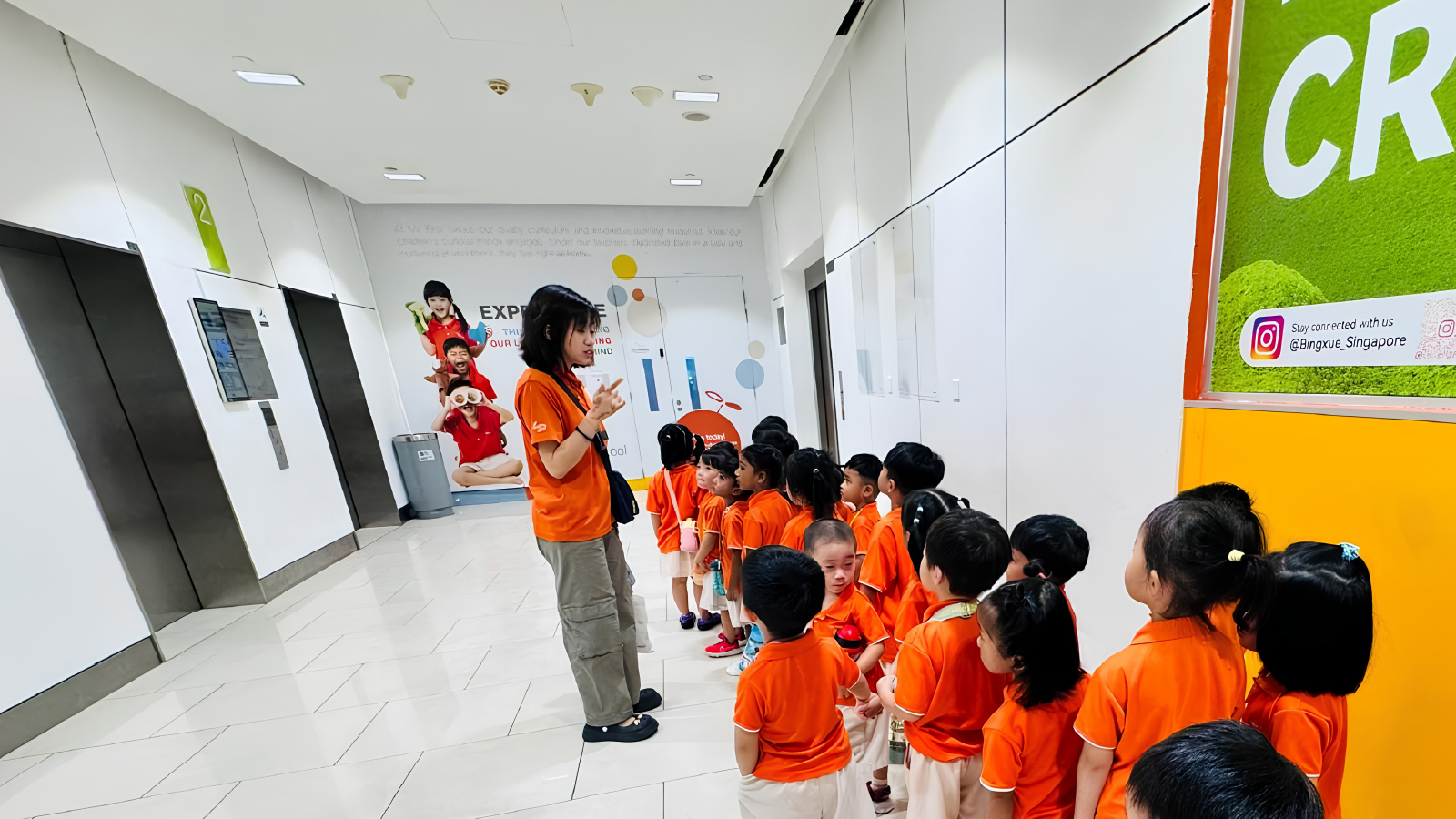 The teacher reviewed the evacuation route with the children during one of the drills, reinforcing important safety practices such as avoiding the use of lifts during a fire emergency.
The preschool had conducted a fire drill just two months earlier, in January. Every six months, My First Skool alternates between a fire drill and a security-related emergency exercise such as responding to an intruder or managing a bomb threat, in line with ECDA’s guidelines and SGSecure advisories.
2. Shared responsibility means everybody can rely on each other
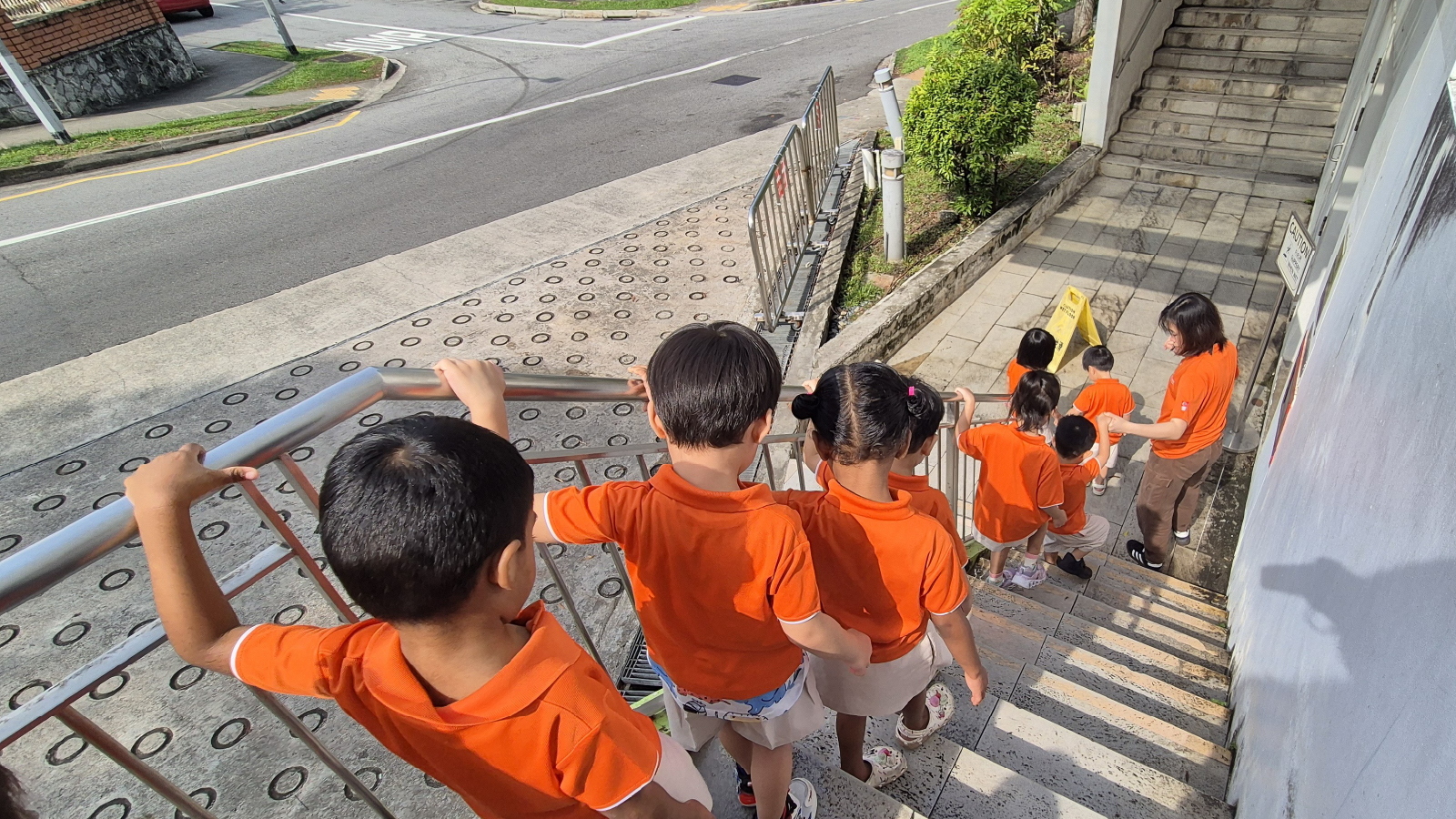 Children moved calmly and orderly towards the designated evacuation point during one of the drills.
The evacuation worked not because Ms Hong dictated every move, but because every staff member knew what to do.
Having been with My First Skool for 15 years, Ms Hong added that this display of shared responsibility mirrored what the team practised daily — colleagues stepping in for one another without being asked. “It’s not just during a practice or a drill,” she said. “It becomes an everyday thing. Every staff member takes ownership.”
3. A calm leader steadies the whole team
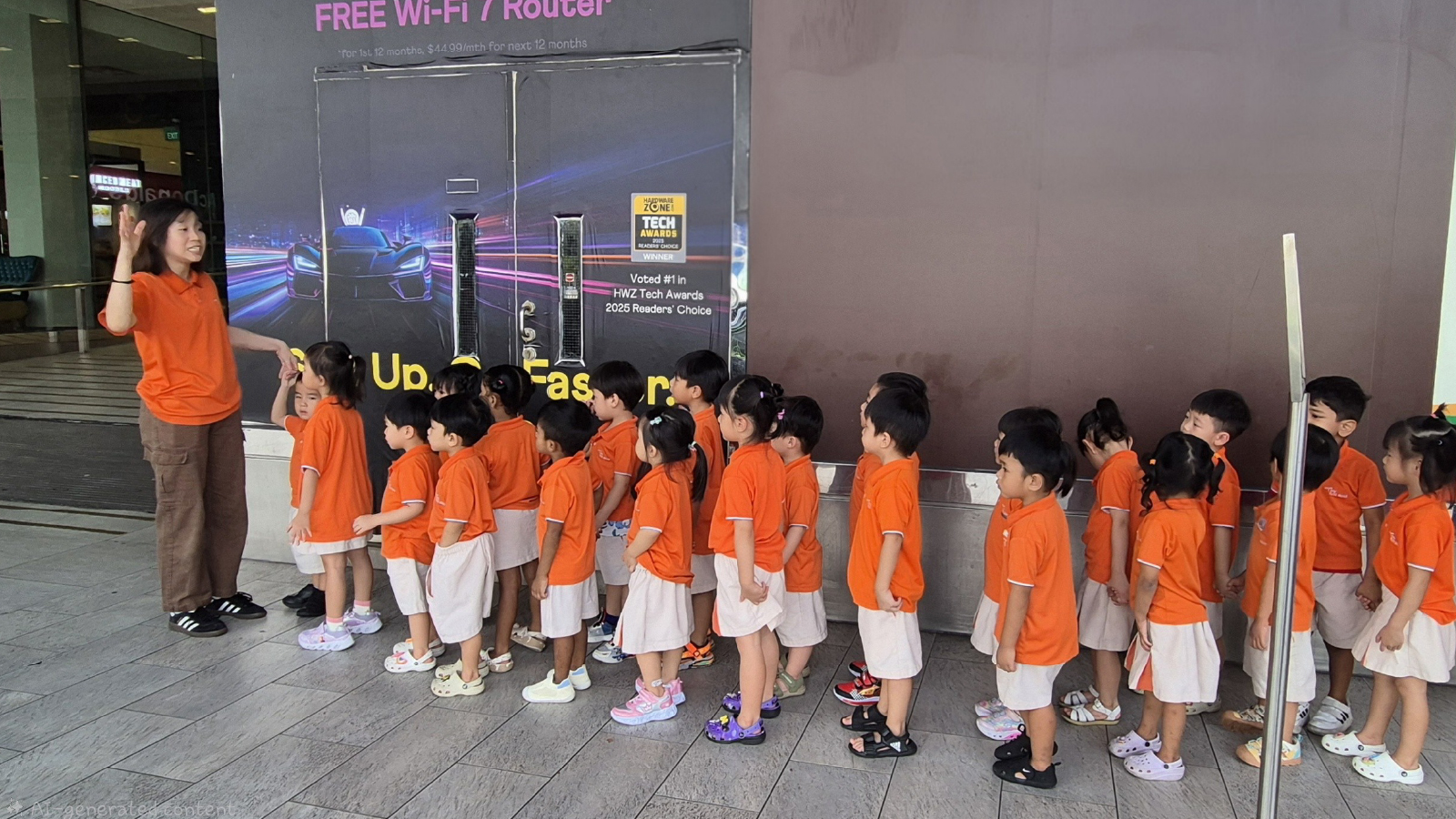 At the designated evacuation point, the educator commended the children for their calmness and for following instructions attentively during one of the drills.
Ms Hong was the last to leave the preschool, checking every classroom, the kitchen, and toilets before exiting. She made a deliberate effort to stay composed throughout.
“In situations like this, children and staff take cues from others around them,” she said. “If you stay calm, people feel assured. It helps you think clearly and guide the team more effectively.” This, she believed, was why neither children nor staff panicked — even when the children spotted a real fire engine and realised that this was no drill.