

“Eat your vegetables.” “It’s time for bed.”
For many parents of young children, these are familiar sayings. As any parent or educator knows, helping children build healthy habits is not always so simple.
Ms Rose Anne A. Del Rosario, a preschool educator at Artemis Preschool @ Woodleigh, sees some of these challenges in her classroom. Some children may be reluctant to eat their vegetables, while others arrive tired after going to bed late.
Building healthy habits takes more than a one-off lesson. By weaving healthy choices into familiar routines, children can learn about them and practise them in everyday life.
For Ms Rose, it is less about adding new activities and more about making the most of everyday moments. A simple mealtime, familiar game or shared routine can offer children natural opportunities to explore healthy choices in meaningful ways.
STARTING SIMPLE CONVERSATIONS ABOUT HEALTHY CHOICES
When the Grow Well SG toolkit was introduced to preschools from April this year, it gave educators like Ms Rose practical, easy -to-use resources on healthy eating, oral health, good sleep, mental health, physical activity and screen.
The colourful posters and activity cards gave Ms Rose an easy starting point for conversations around things the children encounter every day: What food do they enjoy? What keeps their bodies strong? What healthy choices can they make?
She builds on these resources by making learning fun and relatable through play and discussion.
After introducing messages from the Healthy Eating resource, for example, Ms Rose sent her K2 class on a food hunt around the classroom. Equipped with mini baskets, the children searched for food cut-outs and decided which healthier options they would pick.
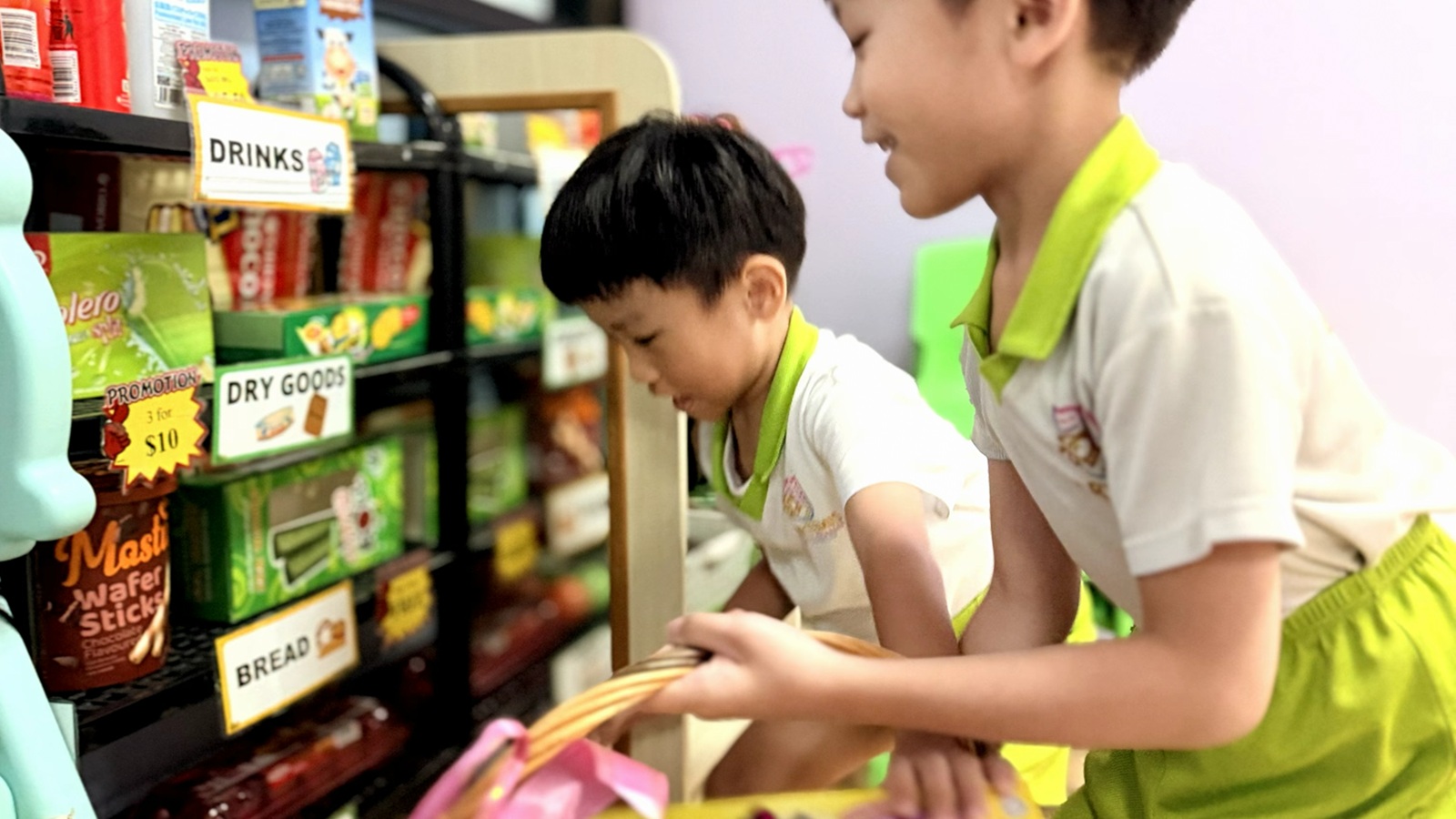 Children engage in dramatic play in preschool to learn about the different types of food they encounter every day.
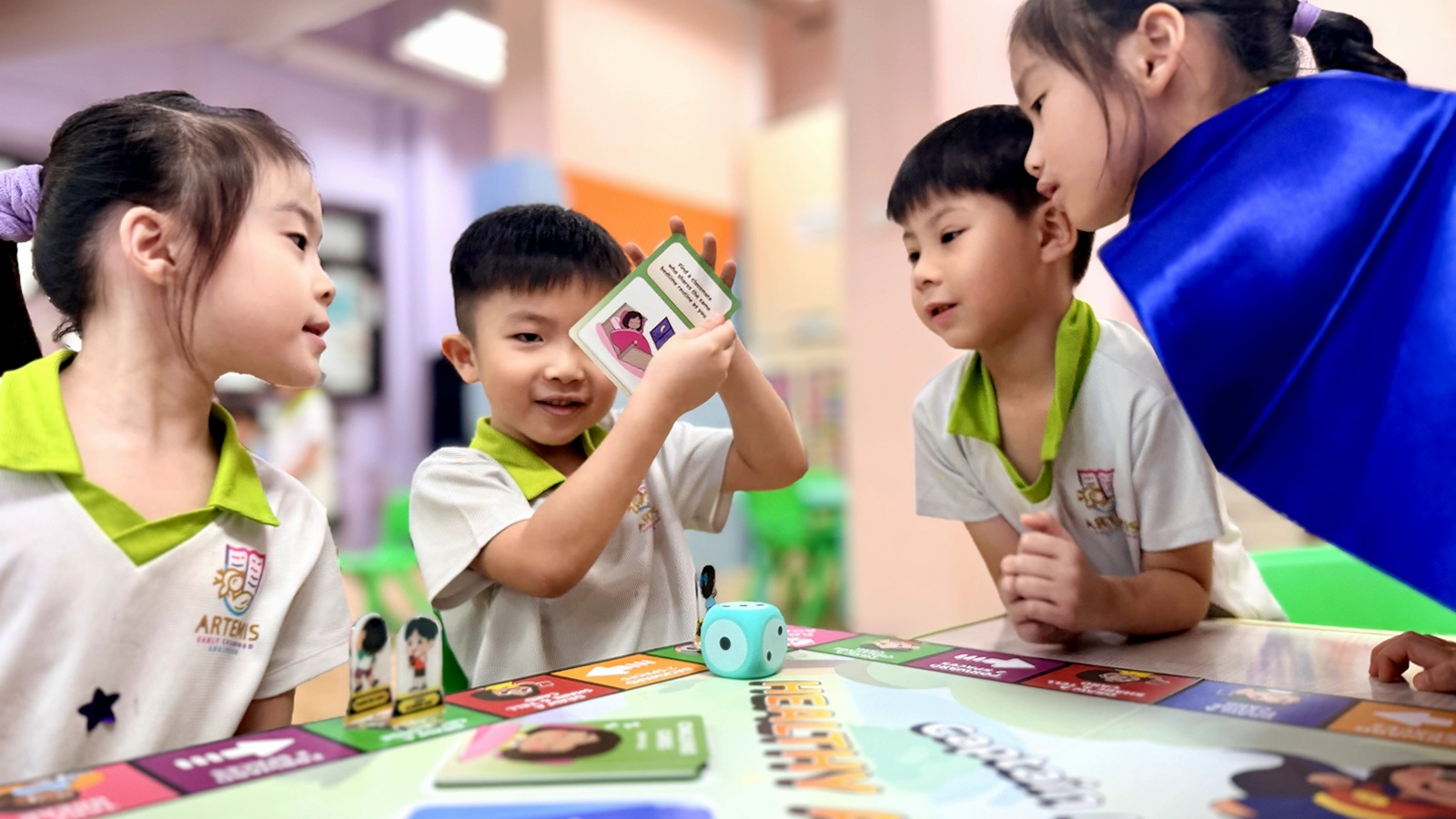
Ms Rose also used the Healthy Adventure board game included in the toolkit to get the children answering questions and connecting healthy choices with their own experiences.
“The children were very excited because they enjoyed the game format,” she said. “They were eager to take turns and share their own ideas and experiences.”
The learning does not end when the game is packed away. Ms Rose brings the same messages into snack time, handwashing and outdoor play, using questions, role-playing and movement to reinforce what the children have learnt.
Over time, she noticed the children using words such as “healthy”, “strong” and “good for our body” on their own. Some became more conscious of drinking water, washing their hands and eating fruits and vegetables.
One child even shared that they had started choosing healthier food at home after learning why fruits and vegetables were good for their body.
For Ms Rose, it was an encouraging sign that something learnt in preschool had found its way into the child’s life at home.
BRINGING HEALTHY HABITS HOME
Healthy habits are not built only in the classroom. When children encounter similar messages and routines at home, they have more opportunities to put what they learn into practice.
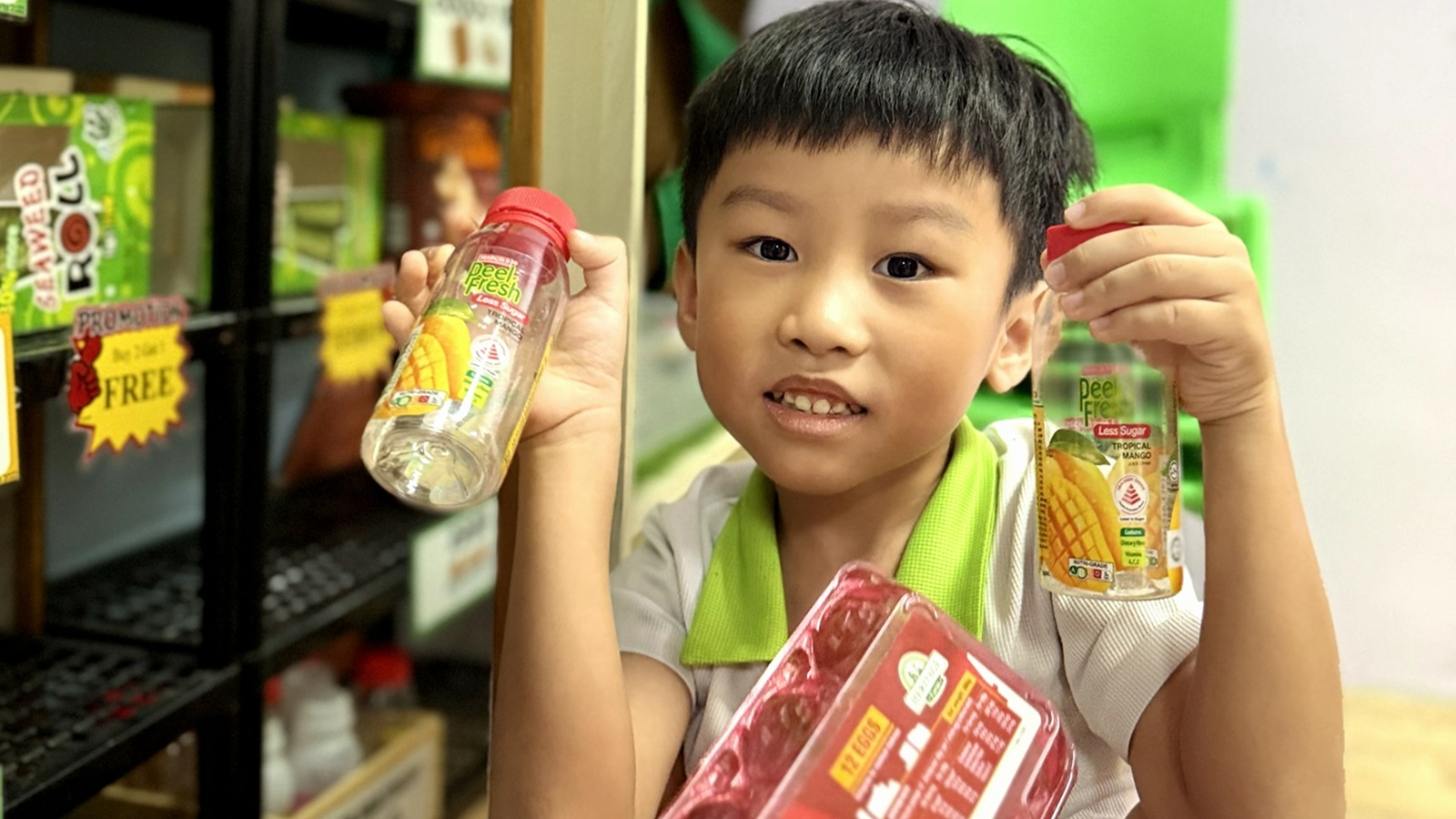 Parents can engage their child during grocery shopping to kickstart discussion about the food they eat.
The parent resources in the Grow Well SG toolkit help families continue these ideas at home. Some parents shared that their children had started talking about healthy food and discussing what they had learnt in preschool.
The conversations also help educators better understand the routines and challenges families experience at home.
Sleep was one example. Some parents said their children went to bed late because they remained alert after using screens. Others stayed awake to spend a little more time with Mum or Dad after their parents returned home from work.
Rather than seeing bonding time and an earlier bedtime as competing priorities, Ms Rose encouraged parents to bring the two together.
Reading a bedtime story, for example, gives parent and child a quiet moment to connect while helping the child wind down for sleep.
Parent-child bonding can also be part of familiar routines, whether it is brushing teeth together, chatting over dinner or curling up with a book before bed.
These everyday moments can support both healthy habits and meaningful connections, while reinforcing at home what children learn in preschool.
MAKING THE EVERYDAY COUNT
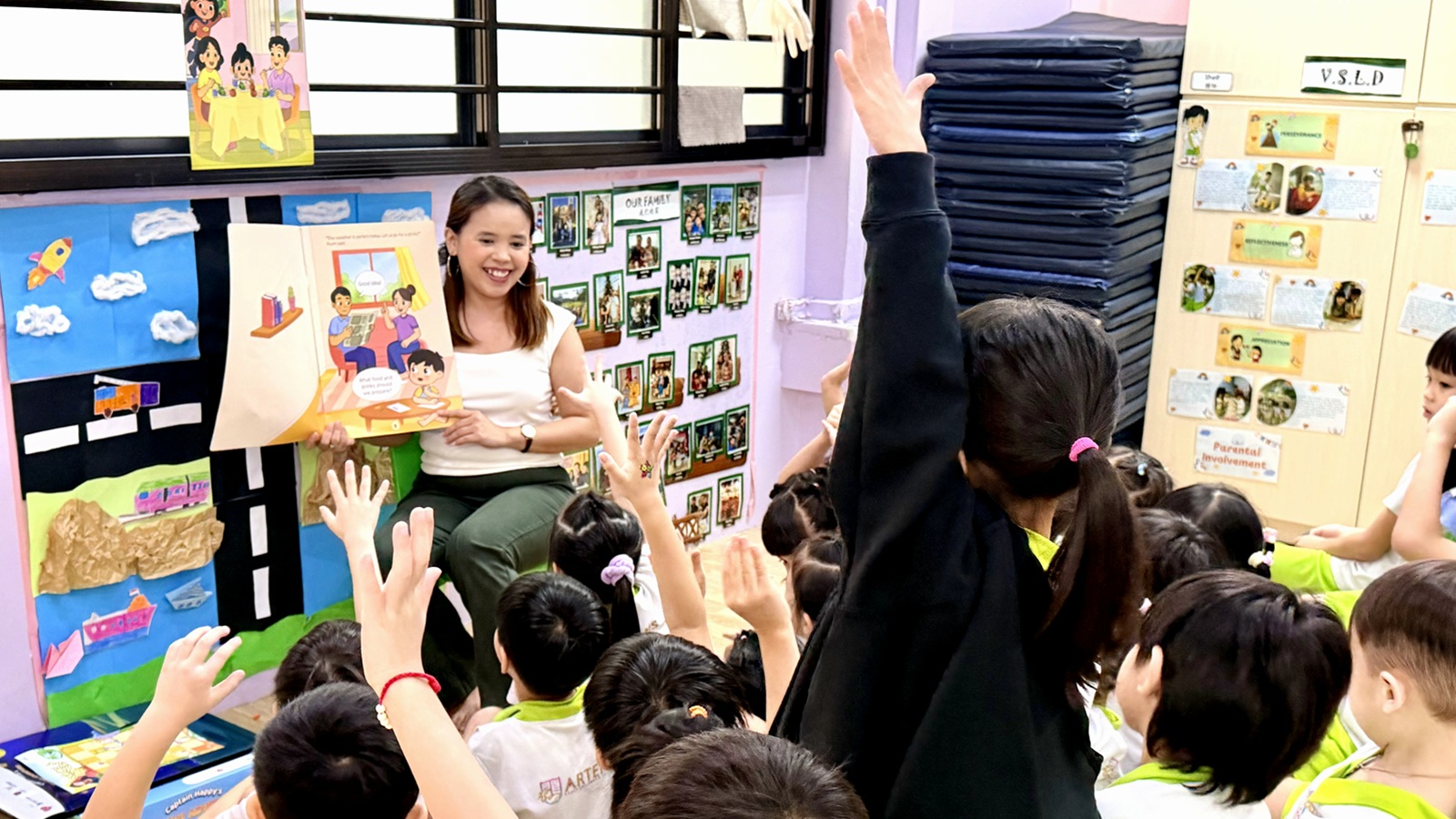 Conversations that extends from preschool to home can reinforce children's learning and positive habits.
For educators starting to use the Grow Well SG toolkit, Ms Rose recommends choosing resources that suit their children and introducing them gradually.
“Introduce the materials gradually and connect them to everyday routines and experiences,” she said. “When children are actively involved, they are more likely to remember and practise the healthy habits they learn.”
For little ones, growing well can begin in ordinary ways — trying a vegetable they once avoided, remembering to wash their hands, chatting with their parents over dinner or settling down with a bedtime story.
They may seem like small moments, but when reinforced consistently at home and in preschool, they can grow into habits that last.


