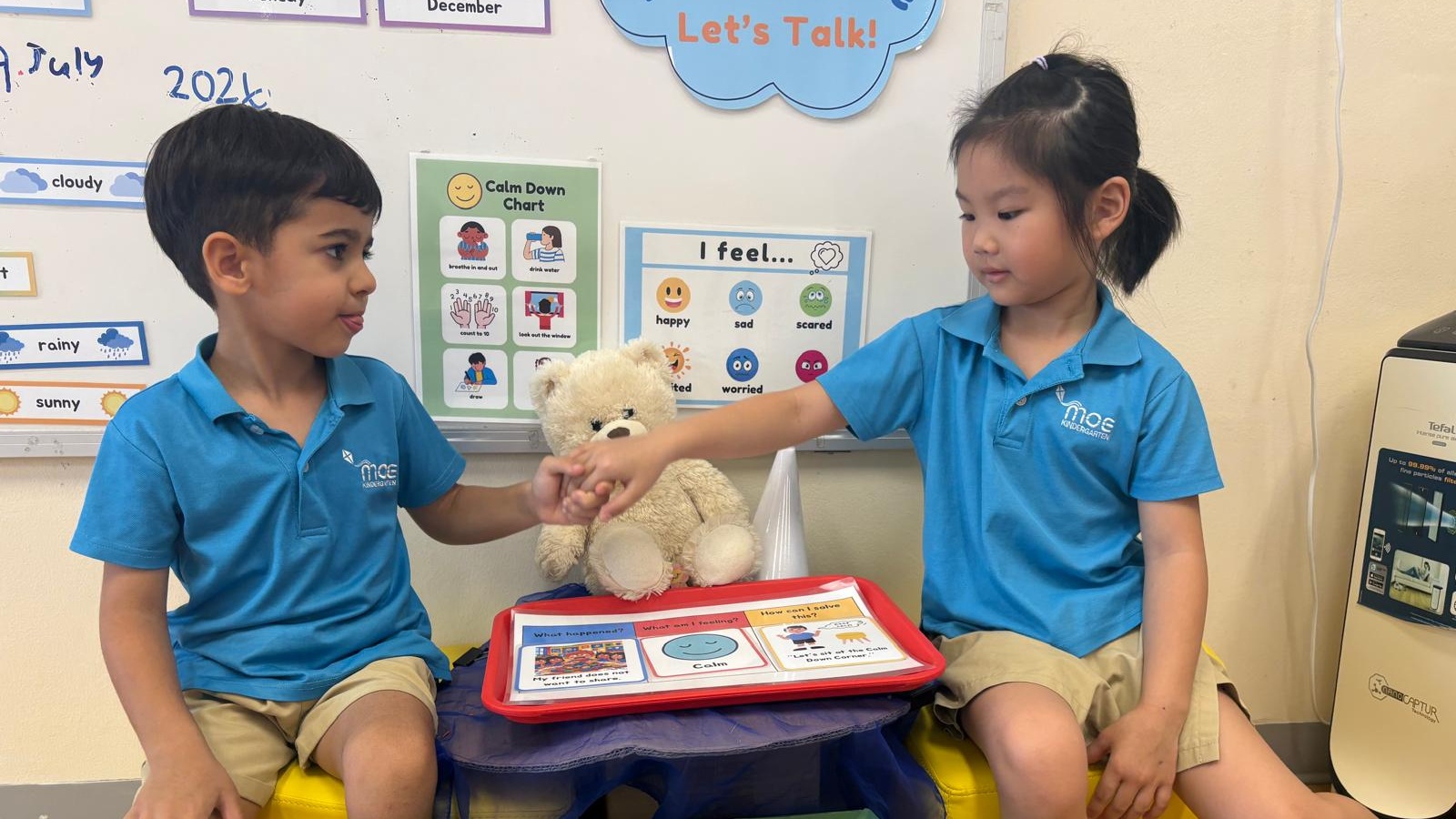

Children do not always need adults to solve manageable conflicts for them. They need adults to keep them safe, help them name what is happening and give them time to try their own solutions.
A DISAGREEMENT CAN BE A LEARNING OPPORTUNITY
What happens when two preschoolers want the same toy? Both may feel upset and immediately look to an adult to decide who is right.
For parents and educators, stepping in can feel like the quickest and kindest response. But if adults settle every manageable disagreement, children miss opportunities to practise solving problems on their own.
“Adults sometimes underestimate what children are capable of,” observed Ms Afika Fazryanti, Level Head at MOE Kindergarten @ Cedar. “Given the right support, time, encouragement and opportunities to build their skills, children are able to listen to their peers, empathise and work together. This helps them build relationships, respect differences and become more considerate friends.”
MAKE THE PROBLEM EASIER TO SEE AND TALK ABOUT
Young children may not know what to do when an adult says, “Work it out together.” They often need concrete language and visual prompts to understand how they feel, explain what happened and consider what they could try next.
Ms Afika and her colleagues noticed that stepping in too quickly could lead children to rely on educators to settle disagreements. So, they created the Little Problem Solvers Box as a practical way to guide children through the process.
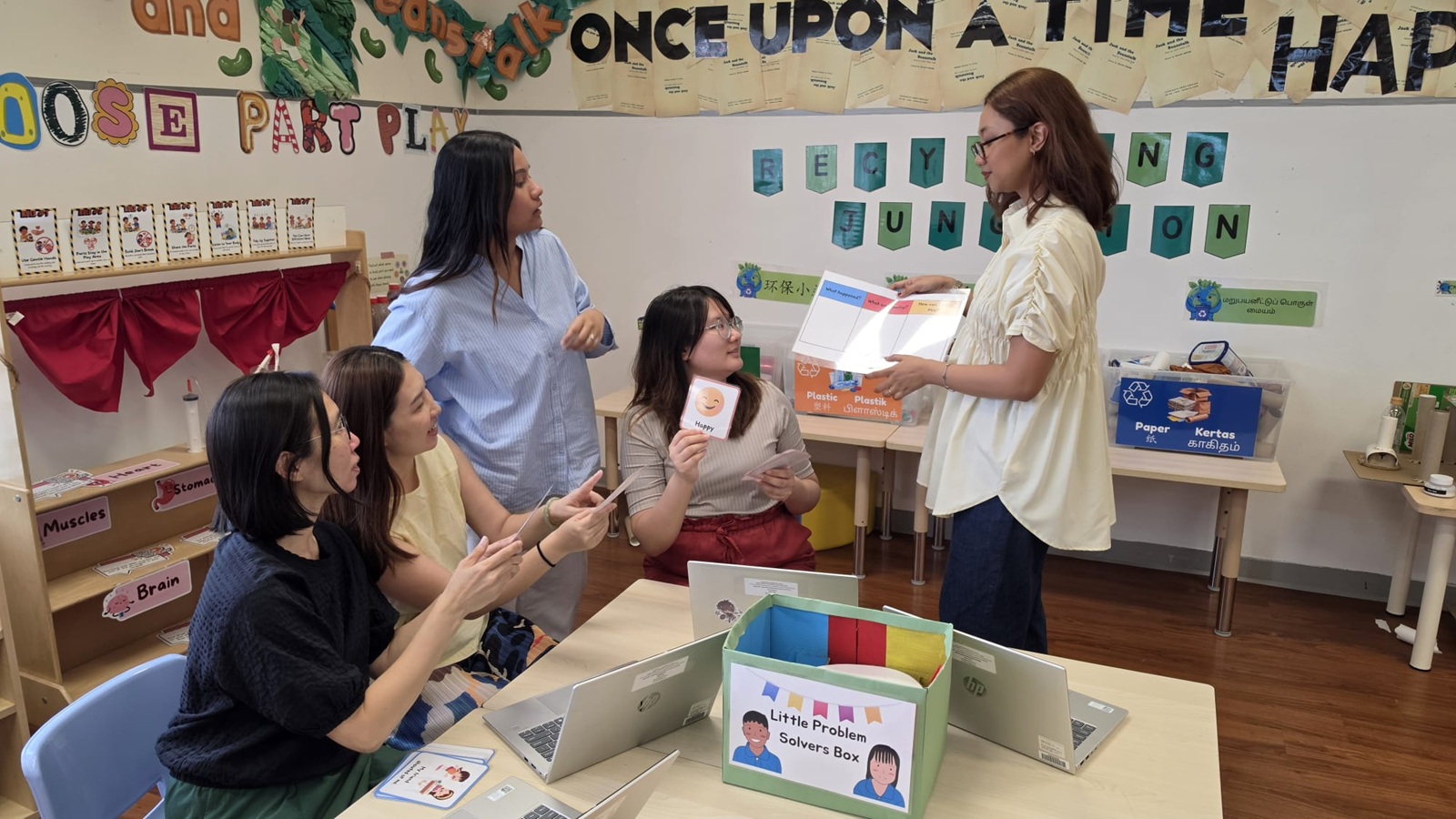 Ms Afika and her colleagues developed the Little Problem Solvers Box to empower children to solve problems independently, rather than rely on constant educator intervention.
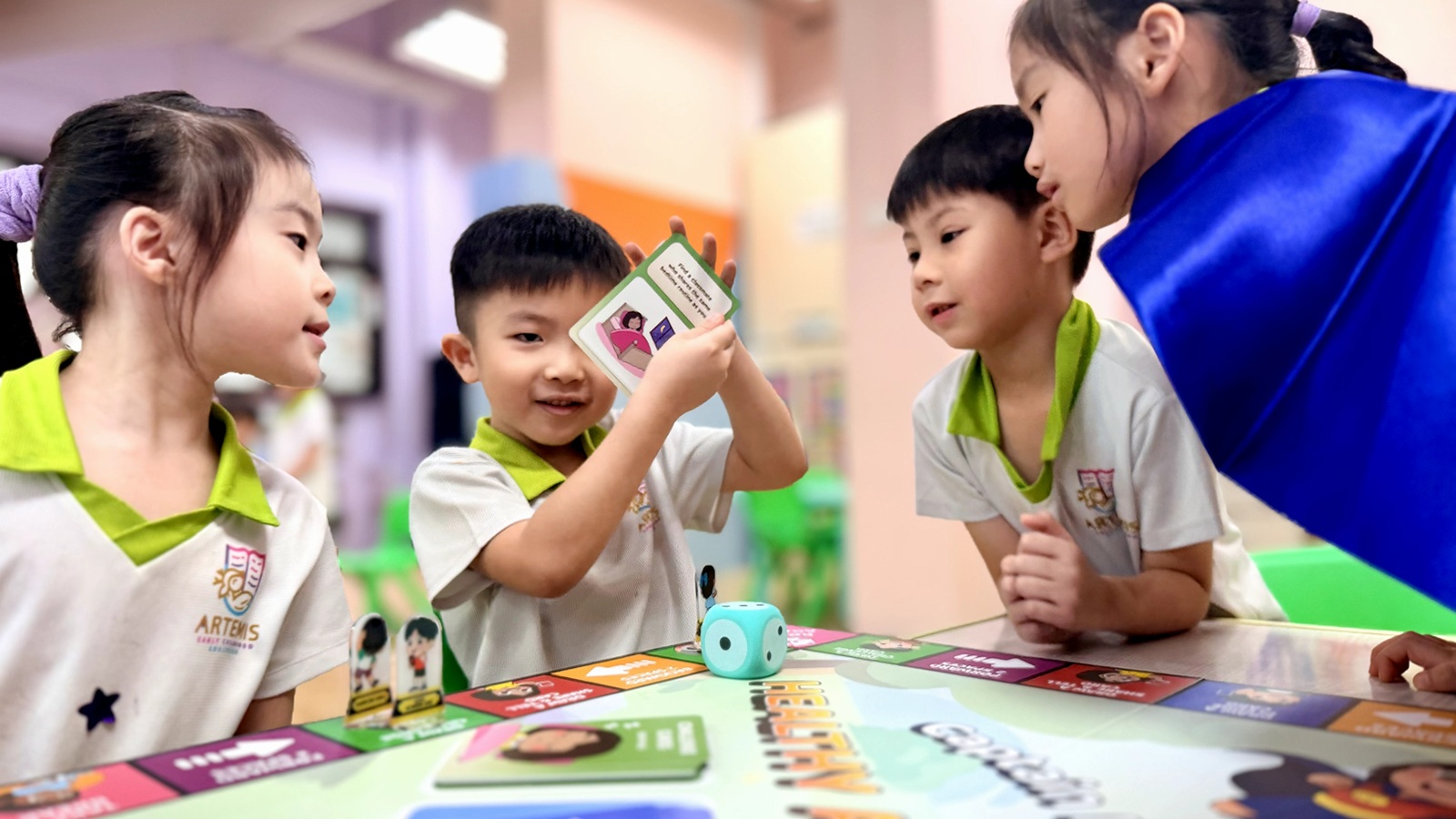
The Box contains cards that prompt children to:
- Name a feeling, such as "Sad" or "Angry".
- Explain the problem, such as "My friend pushed me" or "No one wants to play with me".
- Explore the possible next steps, such as "Can I have a turn when you are done?" or "Let's sit at the Calm Down Corner".
This innovative solution makes the abstract process of problem-solving visible, gives children useful words and involves them in choosing a solution. The innovation also won the preschool the ECDA Early Childhood Innovation (Distinction) Award in 2026.
STEP BACK, BUT STAY CLOSE
When children use the Box, educators observe from the background and give them space to practise. They step in when support is needed, rather than immediately providing the answer.
“Stepping back does not mean leaving children to manage everyday conflicts entirely on their own,” said Ms Afika. “We have to ask ourselves, ‘Are the children safe? Are they emotionally ready to engage with one another?’ If children have difficulty communicating their needs and a situation escalates, educators should step in to help regulate their emotions.”
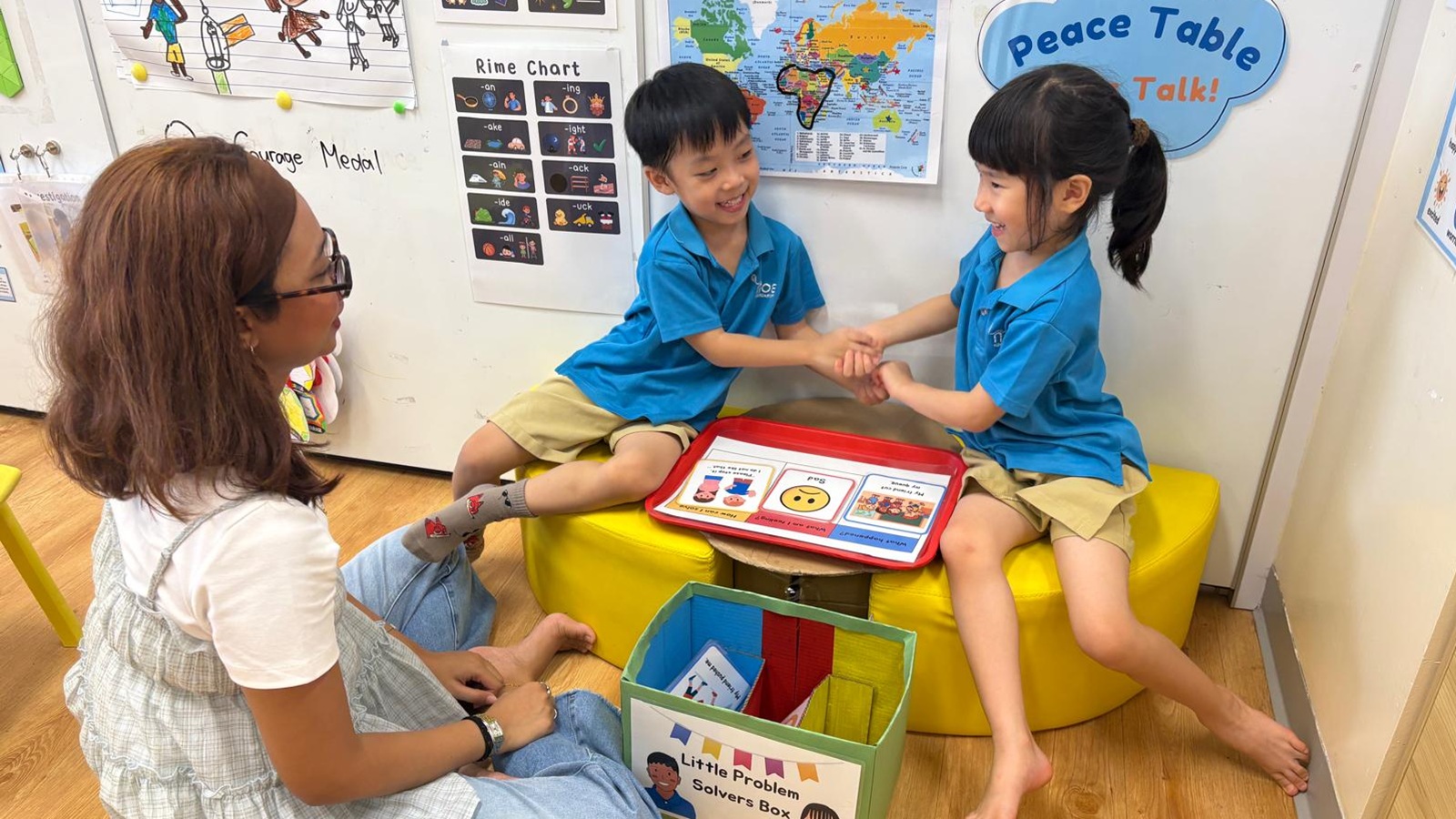 Adults can pause and observe before offering just enough support for children to try resolving the conflict themselves.
This distinction matters at home and in preschool. Adults should intervene when there is a risk of harm, bullying, a serious power imbalance, or when a child is too overwhelmed to engage. For safe, developmentally appropriate disagreements, they can pause, observe and offer just enough support for children to try.
SMALL CONFLICTS CAN BUILD LASTING SKILLS
Ms Afika observed that children became more aware of the strategies they could use when disagreements arose. They learnt to ask friends for their perspective, consider possible solutions and work towards a compromise. These experiences also helped them practise decision-making, empathy and confidence.
Parent Mr Loo Yan Xian saw a similar shift in his six-year-old son, Atticus. In the past, Atticus would become grumpy when play with his cousin did not go his way. He is now more willing to express how he feels, let his cousin take a turn first and choose another activity while waiting.
While it’s natural for parents and educators to jump in when a child faces a challenge, doing so all the time has its drawbacks.
“Give children opportunities to resolve problems independently. By stepping in too early, we stop the child from thinking for himself,” said Mr Loo. “As parents, we are learning every day too. We can guide our children, we can take a step back, but things may not always work out well every single time. It’s all part of growing up for the child.”