It’s not uncommon to see children exhibit “me first” behaviour in their early years as they are still learning to regulate their emotions, and have yet to grasp that others have thoughts and feelings different from their own. Understanding that this is not deliberate “mean” behaviour allows adults to respond with constructive guidance.
Dr Ambika Perisamy, Senior Lecturer at the National Institute of Early Childhood Development (NIEC), outlines practical strategies — from simple daily routines to parent-preschool partnerships — to inculcate a “we first” mindset in young children.
1
My preschooler sometimes pushes or grabs. Is this normal, and how should I respond?
For children between three and six years old, occasional pushing or grabbing is generally developmentally typical. “Changing this behaviour often requires repeated modelling and reminders,” says Dr Perisamy.
She cautions against labelling the child as “mean” or “naughty”, noting that there may only be cause for concern and a need for additional guidance if:
-
The behaviour is frequent and intense across different settings.
-
Your child shows little improvement despite consistent adult support.
-
These behaviours seem intentionally hurtful rather than impulsive.
Try these:
-
Gently remind your child to pause when he begins to act out. You can say, “Let’s take a moment.”
-
Encourage the child to place their hands on their lap or at their sides. This physical action reminds them to stop and reflect.
-
Prompt your child to think about their feelings and the feelings of others. Use concrete language such as, “Look at Ryan. He seems sad. What can we do to help him feel better?” This helps children connect their actions to others’ emotions in a child-appropriate and meaningful way.
-
Use neutral statements such as “Pushing hurts people”, highlight the impact, and guide repairs. You could say: “Can you see that Ryan looks sad because of what happened? What can we do to help him feel better?”
2
How do I set limits without labelling my child?
Children need warmth and clear boundaries. A balanced response involves:
-
Acknowledging feelings:
"You were upset because you wanted the toy."
-
Establishing limits:
"But we don't grab, we take turns if we also want to play with the toy."
-
Teaching alternatives:
"You can say, 'Can I have a turn?'"
There are also alternative guidance approaches that empower children:
-
The choice and agency model:
Offer clear choices, empower reflection, and celebrate cooperative choices.
-
Positive guidance with emotional anchors:
Use a feelings thermometer, the pause-hands-reflect routine, and repair rituals.
-
Collaborative problem-solving:
Ask guiding questions about the next steps to confronting a problem, encourage brainstorming, and model negotiation.
3
How can parents and preschools work together to guide children who show strong-willed or me-first behaviours?
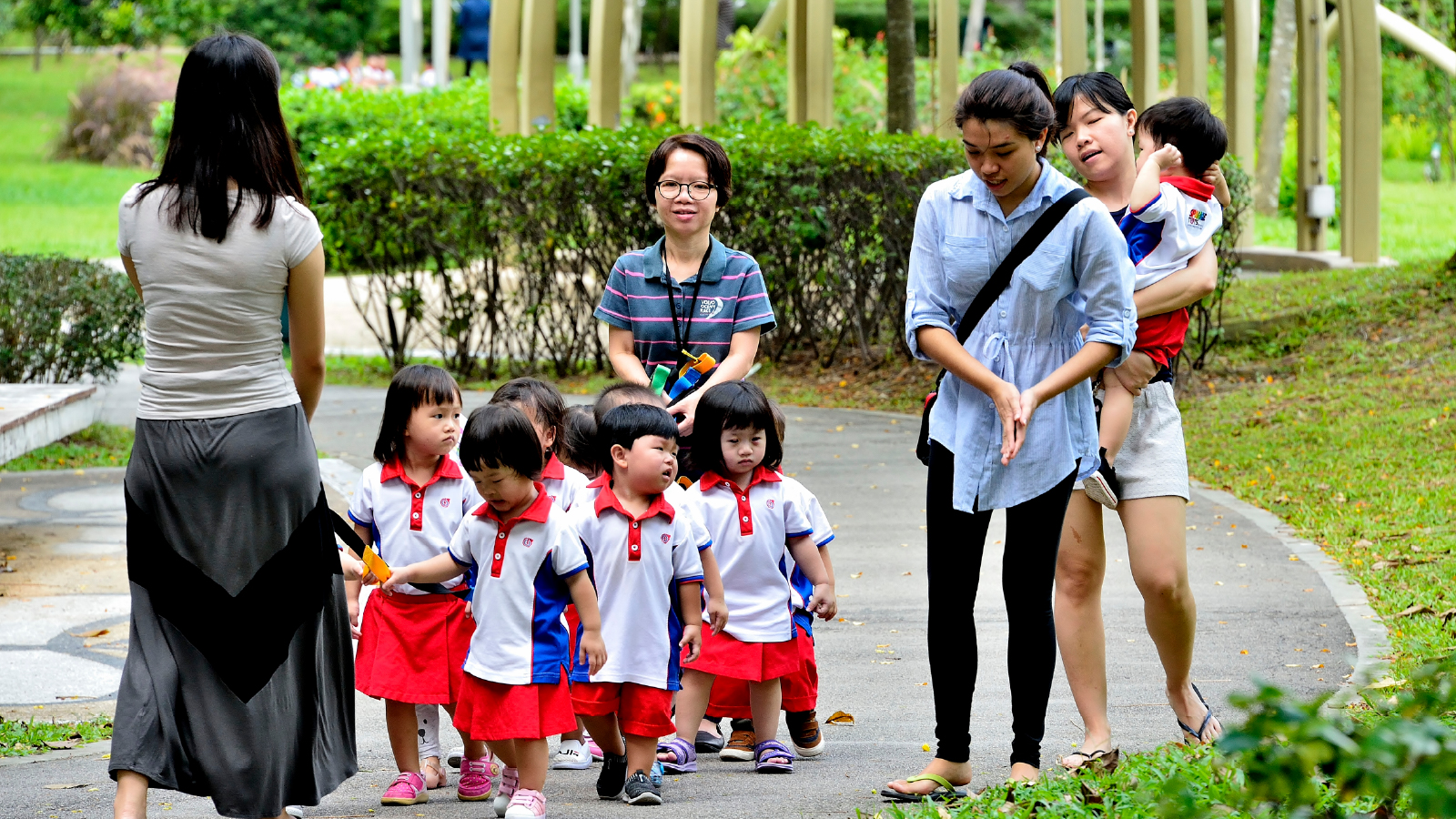 Collaboration between parents and educators is vital.
“Shared expectations and consistent language across home and school provide clarity and security, so children learn faster,” explains Dr Perisamy. Educators and families can engage in conversations about their values around cooperation and empathy, so that expectations are consistent.